
Summary: Travel trends in 2026 point toward more intentional, personalized trips, while travelers continue to weigh cost, timing and local impact. The clearest opportunity is not to copy every forecast, but to shape flexible itineraries around specific interests, quieter seasons and destination capacity, treating niche experiences and digital tools as options rather than universal demands.
Travel demand in 2026 is not moving in one direction: many travelers want more personal trips, while price and crowding continue to shape choices. A useful reading of the travel trends shaping 2026 separates broad priorities from niche formats, instead of treating every forecast as universal. Our earlier article on travel trends and traveler expectations offers context for how those preferences have evolved.
For travelers, this means choosing season, pace and purpose with as much care as destination. For agencies and operators, it means making customization manageable without building every trip from scratch. The evidence below distinguishes forecasts, booking signals and practical recommendations, since each describes a different part of travel behavior.
How should you interpret travel trends in 2026?
Start by separating what travelers say they want from what they actually book. Surveys can reveal interests and intentions, while booking data records activity within a particular platform, market or period. Neither automatically represents every traveler or destination.
For example, Expedia Group’s Unpack 26 report surveyed 24,000 adults across 18 countries who were planning domestic or international travel in the next three years. That makes its findings a forward-looking signal, not a census of trips taken in 2026. Use forecasts to spot possible demand, then compare them with your own clients, destination conditions and booking patterns.
Why are slower trips and quieter seasons appealing?

Imagine replacing a hurried multi-city itinerary with several nights in one place. A slower pace leaves room for local meals, independent exploration and conversations with guides or hosts. It can also reduce the pressure to fit every well-known sight into a short stay.
Slow travel is a useful approach when a destination rewards time and attention. You can explore the slow travel trend for ways to build a more measured itinerary. For a shorter outing, microadventures as an emerging travel trend offer a way to focus on a nearby activity or landscape without planning a long journey.
Timing matters too. Off-season travel can mean fewer visitors and different experiences, but it requires checking local opening dates, transport schedules and weather. A coastal town in a quiet month or a mountain destination outside its busiest weeks may suit some travelers, while others will prefer the reliability of peak-season services.
How do personal interests shape the trip?
A trip built around a particular interest feels more specific than a standard list of attractions. A cooking class, a favorite sport, a literary setting or a nature walk can give the itinerary a clear anchor. The best choice depends on what the traveler values, not simply what appears in trend coverage.
Pop-culture travel offers one example of a narrow signal. Amadeus’s 2026 travel report said international bookings to Alberta for the first half of 2026 were running 20% higher, with bookings from EU27 countries up 47%. Those figures describe a booking signal for one destination and period, not a global measure of film-inspired travel.
Wellness and other niche trips also need a clear fit. A quiet retreat, an active walking holiday or a trip built around food can serve different needs. Ask what the traveler wants to feel or do, then make sure the pace, access and included activities match that purpose.
How are affordability and flexibility influencing choices?
Value is more than the lowest price. Travelers may weigh the cost against convenience, flexibility, trip length and the experience they expect to receive. Clear inclusions and realistic travel times make it easier to judge whether an itinerary suits a budget.
In Deloitte’s April 2026 survey of 4,003 Americans, 45% planned a summer vacation with paid lodging, the lowest share in six years. The survey also identified affordability as a major concern among people not planning to travel. These findings describe U.S. respondents, so they should not be treated as a global measure of travel demand.
When cost is a concern, compare a shorter stay with fewer transfers against a longer, multi-stop itinerary. Flexible dates, nearby alternatives and transparent cancellation terms can also make planning more manageable. For agencies, presenting a few clearly differentiated options helps clients compare trade-offs without obscuring the total cost.
How can travel businesses respond to these shifts?
A trend becomes a useful offer only when it fits the destination and the traveler. The OECD’s 2026 report examines tourism policy across 53 OECD and partner countries. It emphasizes flexible, coordinated approaches to sustainability and resilience, reinforcing the importance of balancing visitor experiences with the needs of places and communities.
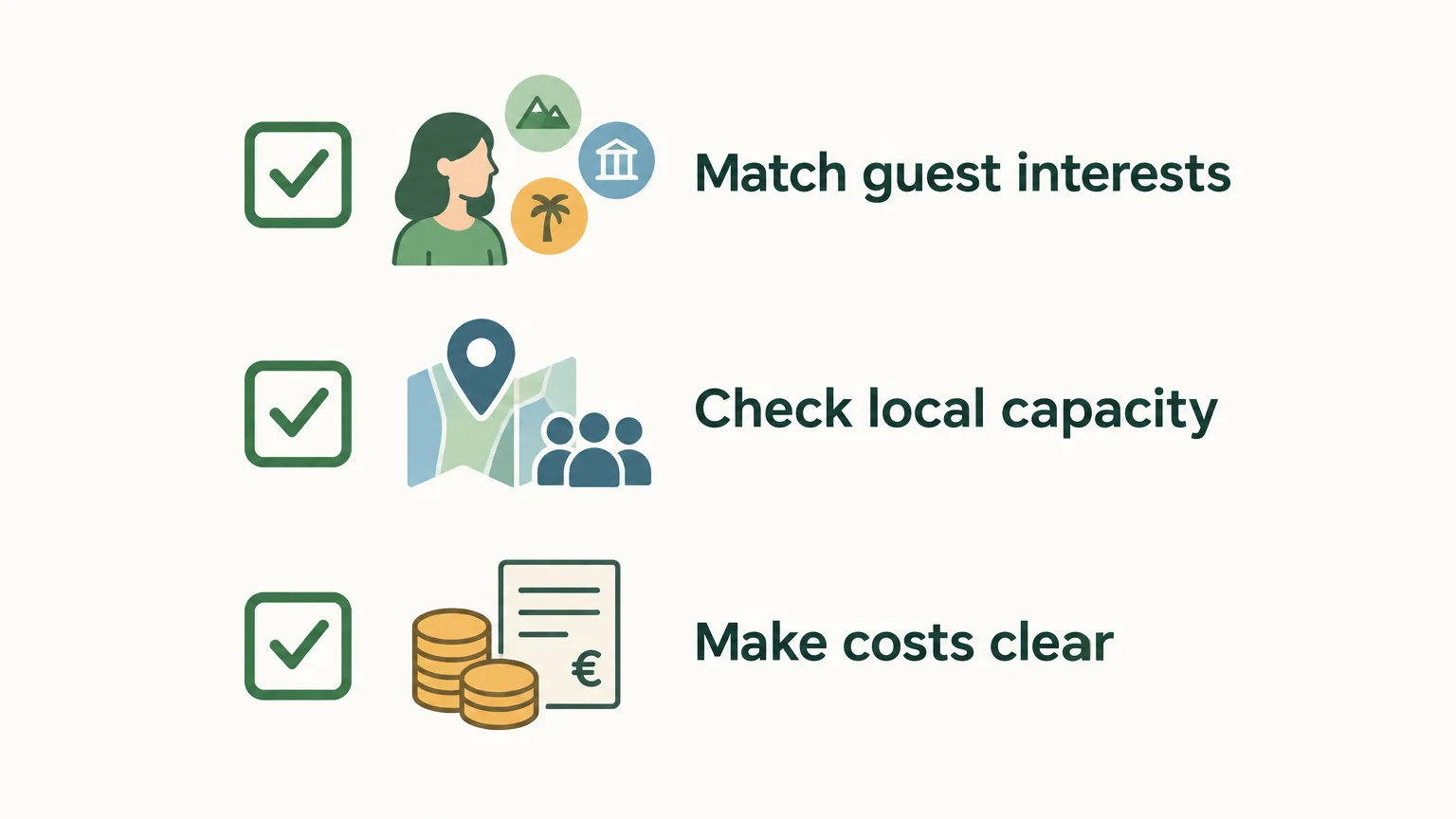
For each proposed itinerary, check three things: whether the experience matches the traveler’s interests, whether local services can support it at the chosen time, and whether the costs and logistics are clear. Responsible planning also means choosing local partners thoughtfully and avoiding promises that suppliers or seasonal conditions cannot support.
For travel businesses, these shifts raise an operational question: how can you offer tailored trips without multiplying manual work? We bring itinerary design, budgeting, proposals, supplier coordination and financial tracking into a shared workspace. In 2026, we support more than 600 agencies in more than 70 countries, with more than 4,000 active monthly users and more than 11,000 unique itineraries created each month.
Reusable project templates and centralized trip information help teams adapt a strong itinerary to a new request while keeping costs, content and client communication connected. If you are reviewing how to respond to changing demand, our article on adapting your offer to new traveler expectations explores practical considerations for shaping your offer.
Make the trends fit the trip
The most useful travel signals in 2026 point toward greater attention to personal interests, trip value and destination conditions. They do not require every traveler or business to follow the same formula. Start with the person, the place and the practical constraints, then use trends to inform choices rather than dictate them.
Turn 2026 Travel Signals Into Better Trip Operations
Trend awareness matters when your team can turn it into clear itineraries, reliable budgets and client-ready choices. We build travel operations software for agencies, destination management companies, tour operators and MICE teams designing tailored trips.
Our cloud platform brings itinerary design, budgeting, proposals, supplier coordination, client approvals and financial tracking into one shared workspace. Reusable templates and connected information support teams as they adapt trips to different client interests and destination requirements. Explore our travel agency software to see how it can support your travel planning and operations.
Frequently Asked Questions
What is the main travel trend in 2026?
There is no single itinerary style that applies to every traveler. More specific experiences, attention to value and thoughtful trip pacing are useful themes to consider when planning.
Is slow travel still relevant in 2026?
Slow travel remains a practical choice for travelers who want more time in one place. Consider transport, seasonal access and the activities that matter most before extending a stay.
How can travelers manage trip costs?
Compare the full itinerary cost, including transfers, activities and cancellation terms. Flexible dates, shorter stays or fewer stops can help you make trade-offs more clearly.
How can destinations balance tourism and local needs?
Destinations can assess visitor capacity, seasonal pressures and the role of local businesses when shaping tourism offers. Travelers can support that balance by choosing locally rooted experiences and respecting local guidance.
How can travel agencies adapt offers to changing expectations?
Agencies can build flexible, reusable itineraries around specific interests while keeping budgets, supplier information and client communication connected. Ezus provides a shared workspace for itinerary design, proposals, supplier coordination and financial tracking.


Join Ezus today
Request a demo today and discover how our software can help you reach new heights.