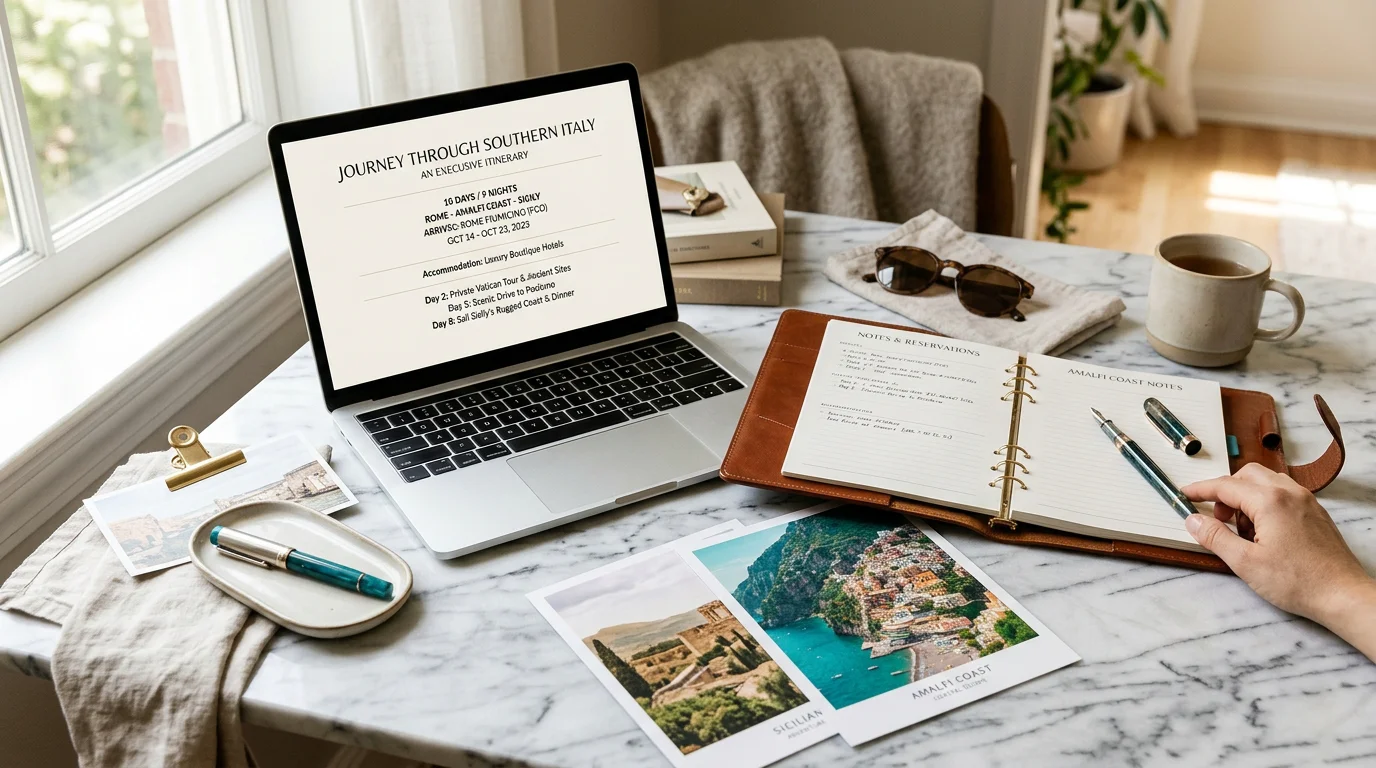
Summary: A reusable template turns proven trip structures into a repeatable starting point, so you assemble bespoke proposals in minutes rather than hours. It standardizes design, pricing, and brand voice while leaving room for personalization. For high-end agencies and DMCs, it accelerates responses, protects margins, and helps convert demanding travelers into confirmed bookings.
Speed decides many high-end sales. Affluent travelers expect a tailored, visually polished proposal almost immediately, and a slow reply often loses the booking. This is precisely where a well-built luxury travel itinerary builder template changes your economics, because it removes the repetitive work behind every quote. To structure that foundation quickly, you can start from our Luxury itinerary builder template and adapt it to each client.
The stakes are considerable. According to Grand View Research, the global luxury travel market was valued at roughly USD 1.59 trillion in 2025, and demand is shifting decisively toward curated, personalized journeys. In that context, a repeatable yet flexible foundation is not a shortcut; it is how serious travel professionals scale quality without sacrificing the bespoke feel their clients pay for.
Why templates matter in high-end trip design
Consider a typical week: several complex enquiries arrive at once, each demanding a distinct, story-driven proposal. Rebuilding every itinerary from a blank page is not sustainable. A template captures your best work once, then serves it repeatedly as a foundation you refine per client.
The market rewards this discipline. Research and Markets reports that the sector is projected to reach USD 2.1 trillion by 2030, driven by rising demand for personalized experiences and customized packages. Templates let you meet that demand at speed, because they preserve structure while leaving every detail open to change. The result is faster response times, consistent brand storytelling, and fewer errors in pricing or formatting.
To keep this practical, think of your itinerary template as a master pattern. You keep the proven skeleton, then swap hotels, experiences, and transfers to fit each traveler. When you need a broader starting library, our itinerary templates for building tailored trips give you multiple structures to begin from.
What belongs in a luxury travel itinerary template
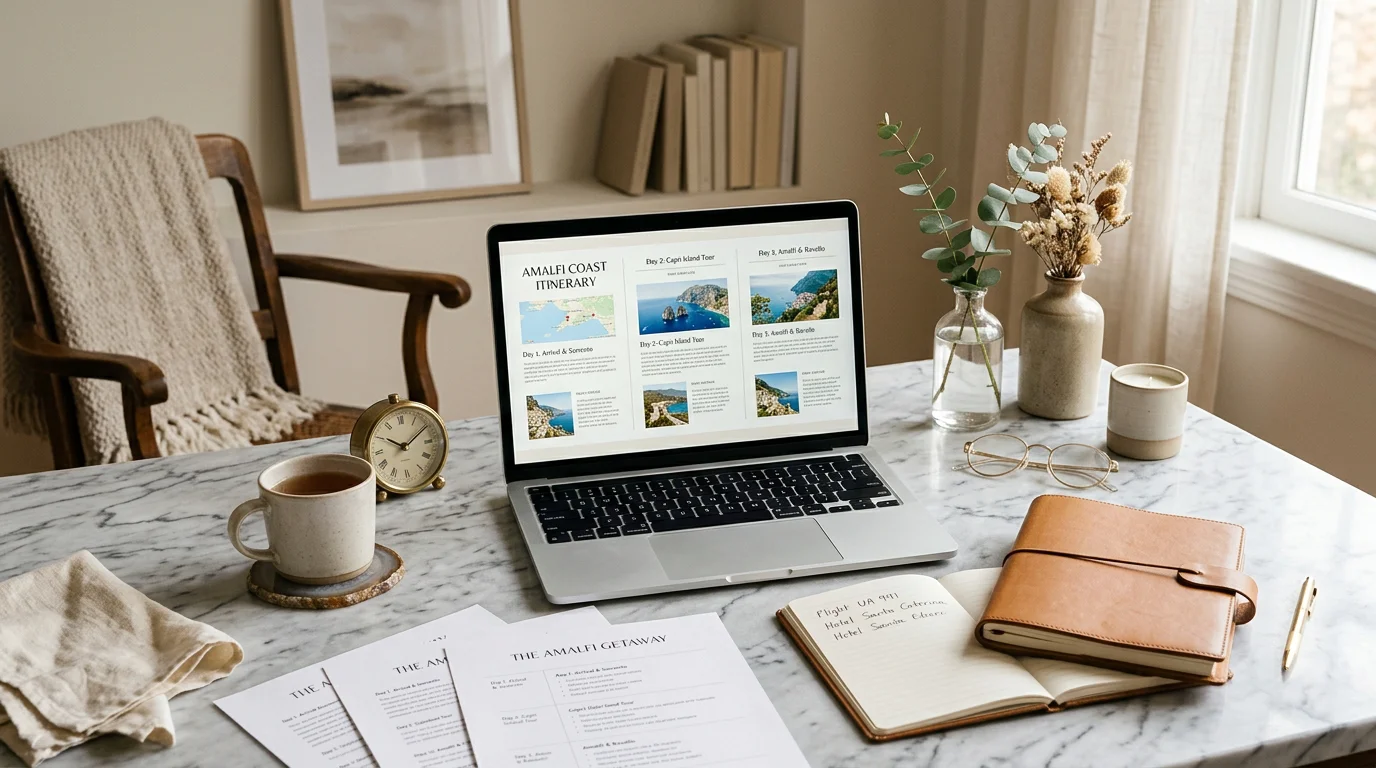
A strong template balances rigor and flexibility. It should hold reusable structure while inviting personalization at every touchpoint. The following elements form a dependable core.
Personalization is not optional at this level. EHL Hospitality Insights notes that personalization has become the heart of luxury, with hyper-personalized itineraries now functioning as markers of status. A good template protects that individuality rather than flattening it, because the reusable parts free your time for the bespoke ones.
How to build your template step by step
Start from your strongest existing trips. Choose two or three itineraries that consistently convert, then extract their structure into a reusable form. From there, refine deliberately.
Maintenance is what keeps a template valuable. Update a single master to reflect new suppliers or seasonal changes, and every future proposal inherits the improvement. To manage many structures in one place, our template library for customizing itineraries centralizes your reusable content and keeps it consistent.
Manual documents versus a dedicated builder
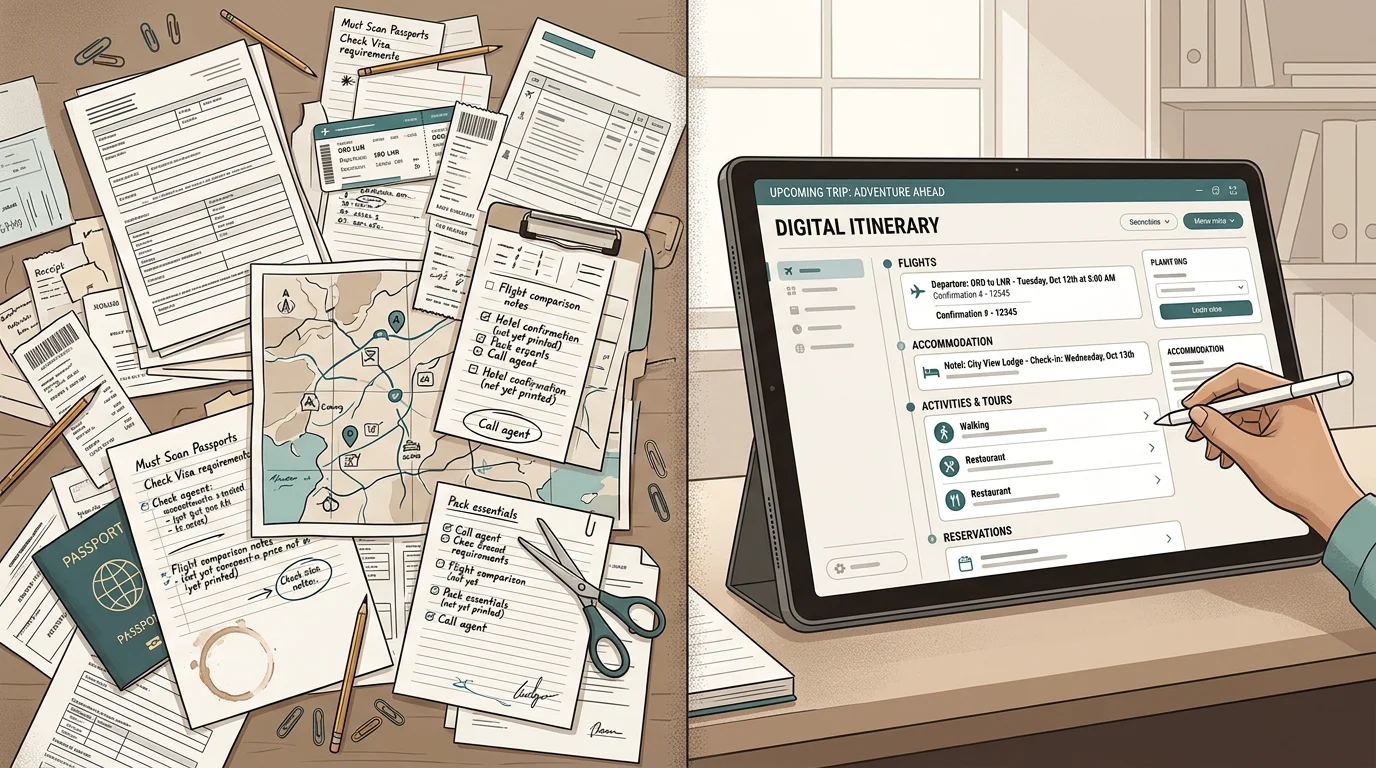
Many teams still assemble luxury proposals in word processors and spreadsheets. That approach works until volume rises, at which point version control, formatting, and pricing errors multiply. A dedicated builder addresses these weaknesses directly.
The distinction matters commercially. AltexSoft reports that luxury travelers typically spend between USD 10,000 and USD 24,999 per trip, with a quarter spending far more. At those values, a formatting slip or a slow reply is expensive, so a builder that guarantees polish and speed protects real revenue.
Keeping personalization at scale
A common fear is that templates make every trip feel identical. The opposite is true when they are built well. By standardizing only the mechanical layers, you reserve your energy for the human ones, such as understanding a client and matching the perfect suppliers.
This aligns with where demand is heading. The younger, experience-driven buyer now dominates: EHL Hospitality Insights observes that travelers under 60 make up around 80% of the luxury market, and they prize authenticity over generic offerings. A flexible template supports exactly this, because it lets you personalize quickly while maintaining the quality your reputation depends on.
Turning structure into a competitive edge
A well-designed luxury travel itinerary builder template is not a constraint on creativity; it is the foundation that frees it. By capturing your proven structures once, you respond faster, price accurately, and keep your brand consistent across every proposal. Begin with two or three of your best-converting trips, break them into reusable blocks, and maintain them as living master documents. The discipline pays off in speed, consistency, and the bespoke quality that discerning travelers expect.
Take action with Ezus
If your team is losing hours to manual formatting and scattered pricing, the fix is a single system that turns your best trips into instant, on-brand proposals. You keep full control over personalization while removing the repetitive work that slows every quote.
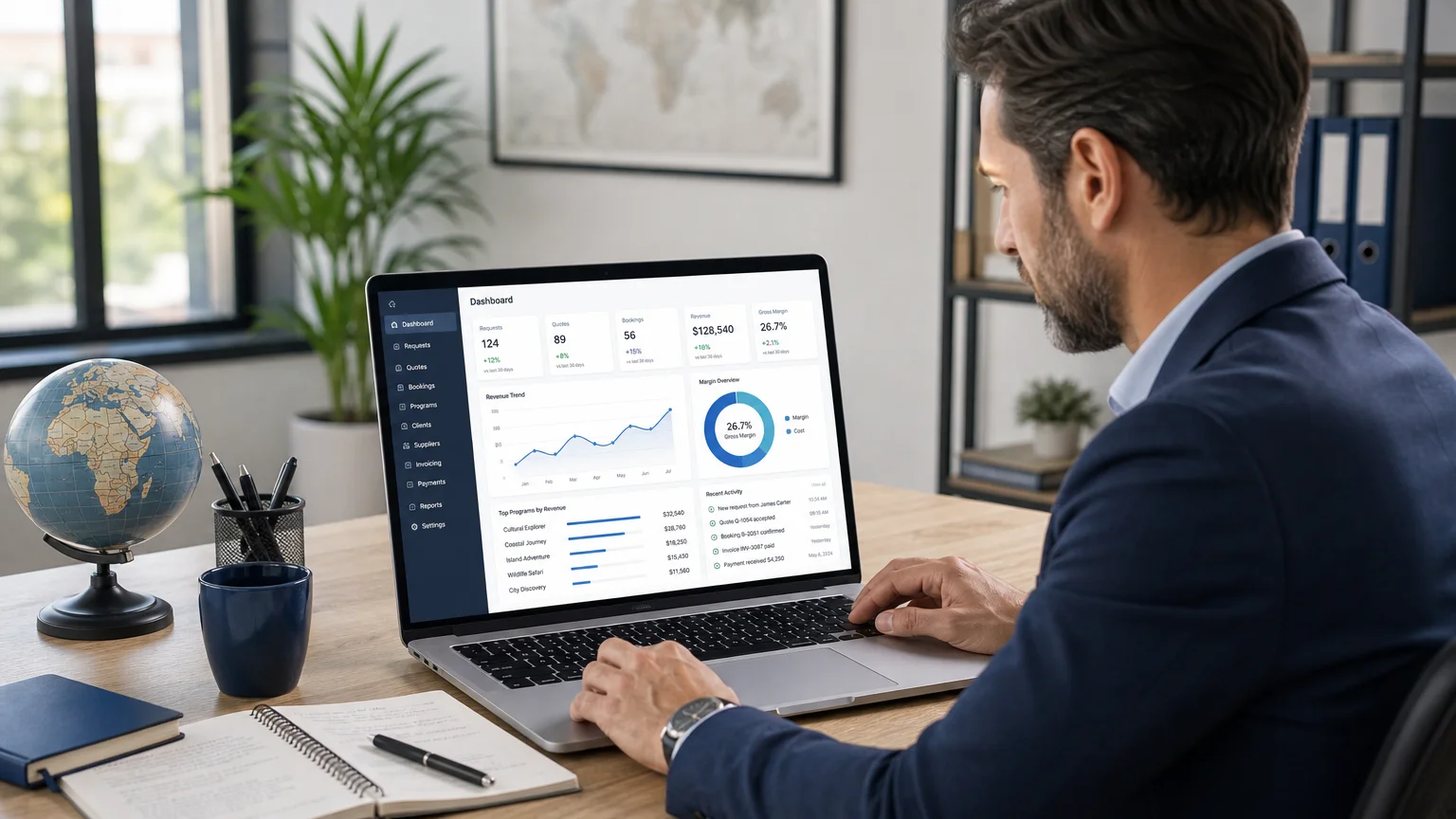
With our luxury travel itinerary builder, you generate polished proposals in one click, apply smart pricing with real-time margin visibility, and share everything through a branded client portal for quick approvals. Multi-currency, multi-language, and multi-brand support let you scale globally, and teams save up to three hours per quote. Request a demo to see how quickly you can respond to your next high-end enquiry.
Frequently Asked Questions
What is a luxury travel itinerary template?
It is a reusable structure that captures a proven trip format, including layout, content blocks, and pricing logic. You start from it for each new client, then swap details to personalize the journey. This saves time while maintaining consistent quality.
Does using a template make trips feel generic?
No, provided the template standardizes only mechanical layers such as layout and pricing. The bespoke elements, including suppliers, experiences, and narrative, remain fully customizable. In practice, a good template frees more time for genuine personalization.
How much time can a template really save?
Savings depend on your volume and complexity, but reusable structures remove most repetitive formatting and pricing work. With our itinerary builder, teams save up to three hours per quote. That time is redirected toward client relationships and trip design.
Can a template handle multiple currencies and languages?
Yes, when you use a dedicated builder rather than a static document. Multi-currency and multi-language support allow you to serve international clients accurately. This is essential for agencies and DMCs operating across borders.
How often should I update my templates?
Review them whenever suppliers, seasons, or pricing change, and at least ahead of each major booking cycle. Updating a single master keeps every future proposal accurate. Regular maintenance prevents outdated rates or descriptions from reaching clients.
.jpeg)

Découvrez Ezus aujourd'hui
Demandez une démonstration dès aujourd'hui et découvrez comment notre logiciel peut vous aider à atteindre de nouveaux sommets.



.jpg)