



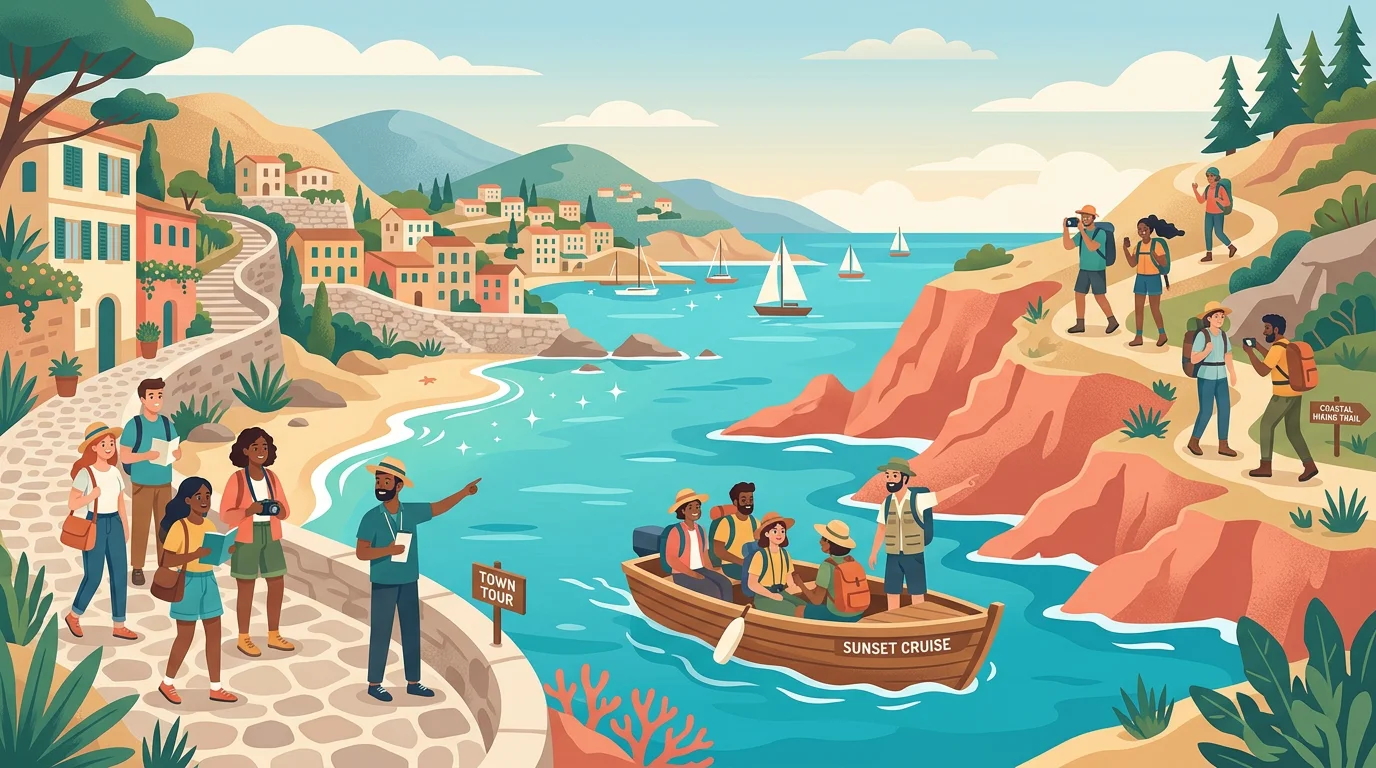
Summary: Curated travel experiences now form the third-largest segment of tourism, and the experiences market reached roughly 360 billion dollars in 2025, rewarding operators who personalize and price them well.
Travelers no longer measure a trip by the flights they took or the hotels they slept in. They measure it by what they did. This shift places activities and excursions at the center of modern trip design, and it rewards the professionals who build them into our customized travel itineraries with intention rather than as an afterthought.
The numbers confirm the momentum. According to Statista, the global travel experiences market was estimated at around 360 billion dollars in 2025. For travel agencies and destination management companies, that demand represents a clear opportunity to grow revenue, deepen client loyalty, and differentiate offers that would otherwise look identical to the competition.
Why experiences drive today's travel market
The appetite for hands-on discovery is not a passing fashion. It is a structural change in how people spend their travel budgets. Grand View Research reports that the adventure tourism market was valued at 464.3 billion dollars in 2025 and is projected to reach 534.4 billion dollars in 2026, expanding at a compound annual growth rate of 18.6 percent through 2033.
Reservations for organized experiences follow the same upward curve. The tours and activities reservations market was estimated at 185.52 billion dollars in 2025, according to 360iResearch, with a projected annual growth rate of 7.51 percent toward 2030. These figures tell travel professionals a simple story: the experiential layer of a trip is where value is increasingly created and captured.
Millennials and Gen Z sit at the heart of this movement. They prioritize memorable moments over material possessions, and they research heavily before committing. Meeting them requires more than a catalog of standard guided tours and day trips; it requires relevance, authenticity, and flexibility.
The difference between activities and excursions
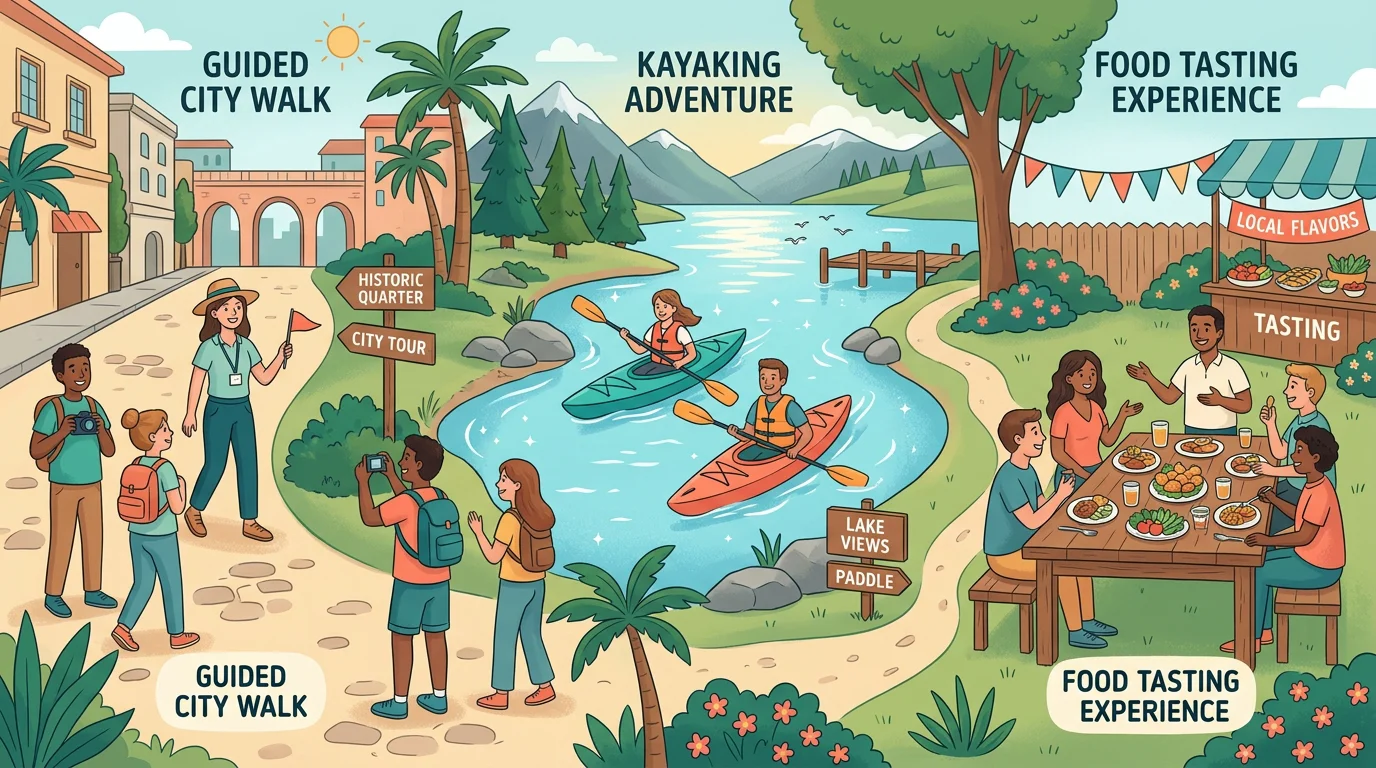
Although the two terms are often used interchangeably, distinguishing them helps you build clearer offers. An activity is typically a shorter, focused experience: a cooking class, a wine tasting, a museum tour, or a sunset cruise. An excursion is usually a longer outing away from the base, such as a full-day trip to a national park or a coastal village.
Understanding the distinction matters for logistics and pricing. Single-day outings appeal to urban explorers and business travelers with limited time, while multi-day itineraries demand deeper coordination with lodging, transport, and local guides. Both categories, however, share one requirement: seamless organization behind the scenes.
When you sell a portfolio of day trips and local experiences, the operational complexity multiplies quickly. Coordinating suppliers, availability, and client expectations across dozens of options is where many teams lose time and margin. This is precisely where structured tools and workflows earn their keep.
Personalization as your competitive advantage
Generic itineraries no longer satisfy discerning travelers. They expect recommendations that reflect their pace, interests, and values. This is why the microadventure travel trend has gained traction: short, accessible, and often local experiences that fit into a broader trip without heavy planning.
At the same time, the rise of slow travel shows that many clients prefer fewer, deeper experiences over a packed checklist. The lesson for travel professionals is not to offer more, but to offer better. Curating a smaller set of meaningful excursions and guided experiences tailored to each traveler often outperforms an overwhelming menu.
Personalization also builds retention. When clients feel that an itinerary was designed specifically for them, they return and they refer. The challenge is delivering that bespoke feeling at scale, without spending hours rebuilding proposals from scratch. Automating itinerary and document generation frees your team to focus on the creative, human parts of trip design.
Pricing and margins: where operators win or lose
Selling wonderful experiences means little if the economics do not hold. The tours and activities sector is dominated by small operators working with thin margins, and pricing errors quietly erode profitability. Currency fluctuations, supplier rate changes, and manual markups all introduce risk.
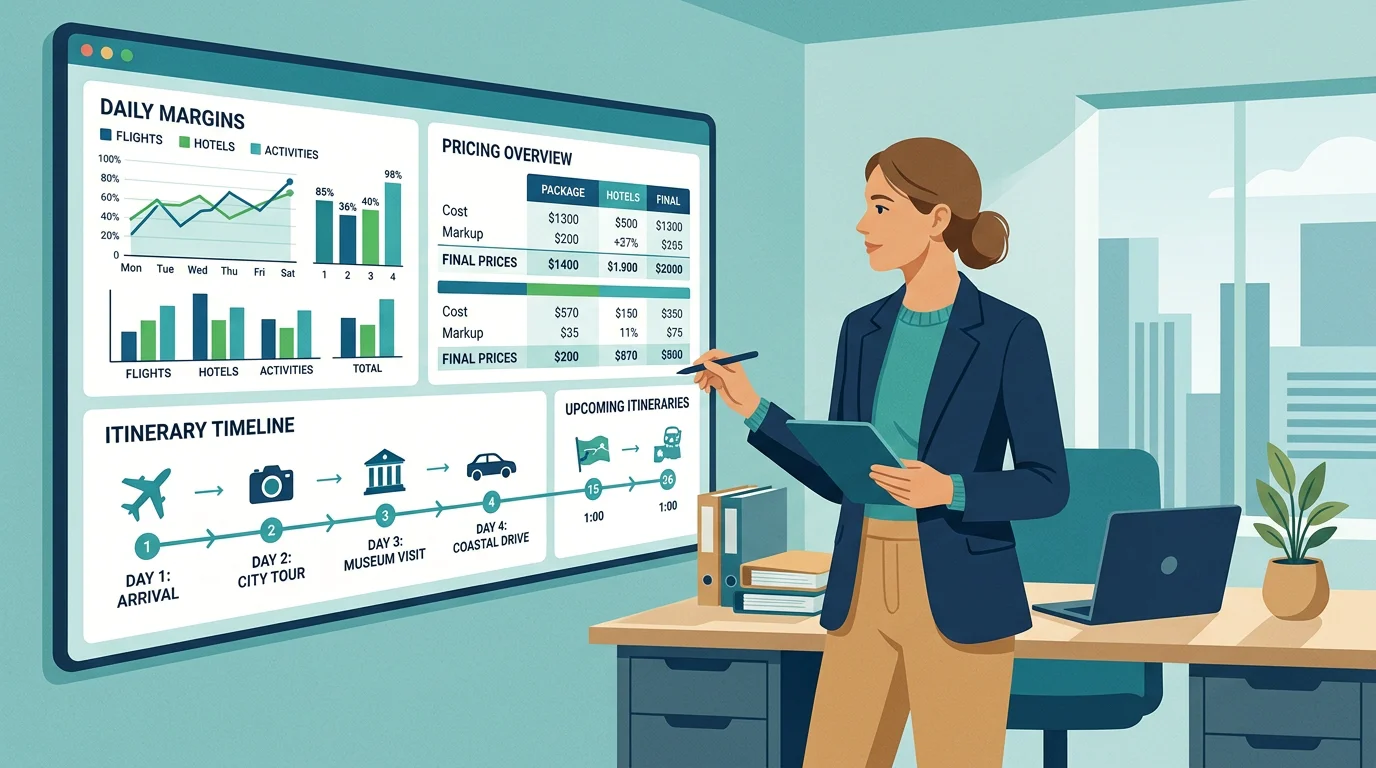
Real-time visibility is the antidote. When you can compare projected margins against actual costs across every activity in a proposal, you protect revenue that would otherwise leak away. Our Smart Pricing dashboards give your sales and finance teams that clarity, with margin alerts and markup tracking built directly into the quoting process.
The table below summarizes how a structured, all-in-one approach compares with the fragmented tools many teams still rely on when assembling experiential offers.
CriterionManual tools (Word, Excel, inbox)Generic booking sitesOur all-in-one platformQuote speedSlow, rebuilt each timeFast but not tailoredSave 3 hours per quotePersonalizationHigh effort, error-proneLimited to catalogFully customized itinerariesMargin visibilityManual, delayedNot providedReal-time dashboardsMulti-currencyManual updatesVariesInstant managementIntegrationsDisconnectedClosed ecosystemConnect 9,000+ tools
Distribution and booking behavior
Where and when travelers book has shifted dramatically. A significant share of experiences are now reserved after arrival, meaning your offers must remain flexible and easy to adjust on short notice. Mobile-first, review-driven behavior means clients expect quick answers and polished proposals.
Speed matters commercially. Responding to an inquiry in minutes rather than days is often the difference between winning and losing a booking. Generating an on-brand proposal in one click, then sharing it through a branded client portal for review and approval, removes the friction that slows conversions.
Regional context also shapes strategy. Europe leads the global travel and tourism market with an estimated share of 37.4 percent in 2026, according to Coherent Market Insights, while leisure travel is expected to represent around 40 percent of the market that same year. For internationally minded agencies, multi-currency and multi-language support becomes essential rather than optional.
Building a scalable operation
Growth exposes weak processes. In the United States alone, the tour operators industry reached a market size of 12.7 billion dollars in 2026, according to IBISWorld, yet the number of businesses has contracted, a reminder that operational efficiency separates those who scale from those who stall.
Centralizing your workflows is the foundation. When quotes, budgets, documents, and client communication live in one always-updated system, you eliminate version mismatches, lost files, and the handoff errors that frustrate both staff and travelers. Reliable itinerary-building software replaces the scattered patchwork of spreadsheets and email threads that hold many teams back.
Role-based permissions add a final layer of control, giving sales teams and finance teams the right access while keeping sensitive data secure. As your catalog of tours and experiential offers expands, structure is what allows you to grow without losing quality or margin.
Conclusion
The evidence is consistent across every credible market study: experiences are now the engine of travel spending, with the sector approaching 534 billion dollars in adventure tourism alone in 2026. Travelers reward relevance, authenticity, and speed, and they punish generic, slow, or disorganized offers. To capture this demand, focus on curating fewer but more meaningful activities and excursions, price them with real-time margin awareness, and respond faster than your competitors. By centralizing your entire workflow from request to invoice in one platform, you protect your margins while delivering the personalized experiences clients expect. To take the next step, explore our itinerary-building software and see how quickly your team can design and sell standout trips.
Frequently Asked Questions
What is the difference between an activity and an excursion?
An activity is usually a short, focused experience such as a cooking class or guided tour. An excursion is typically a longer outing away from the base, such as a full-day trip to a park or coastal town.
How can a travel agency price experiences profitably?
Profitability depends on real-time visibility into costs and margins. Our Smart Pricing dashboards let you compare projected and actual margins, apply markups, and manage multiple currencies instantly, which reduces the revenue leakage common with manual tools.
Why are experiences growing faster than other travel segments?
Younger travelers prioritize memorable moments over possessions and research heavily before booking. This behavior, combined with rising disposable income and social media influence, has made curated experiences one of the fastest-growing parts of the travel market.
.jpg)

Join Ezus today
Request a demo today and discover how our software can help you reach new heights.









.jpeg)
