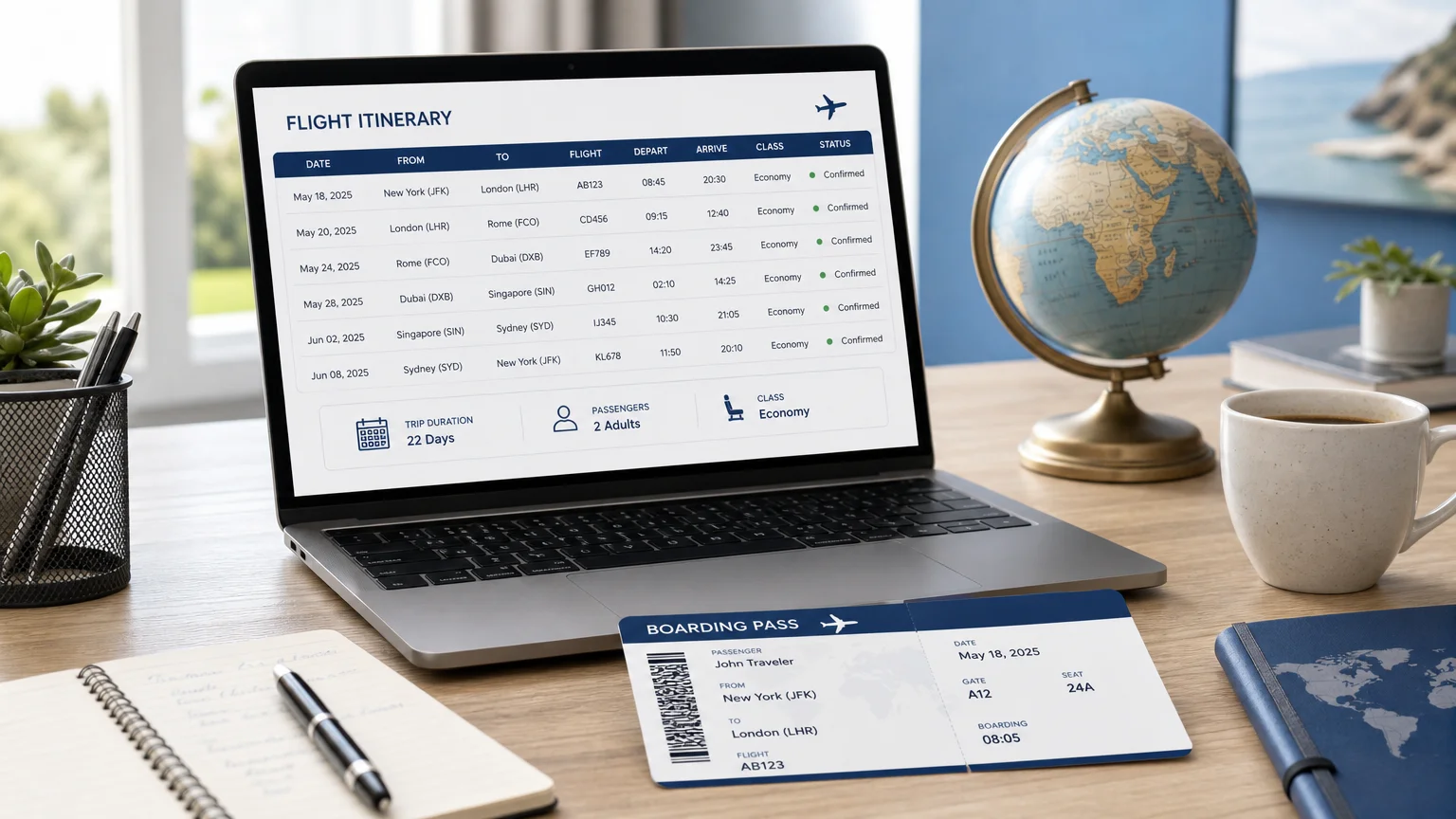

Summary: Tour booking software should do more than accept reservations. The right system connects availability, payments, customer communication, resources, reporting, and the operational work behind each experience. For agencies and operators selling tailored or multi-day trips, it should also support itineraries, budgets, suppliers, margins, approvals, and client-facing proposals without forcing teams to rebuild information in separate tools.
Can your team see, in one place, what a client requested, what has been quoted, what remains available, and what each supplier costs? That question separates a simple reservation calendar from a serious travel workflow. To connect customer demand with trip creation, many teams begin with our online travel agency booking software, then assess how deeply the system supports production and operations.
The need is becoming more complex as the experiences sector expands. According to 2026 market research, global tours, activities, and attractions generated $253 billion in 2024, with the market projected to reach $342 billion by 2029. That scale creates opportunity, but it also increases pressure to coordinate bookings, suppliers, teams, customers, and margins with fewer manual handoffs.
What does tour booking software actually need to manage?
A reservation tool records a customer, a date, and a payment. Tour booking software should manage the wider commercial and operational process surrounding that reservation. This distinction matters because the needs of a fixed-time walking tour differ from those of a DMC creating a multi-country itinerary with private transfers, accommodation, activities, and changing supplier costs.
At a minimum, the system should manage real-time availability, booking details, capacity, payments, customer messages, and staff access. More advanced platforms also handle resources such as guides, vehicles, rooms, equipment, and transport segments. They can apply booking rules, collect special requirements, send confirmations, and maintain a reliable record of changes.
The strongest fit depends on your operating model. A small activity provider may prioritize a website booking widget, automated reminders, digital waivers, and simple payment collection. A tailor-made agency may need itinerary production, pricing, supplier management, approvals, invoicing, and financial tracking in the same workspace.
Where does the value come from beyond the booking button?

Imagine receiving a booking for a six-day private trip. The reservation itself is only the beginning. Your team must confirm supplier availability, update the itinerary, calculate the margin, issue documents, communicate changes, and ensure that finance and operations see the same information.
This is where workflow centralization creates practical value. Instead of copying information between email, spreadsheets, documents, and separate booking tools, your team works from connected records. A change to a service can inform the itinerary, budget, supplier task, customer document, and internal follow-up.
Research from Arival’s 2025 operator study, based on responses from 7,000 operators worldwide, examined booking-system adoption, satisfaction, connectivity, and technology priorities. Its central implication is relevant in 2026: adopting a booking system is not enough if the system does not fit the way your team sells, produces, and delivers travel.
For teams comparing broader operational platforms, our best tour operator software resource explains the criteria that matter when booking management must work alongside quotations, customer records, supplier information, and trip production.
Which features matter across different tour types?
A useful test is to follow one booking from the first inquiry to the final financial review. The system should support each stage without creating a new administrative bottleneck.
- Availability and capacity: check dates, limits, times and resource conflicts in real time.
- Booking and payment control: accept deposits, full payments, balances or invoices based on your business rules.
- Automated communications: send confirmations, reminders, requests for missing information and post-trip follow-ups.
- Customer data: store contacts, preferences, booking history, forms and special requirements in a usable record.
- Cross-channel connectivity: coordinate direct sales, agents, resellers, marketplaces and other distribution sources, where relevant.
- Resource management: assign guides, vehicles, rooms, activities, equipment and other components to each departure or itinerary.
- Reporting and analytics: track bookings, revenue, costs, conversion, cancellations, channel performance and profitability.
- Data portability: export business documents and data if you switch systems or need to connect another platform.
For multi-day and tailor-made travel, the booking record should connect to a detailed itinerary rather than remain an isolated transaction. Our tour operator itinerary software supports this broader view by connecting trip design with documents, budgets, client presentations, and operational follow-through.
How should you compare costs and implementation?
A low subscription price does not necessarily represent a low total cost. You should assess the full financial model, including subscription fees, transaction charges, onboarding, payment processing, data migration, integrations, training, and the internal time required to maintain the system.
Common pricing structures include a monthly or annual subscription, a per-user plan, a booking-based fee, a transaction percentage, or a combination of these models. A transaction fee may be manageable for a low-volume operation, while a growing operator may prefer predictable software costs. The correct comparison depends on your booking volume, average order value, sales channels, staffing model, and margins.
Implementation also deserves attention. Ask how the provider handles existing customer records, products, suppliers, templates, prices, documents, and historical data. Confirm who prepares the import files, who configures workflows, how training is delivered, and what support is available after launch.
The complexity of multi-day travel makes these questions especially important. The 2026 WeTravel report is based on aggregated activity covering 1.3 million travelers, 800,000 bookings, and 350,000 trips. Its focus on pricing, customization, group structure, direct bookings, and operational complexity illustrates why a booking system may need to support more than individual seat reservations.
Before you commit, test a realistic use case. Create a sample booking, change a supplier cost, add a traveler requirement, issue a proposal, record a payment, and review the resulting margin. This reveals more than a feature list because it shows whether the platform reflects your actual working methods.
How can you protect revenue after a booking?
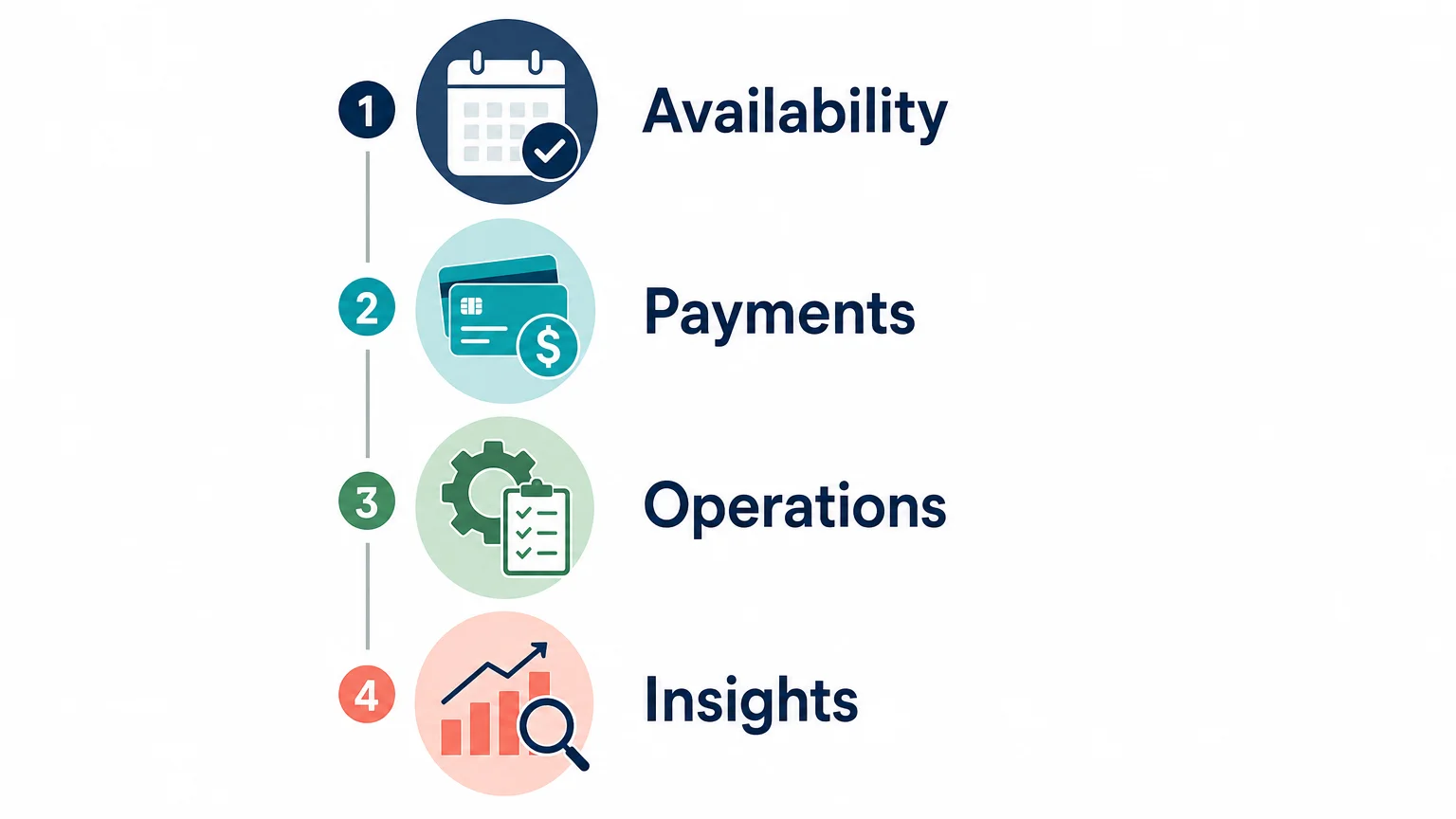
A full calendar can still produce weak results if you cannot understand where bookings come from, which products generate margin, or which communication gaps cause cancellations. Revenue protection therefore depends on reporting and process quality, not only on accepting more reservations.
Look for booking attribution that distinguishes direct website sales, repeat customers, agents, resellers, campaigns, and other channels. You should also be able to compare planned revenue with actual revenue, identify unpaid balances, monitor cancellations, and review supplier costs against the original quote.
This is a significant operational gap for many tourism businesses. A 2026 audit from tourism marketing research examined 545 businesses and found that only 9.8% could trace a booking back to its source. The same study reported that 66.5% had analytics installed, while many still lacked meaningful connections between analytics, contact actions, and booking systems.
The lesson is not that every operator needs a complex analytics department. It is that your booking platform should make useful information accessible to the people who act on it. Sales teams need follow-up visibility, operations teams need accurate passenger and supplier information, and managers need dependable cost and margin signals.
Mobile access is also important for teams working away from a desk. Guides, coordinators, and managers may need to review schedules, check customer information, confirm changes, or update a booking while a departure is underway. The interface should remain practical during busy periods, not only during administrative planning.
When is a broader travel operations platform the better fit?
Consider two operators. The first sells recurring two-hour activities with fixed capacity and a small number of resources. The second designs bespoke international trips that combine several suppliers, currencies, documents, payment stages, and customer approvals.
The first operator may need a focused reservation engine with a website booking page, payment collection, reminders, and resource scheduling. The second needs a platform that connects booking with itinerary production, quotations, supplier coordination, budgets, invoices, client portals, and financial reporting.
This distinction helps prevent an expensive mismatch. A basic booking system may appear efficient until your team starts recreating itineraries, supplier requests, and pricing documents elsewhere. Conversely, a large operational platform may introduce unnecessary complexity for a small provider that only needs simple reservations.
For agencies and operators managing several suppliers, our supplier booking process approach connects supplier coordination with the wider trip workflow. This can be useful when a booking is only one part of a larger service delivery process.
Choose the category that matches your business rather than the category with the longest feature list. The right system should reduce handoffs, preserve information, and help your team serve customers consistently as volume and trip complexity increase.
Conclusion: choose software around your operation
The best choice begins with your workflow, not with a generic list of features. Define how you sell, design, price, confirm, operate, and review each trip, then select tour booking software that supports those stages in one coherent process. Prioritize availability, payments, customer communication, resources, reporting, integrations, data portability, and implementation support. If you sell tailored or multi-day travel, include itineraries, supplier management, budgets, approvals, and margins in the evaluation from the start.
Take action with Ezus
When reservations connect to complex itineraries, supplier coordination, pricing, and client communication, separate tools can create unnecessary delays and version errors. A centralized travel workflow gives your sales, production, finance, and operations teams a clearer way to collaborate.
Our platform supports itinerary design, dynamic budgeting, branded proposals, traveler portals, supplier management, CRM, invoicing, payments, and financial tracking. It also provides onboarding, training, integrations, migration support, and customizable workflows for international travel businesses. Explore our tour operator software to assess whether it fits your operating model and growth plans.
Frequently Asked Questions
What is tour booking software?
Tour booking software helps operators manage reservations, availability, payments, customer information, schedules, and communications. Depending on the platform, it may also support suppliers, resources, itineraries, reporting, invoicing, and financial workflows.
Is tour booking software suitable for a travel agency?
It can be suitable when the platform supports more than fixed activity reservations. Travel agencies selling tailored trips should look for itinerary creation, quotation management, supplier coordination, client approvals, document generation, and margin visibility.
What is the difference between booking software and itinerary software?
Booking software generally focuses on reservations, availability, payments, and customer communication. Itinerary software focuses on designing, pricing, presenting, and managing the trip itself, although some platforms connect both functions.
How should you evaluate tour booking software?
Start with your actual workflow and test a complete booking from inquiry through payment and post-trip reporting. Review integrations, data migration, user permissions, support, implementation requirements, pricing structure, and the system’s ability to scale with your operation.
Can Ezus support complex tour operations?
Our platform is designed for travel agencies, DMCs, tour operators, MICE agencies, and tailor-made travel professionals. It connects trip production, sales, supplier management, client communication, invoicing, payments, and financial tracking in one workspace.
.jpeg)

Join Ezus today
Request a demo today and discover how our software can help you reach new heights.



.jpg)