A band manager needs reliable call times and venue details; a tailor-made travel agency needs supplier quotes and client itineraries. Tour management software can describe either workflow, but the systems are not interchangeable. If you manage travel sales and delivery, our travel management software is designed for that business context.
For live music, a tour manager’s day may involve schedules, travel, crew coordination, and show finances. Berklee’s career profile describes responsibilities that include creating day sheets and managing tour finances. Travel businesses have a different job: designing, pricing, presenting, and operating trips for clients.
What does tour management software mean in your case?
Start with the kind of “tour” your team handles. A music tour connects artists, crew, venues, travel, and show schedules. A travel company’s tour is a trip or itinerary it packages and delivers to travelers.
Both businesses coordinate people, dates, and changing plans, but their records are not the same. A concert team may need load-in times, venue contacts, and hotel details. A tour operator may need a traveler itinerary, supplier rates, client approvals, and cost tracking. Choosing by the shared word “tour” alone can lead you to software that misses your daily work.
Use the distinction to narrow your search before comparing feature lists. Ask whether the platform is designed for live show logistics, for selling and operating travel, or for another related workflow, such as booking tickets or managing an artist roster.
For music tours, organize the details that change
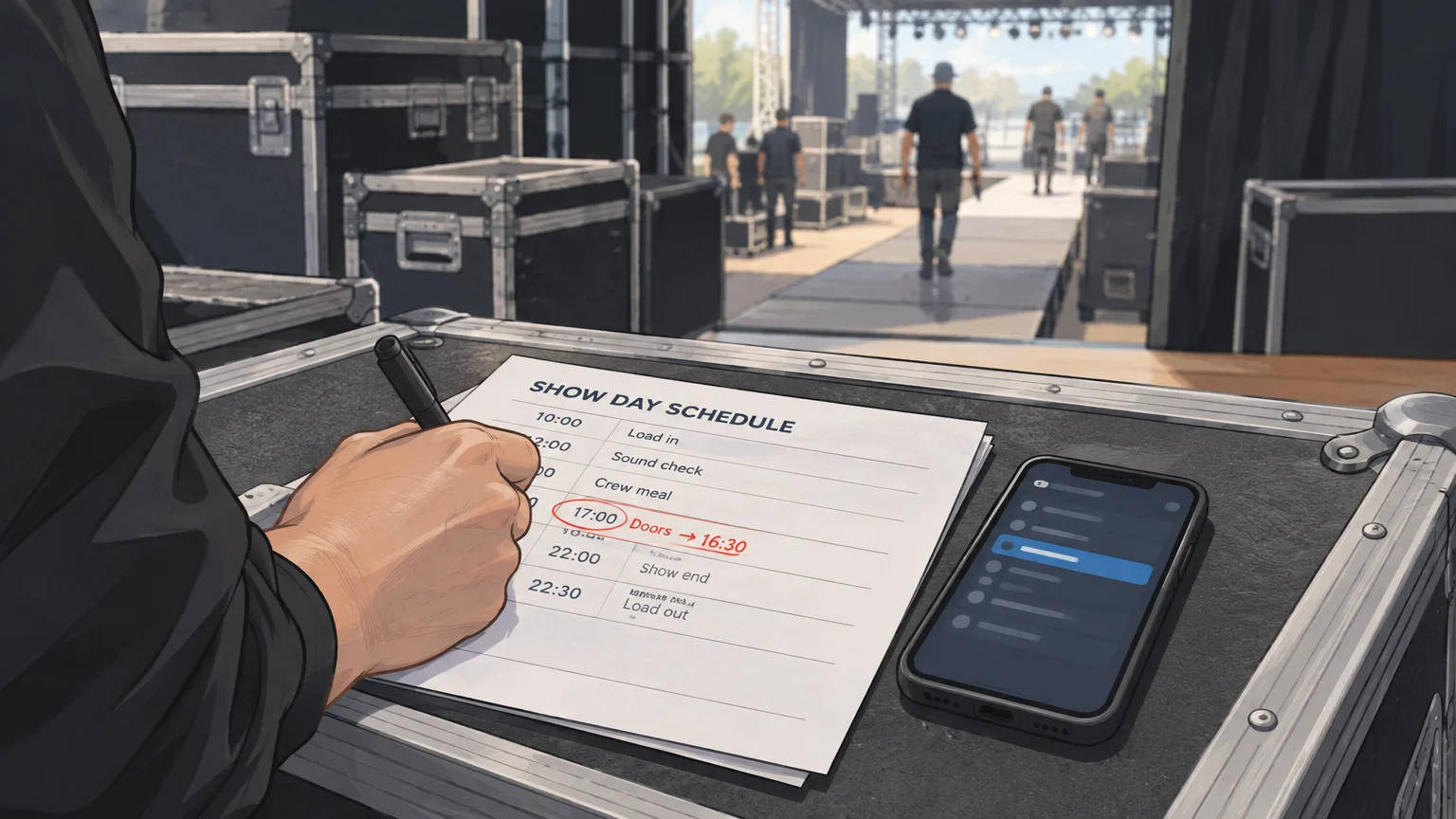
When a venue changes a call time, the practical test is whether every relevant person sees the correction. Software for touring musicians generally brings schedules, day sheets, venue information, contacts, travel details, and team updates into a shared system. Some tools also support guest lists, files, routing, or financial information.
Those details matter because a tour schedule is an operational handoff, not just a calendar. A musician may need to know when doors open; a crew member may need the load-in location; a manager may need hotel and transport details. Clear roles and timely updates help each person find the information needed for the next task.
Examples to evaluate include:
- Master Tour Mobile, which provides tour schedules, travel details, contacts, and offline access to stored information.
- Tourmanagement, which focuses on band calendars, callsheets, event details, and coordination with crew and management.
- Tourbit, which brings schedules, day sheets, venue details, contacts, files, and route planning into a mobile-friendly workspace.
- Artist Growth, which covers broader artist and roster operations, including events, schedules, tasks, guest lists, and finances.
These products have different scopes, so treat their names as a starting shortlist rather than a ranking. A focused day-sheet tool may suit a small touring party with straightforward logistics. A larger operation may need deeper permissions, shared information across multiple artists, or tools for finance and management work alongside show planning.
Travel businesses need trip production and operations
If your team sells multi-day trips, the workflow extends beyond the show-day schedule. You may need to turn an inquiry into a priced itinerary, coordinate suppliers, share a proposal, track approvals, and pass confirmed details to operations and finance. Capterra’s 2026 operator software overview describes this category through needs such as booking, scheduling, customer communication, and itinerary planning.
Multi-day travel also involves product and distribution choices. Arival’s multi-day tours report, published in March 2026, covers topics including tour length, group size, booking windows, pricing, technology, and distribution. These are travel-business considerations, not substitutes for concert schedules or crew callsheets.
Our platform is built for travel agencies, destination management companies, tour operators, tailor-made travel businesses, and MICE teams. We bring itinerary design, budgeting, proposals, supplier booking management, invoicing, and financial tracking into connected workflows. For teams that need to create and present trip plans, our tour operator itinerary software page explains that part of our work.
Since beginning operations in 2018, we have developed from itinerary building into travel production, sales, and operations software. Our company information lists more than 600 agencies across more than 70 countries, but does not give a measurement date for those figures. Travel Exclusive Asia has described reducing its re-quoting time from 15–20 minutes to a maximum of five minutes; that is one customer’s testimonial, not a guaranteed or independently verified result.
For 2026, our Professional plan is €75 per user per month and our Premium plan is €100 per user per month when billed annually; displayed subscription prices exclude tax. A mandatory, one-time Onboarding Pack costs €1,990 excluding tax, and subscriptions renew annually. Enterprise pricing is available on request from 30 users, so confirm plan-specific capabilities and total costs against your team’s requirements.
To see how the wider workflow can support a growing travel business, read about our tour operator software for growing your travel business. This use case is distinct from managing a band, crew, or concert itinerary on the road.
What should you test before choosing a platform?
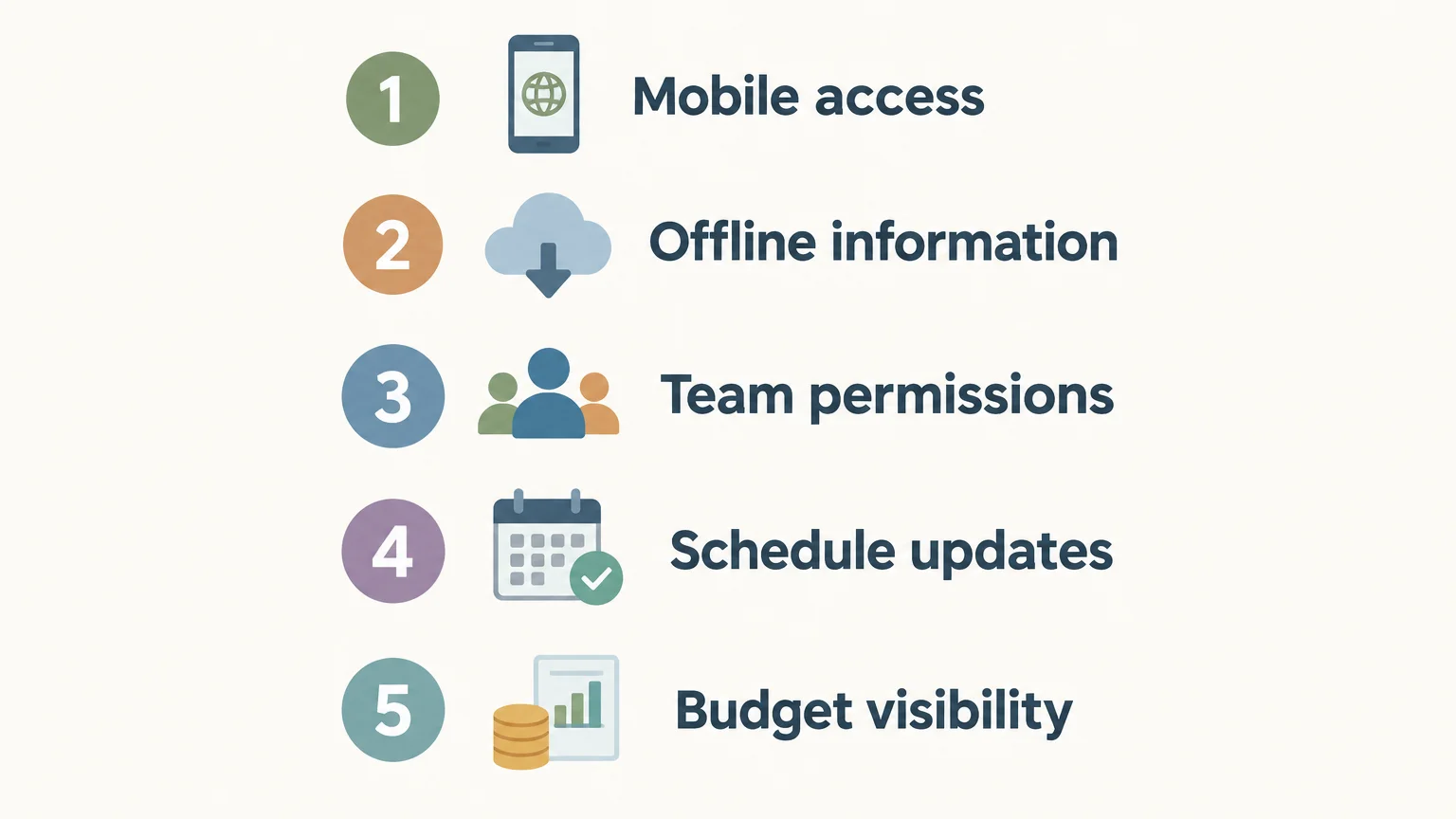
Before committing, test one real event or trip in each shortlisted platform. A demonstration using your own workflow can reveal gaps that a feature list will not, including how updates reach the team and whether the information stays useful when plans change.
- Mobile access: Can the people who need the schedule find it easily on their phones?
- Offline availability: Can the team retrieve essential details when the connection is unreliable?
- Permissions: Can you control who edits or sees sensitive information?
- Updates and handoffs: Does a changed time, itinerary, or supplier detail reach the right people without repeated re-entry?
- Workflow fit: For live music, test day sheets, travel, and crew coordination. For travel sales, test inquiry intake, itinerary pricing, client review, supplier details, and financial tracking.
Also check how the system handles past tours, reusable templates, team growth, exports, and onboarding. Compare the time needed to maintain the software with the administrative work it is meant to centralize.
Choose for the work your team actually does
Tour management software is only a useful search term once you define the job. Live music teams need reliable show, travel, and crew coordination; travel businesses need tools for building, selling, and operating trips. Compare platforms against a real workflow, including the people who need access and what happens when plans change.
Explore software for tour operators
If your team manages client trips rather than concert schedules, choose tools that connect itinerary creation with proposals, supplier details, and financial workflows. The right fit should reflect how your travel business sells and delivers each trip.
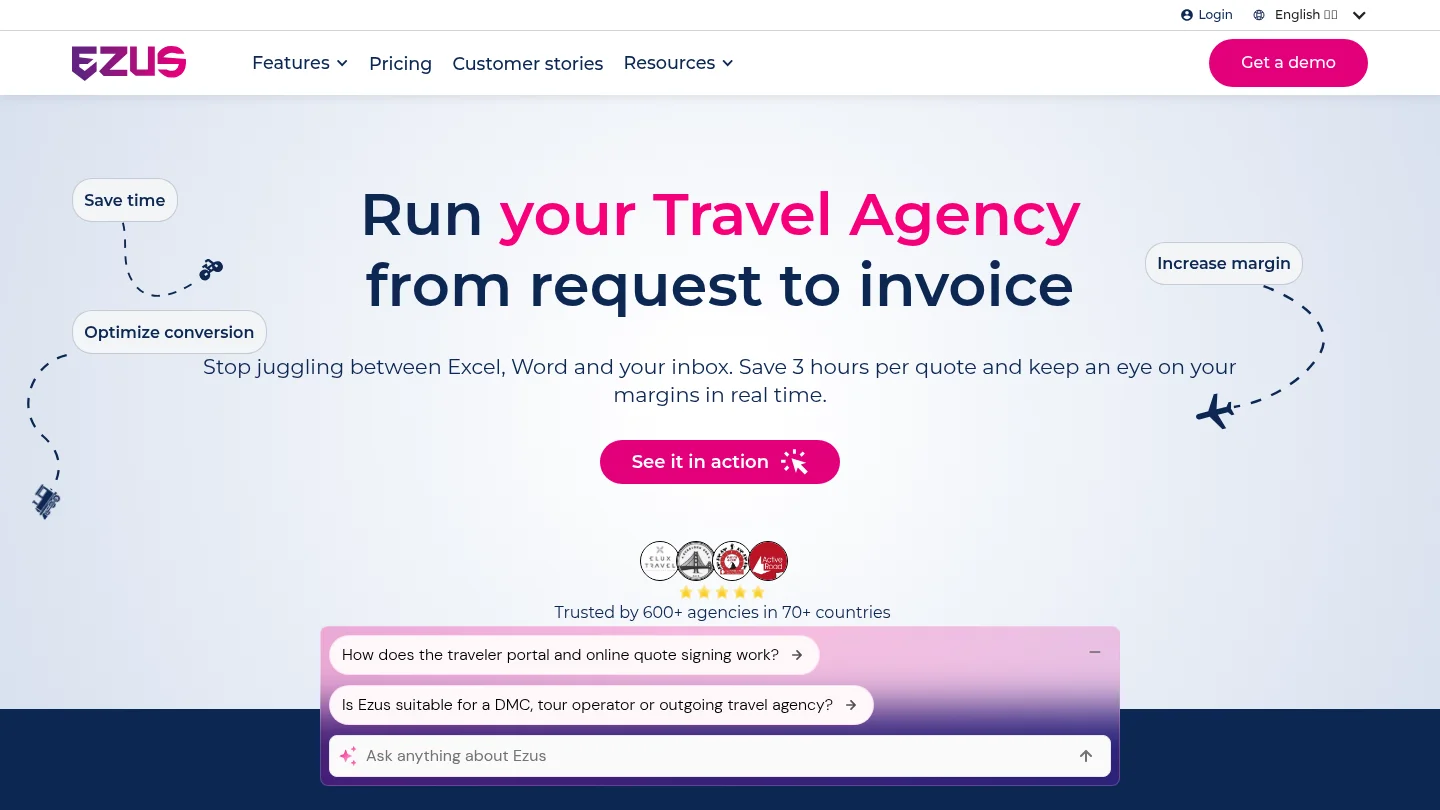
Our tour operator software brings travel production, sales, operations, and finance workflows into one platform. You can request a demonstration to see how its itineraries, budgets, proposals, supplier management, and financial tracking align with your team’s needs.
Frequently Asked Questions
What is tour management software?
It can refer to software for coordinating live music tours or to systems that help travel businesses plan and operate trips. Check the intended users and workflows before comparing products.
Can music tour software manage a travel agency?
Not necessarily, because concert logistics and travel sales require different records and processes. Travel agencies should look for itinerary, quotation, supplier, client, and finance workflows.
What features should a band or tour manager look for?
Compare schedules, day sheets, travel details, venue contacts, team permissions, mobile access, and offline availability. Add guest lists, files, or finances if those are part of your operation.
How does Ezus fit into tour management?
Our platform is designed for travel agencies, DMCs, tour operators, tailor-made travel businesses, and MICE teams, not concert crew scheduling. It supports travel workflows such as itinerary design, budgets, proposals, supplier booking management, and financial tracking.
How can I tell whether a platform is right for my team?
Test one real tour or trip with the people who will use the system. Check mobile access, permissions, update handling, offline needs, and whether the software supports your full workflow.
.jpeg)

Join Ezus today
Request a demo today and discover how our software can help you reach new heights.

.jpg)