
Summary: A travel itinerary sample is a structured, day-by-day plan that organizes dates, transport, accommodation, activities, and costs in one clear document. The most effective versions group activities by area, leave space for flexibility, and separate confirmed bookings from ideas. This guide presents a practical example, format options, and a step-by-step method to build your own.
In 2026, planning a trip is no longer a spontaneous afternoon exercise. According to industry research, more than half of travelers now use artificial intelligence specifically to assemble their trip plans, yet many still struggle to keep the details organized in one place. A clear sample travel itinerary solves that problem by giving you a proven framework you can reuse for every journey. If you would like ready-made structures to start from, our sample travel itinerary templates offer a practical foundation.
The difference between a stressful trip and a smooth one often comes down to structure. IPX1031 reports that among travelers using AI, building itineraries is one of the top three applications, cited by 55% of users. A well-organized plan protects your time, your budget, and your peace of mind, whether you are a solo traveler or a professional coordinating trips for clients.
What a Travel Itinerary Sample Should Include
A well-constructed sample of travel itinerary gives you a repeatable structure rather than a rigid script. It stores the practical details you need at your fingertips: addresses, opening hours, costs, and confirmation numbers. The goal is not to dictate every minute, but to make sure you never arrive at a closed museum or find yourself without a dinner reservation.
At a minimum, a strong itinerary contains a header section for flight and accommodation details, followed by a day-by-day breakdown. Each day is typically divided into morning, afternoon, and evening blocks. Many experienced planners add columns for transportation, meal planning, and a budget estimate, since costs often break down predictably across travel, lodging, food, and activities.
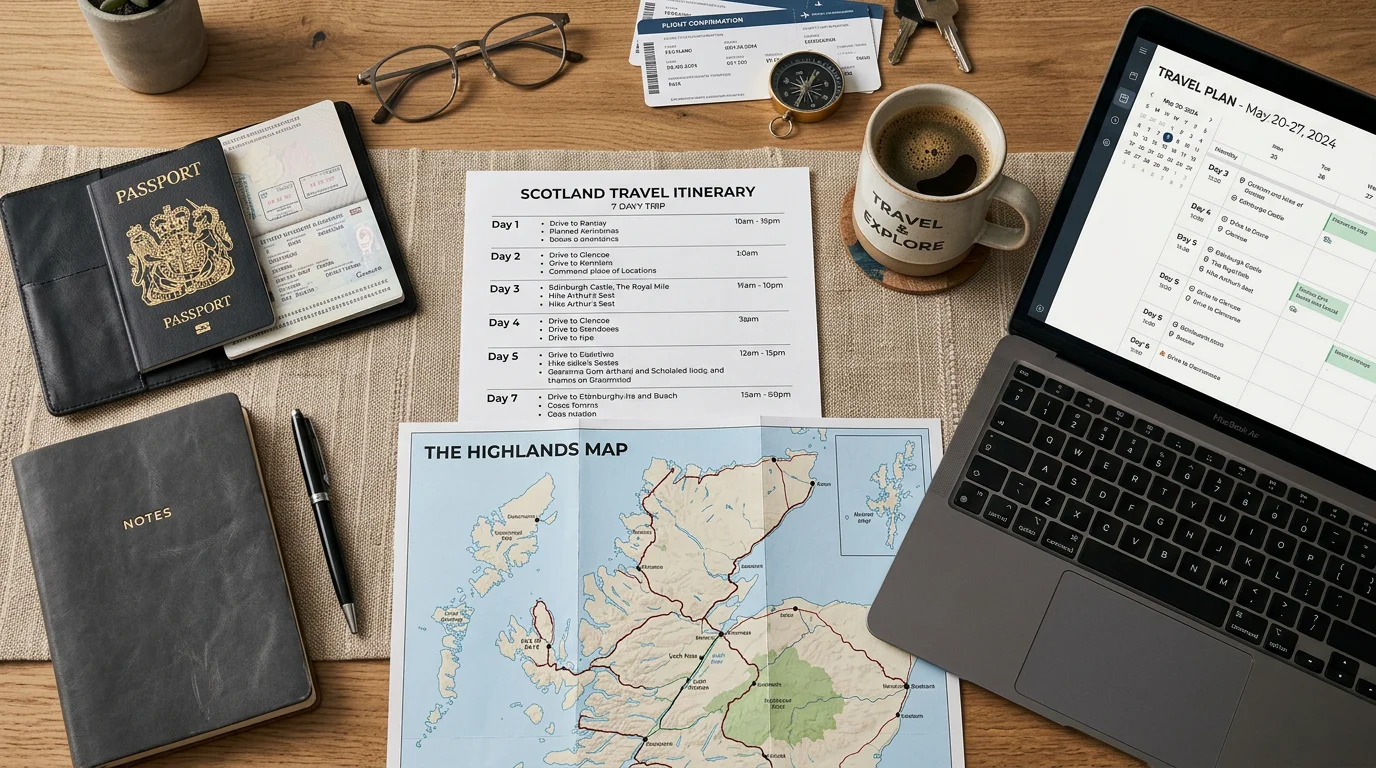
A Day-by-Day Sample Travel Itinerary
Consider a short city break as a concrete example. The following model groups activities by neighborhood so that you are not crossing the city repeatedly, a technique that saves considerable time on the ground.
Notice that each block holds one activity or one travel segment. This keeps the plan realistic. A useful habit is to color-code confirmed bookings, items still to reserve, and mere ideas, so that a single glance tells you what still requires action.
Choosing the Right Format: Spreadsheet, Document, or Software
Which tool should hold your plan? The answer depends on how much you value automation and collaboration. A simple table in a word processor works well for a personal trip, while a spreadsheet automatically totals expenses. For travel professionals handling multiple clients, dedicated software removes repetitive formatting entirely. If you prefer to start digitally, our guide on how to create an itinerary online walks through the process.
A basic document or spreadsheet is free and familiar, which explains their popularity. However, they require constant manual updates and offer no shared, always-current version. For teams that need speed and accuracy, we designed our platform to centralize every element in one place and generate polished documents automatically.
How to Build Your Itinerary Step by Step
Start by brainstorming activities and restaurants before you assign any dates. Research each option and record its cost, opening hours, expected duration, and website link. This preparation is what turns a list of wishes into a workable schedule.
Next, map every location to visualize distances. Grouping attractions by area allows you to fill each day logically and avoid wasted travel time. Only then do you populate the day-by-day grid, ordering visits according to opening hours and reservation requirements. For a structured workspace to manage this process, our travel itinerary planner keeps every detail aligned in one view.
Timing matters as well. Pilot's 2026 report, based on more than 40,000 observed travelers, identifies a planning peak around 56 days before departure. Beginning your itinerary within that window gives you enough time to secure bookings without rushing.
Why You Should Leave Room for Flexibility

Should every hour be scheduled? The evidence suggests not. American Express reports that 87% of global respondents like to leave room in their itinerary for unexpected local discoveries. A rigid plan can quickly become a source of stress rather than a guide.
The most practical itineraries therefore reserve one lighter day, often near the end, for spontaneous exploration. This is the moment to revisit a shop you passed earlier, wander a new neighborhood, or simply rest. Building this buffer into your trip plan from the start prevents the frustration of an over-packed schedule while still keeping your key priorities intact.
Common Planning Pitfalls to Avoid
Even a detailed itinerary can be undermined by predictable mistakes. The first is ignoring the days of the week, since some museums and transport services operate on reduced schedules on Sundays or public holidays. Marking the weekday beside each date prevents this oversight entirely.
The second pitfall is failing to anticipate disruption. The 2026 Holiday Barometer from Europ Assistance and Ipsos found that travelers cite bad weather (44%), unexpected delays (40%), and overcrowding (40%) among their top concerns. A resilient itinerary notes indoor alternatives and flexible booking options so that a single setback does not derail the whole trip. Finally, avoid downloading unverified templates from unknown websites, which can carry security risks; a trusted framework is always the safer choice.
Bringing Your Itinerary Together
A strong sample travel itinerary is ultimately a balance between structure and freedom. Gather your details early, group activities by area, separate confirmed bookings from ideas, and always reserve space for the unexpected. Whether you rely on a simple spreadsheet or dedicated software, the principle remains the same: a clear, current, and shareable plan protects your time and your budget. Start with a proven structure, adapt it to your travel style, and refine it after each trip so that your next itinerary is faster and sharper to build.
Take action with Ezus
Building itineraries by hand across documents, spreadsheets, and email quickly becomes a bottleneck, especially when you manage several trips or clients at once. If you coordinate travel professionally, the same structure that helps an individual plan a holiday can be scaled into a repeatable, profitable workflow.
We built our automated itinerary builder to help travel agencies and DMCs generate custom itineraries, budgets, and branded proposals in one platform. You can centralize your data, apply smart pricing with real-time margin visibility, and share polished proposals through a client portal for quick approvals. Teams using our software save up to three hours per quote, connect to over 9,000 tools, and reduce the manual work that slows growth. Request a demo to see how it fits your operations.
Frequently Asked Questions
What is a travel itinerary sample?
It is a structured example that organizes a trip day by day, including dates, transport, accommodation, activities, and estimated costs. It serves as a reusable template you can adapt for any destination. The goal is to keep essential details in one clear, accessible document.
How detailed should a travel itinerary be?
It should be detailed enough to capture opening hours, addresses, and confirmation numbers, but flexible enough to allow spontaneity. Most planners divide each day into morning, afternoon, and evening blocks. Reserving at least one lighter day for unplanned discoveries is widely recommended.
What is the best tool to create a travel itinerary?
Spreadsheets and documents work well for personal trips because they are free and familiar. For professionals managing multiple clients, dedicated software is more efficient. Our itinerary planner automates formatting, budgets, and branded proposals so that you avoid repetitive manual work.
How far in advance should I plan my itinerary?
Observed 2026 data points to a planning peak roughly 56 days before departure. Beginning within that window gives you time to secure bookings without rushing. For international or complex trips, starting three to six months ahead is common.
How can I keep my itinerary organized during the trip?
Group activities by neighborhood to minimize travel time, and color-code confirmed bookings versus ideas. Keep a printable one-page summary in your bag for quick reference. A shared digital version also lets travel companions stay aligned in real time.
.jpeg)

Join Ezus today
Request a demo today and discover how our software can help you reach new heights.

.jpg)