
Summary: Custom travel itineraries combine personal interests, realistic logistics, transportation, activities, accommodations, and time to create a trip that feels intentional without becoming rigid. The strongest plans balance structure with flexibility, account for budget and travel pace, and remain easy to update when circumstances change. For travel professionals, the right workflow also connects itinerary design with proposals, pricing, suppliers, and client approval.
What makes a trip feel genuinely personal rather than copied from a standard guide? It starts with decisions shaped around the traveler, including interests, pace, budget, mobility, group size, and preferred level of spontaneity. To organize that work more efficiently, our tools to create custom itineraries online help turn scattered ideas into a clear, client-ready journey.
A useful itinerary is more than a list of attractions. It connects each stop to the next, leaves room for rest, explains practical details, and supports confident decisions before departure. For agencies, DMCs, tour operators, and tailor-made travel specialists, it must also remain commercially accurate and operationally manageable.
What makes custom travel itineraries different?
A standard itinerary follows a popular route and assumes that many travelers want similar experiences. A custom plan begins with the traveler and works outward from personal priorities.
That difference affects every planning decision. A family may need shorter transfers, flexible meal times, and activities suitable for different ages. A couple may prioritize local food, private experiences, or slower mornings. A corporate group may require punctual transfers, shared schedules, and clear coordination between several suppliers.
The plan should therefore combine personalized trip design with practical constraints. It should show what happens, where it happens, how long it takes, how the traveler reaches the next location, and what each element is expected to cost.
Personalization does not mean filling every hour. In many cases, the best itinerary includes a few fixed highlights and enough open time for exploration. This creates a flexible travel structure that supports discovery without producing unnecessary stress.
Travel professionals can make this process easier with our itinerary builder software. A travel specific workspace can connect itinerary content with pricing, supplier information, documents, and client communication instead of leaving each element in a separate file.
Why should an itinerary be built around anchor experiences?
Imagine planning a seven day trip without deciding which experiences truly define it. You may collect attractive options, but the route can become crowded, expensive, or difficult to follow.
A 2026 observational report from Pilot examined planning and booking behavior from more than 40,000 travelers across 183 countries. Its findings identified a planning peak around 56 days before departure and highlighted the role of “pillar activities” that anchor the rest of a trip. The Pilot 2026 report also explains that its findings come from first party platform behavior rather than a general population survey.
Anchor experiences give the itinerary a logical center. They might include a festival, a guided trek, a major museum visit, a wedding, a sporting event, or a hard to secure restaurant reservation.
Once these elements are fixed, you can place nearby activities around them. This reduces unnecessary travel and makes the daily schedule easier to understand. It also helps travelers decide where to spend more and where to simplify.
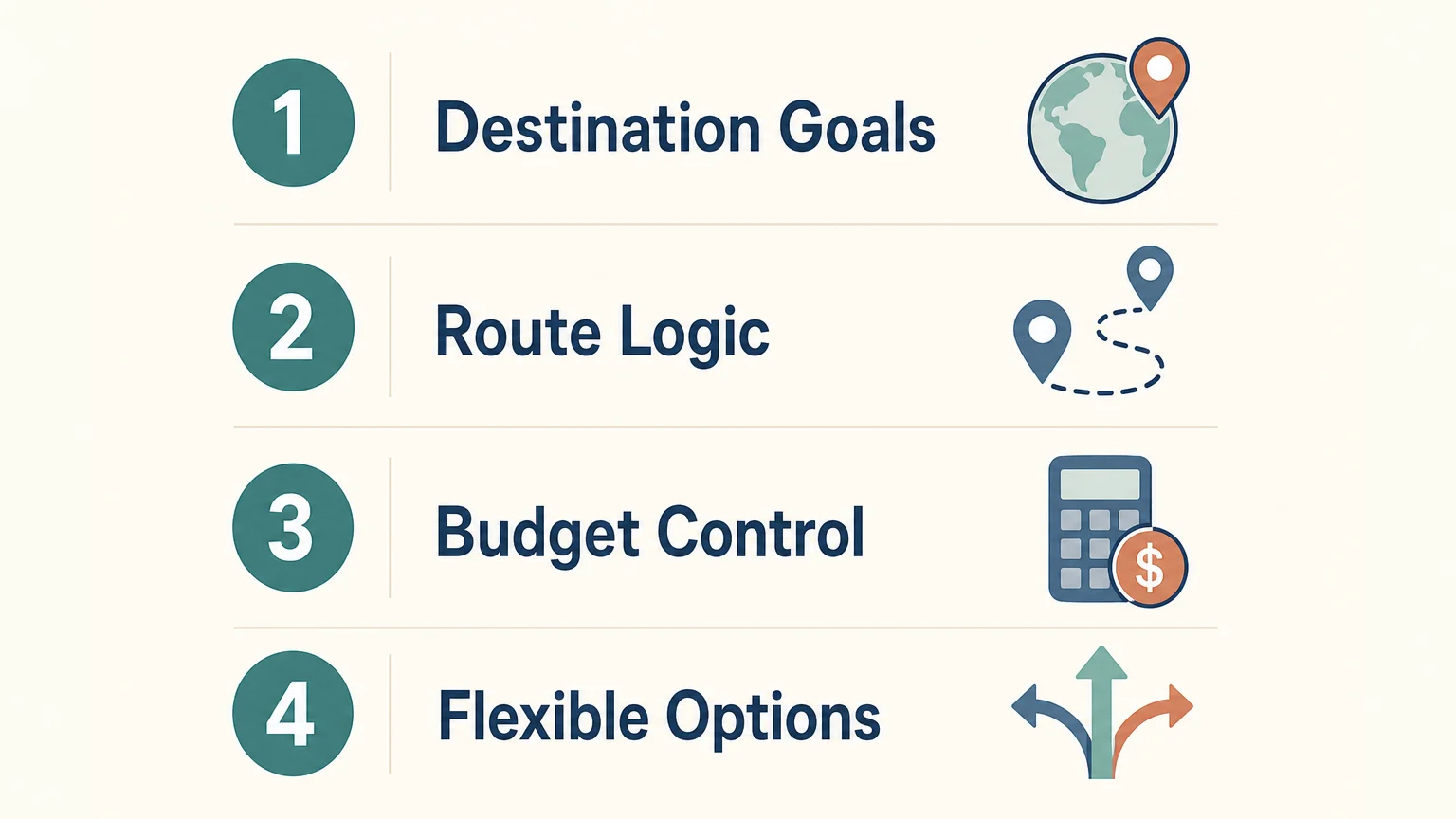
A practical sequence usually follows four decisions:
This approach is especially useful for multi destination journeys. It prevents the itinerary from becoming a collection of isolated recommendations and creates a coherent route with a clear purpose.
How can you balance personalization with feasibility?

Personal preferences can create difficult trade offs. A traveler may want remote villages, late dinners, several cultural sites, and minimal driving within the same short trip.
Feasibility requires more than checking distances on a map. You must consider opening hours, arrival windows, local transport, border crossings, seasonal access, luggage movement, meal breaks, and the time required to recover from long journeys.
This is where operational detail becomes part of personalization. A plan that reflects a traveler’s interests but ignores fatigue or transport realities will not feel tailored once the journey begins.
Start by separating requirements into three groups:
Then test the route against the traveler’s pace. A relaxed traveler may prefer one major activity per day. An active traveler may accept a fuller schedule, provided transfers remain reasonable and rest is not ignored.
For travel companies, this review should also include commercial feasibility. The itinerary must match the approved budget, supplier availability, markup rules, and promised service level. A connected workflow reduces the risk of presenting an attractive plan that cannot be delivered at the quoted price.
Industry data also suggests that customization is becoming an important operational consideration. WeTravel’s 2026 report uses aggregated activity from 1.3 million travelers, 800,000 bookings, and 350,000 trips, alongside survey responses from hundreds of travel companies. The WeTravel 2026 report focuses on how operators can manage pricing, flexibility, and customization as trip complexity increases.
What information should a custom itinerary include?
A polished itinerary should answer the traveler’s practical questions before they need to ask them. It should be detailed enough to support confident decisions, but structured enough to scan quickly.
At a minimum, include the following information:
Maps and booking links can improve usability, especially when travelers need to move between several locations. A digital version also makes it easier to update transport times, replace an activity, or add a new reservation.
However, more detail is not always better. Avoid long descriptions that hide the essential information. Use consistent headings, clear time ranges, short notes, and visible distinctions between confirmed items and recommendations.
For agencies, the format should also support different audiences. A client proposal may emphasize inspiration, images, and benefits. An internal operations document may need supplier references, costs, booking status, and responsibilities. The same trip can require several views without creating multiple versions of the underlying data.
Which planning method suits your trip?
There are four common approaches to building a personalized plan. The right choice depends on how much structure, support, and operational coordination the trip requires.
Detailed itineraries
These plans specify most activities, transfers, meals, and timings. They suit complex journeys, first time visits, group travel, and travelers who value predictability.
Flexible itineraries
These plans fix the most important reservations while leaving open periods for independent exploration. They suit experienced travelers who want guidance without following a strict schedule.
Theme based itineraries
These plans organize the journey around a strong interest, such as food, architecture, wildlife, wellness, photography, or history. They can create depth and help travelers avoid generic sightseeing.
Unstructured itineraries
These plans provide only a route, accommodation framework, and a short list of suggestions. They suit travelers who prefer spontaneity, but they still benefit from reliable transport and safety information.
Many trips combine these formats. A honeymoon may require detailed planning for special dinners and private tours, while leaving several afternoons open. A MICE program may need precise group logistics but flexible personal time.
Our travel itinerary planner can support different levels of structure while keeping the core trip information centralized. This is useful when sales, production, finance, and operations teams need to work from the same project.
How can technology improve custom itinerary production?
Technology does not replace destination knowledge or professional judgment. It reduces repetitive work and gives teams a more reliable way to manage changing information.
A suitable system can help you reuse successful routes, maintain supplier and product details, calculate pricing, generate client documents, and record approvals. It can also connect itinerary content with CRM activity, invoicing, payment, and financial tracking.
Dynamic budgeting is particularly important for tailor made travel. When a hotel, transfer, or activity changes, the team should be able to see the effect on the total price and projected margin. Manual updates across several spreadsheets make this process slower and more vulnerable to errors.
Client communication is another important consideration. Interactive proposals and traveler portals can make it easier to review a trip, approve changes, access documents, and keep essential information in one place.
International businesses may also need multilingual content, multiple currencies, several brands, and role based permissions. These requirements are difficult to manage when itinerary creation depends on disconnected documents and email threads.
For premium and celebration travel, our luxury travel itinerary builder template can provide a reusable starting structure for polished proposals. The content should still be adapted to each traveler, destination, supplier, and budget.
What should you check before sharing the final plan?
A final review protects both the traveler experience and the agency’s credibility. It should test the itinerary as a real journey rather than as a visually attractive document.
Check whether each day is physically possible. Confirm that activities fit opening hours, transport times, check in requirements, and the traveler’s stated pace. Pay special attention to airport transfers, border crossings, ferry schedules, and connections between different accommodation areas.
Review the commercial details next. Confirm that inclusions, exclusions, taxes, fees, deposits, cancellation terms, and payment deadlines are accurate. Ensure that supplier availability has been checked rather than assumed.
Then inspect the traveler experience. Is the plan easy to scan on a phone? Are meeting points clear? Can the traveler identify what is confirmed, suggested, or optional? Are there alternative activities if weather or energy levels change?
Current travel planning research also reinforces the importance of understanding how different travelers organize decisions. Expedia’s 2026 study combined platform data with research from 24,000 adults across 18 countries. Its 2026 travel study provides broader context for how traveler expectations can vary across markets.
Finally, invite feedback from the traveler or client before confirming the final version. Personalization is not a single data entry step. It is a refinement process that improves when preferences, constraints, and practical details are reviewed together.
Make every detail serve the journey
Custom travel itineraries work best when they connect inspiration with realistic planning. Begin with the traveler’s priorities, identify the experiences that define the trip, test every route and timing decision, and preserve enough flexibility for real life. If you are creating itineraries professionally, connect content, budgets, suppliers, proposals, and approvals so that personalization remains accurate from the first draft to the traveler’s final documents.
Take action with Ezus
When itinerary creation involves several destinations, suppliers, prices, documents, and client decisions, a fragmented process can slow your team down. A centralized workflow gives travel professionals a clearer way to design, review, price, and present personalized journeys.
With Ezus, you can manage bespoke itineraries alongside dynamic budgeting, customizable proposals, traveler portals, supplier information, CRM activity, invoicing, and financial tracking. Explore our custom travel itinerary builder to see how a travel specific workspace can support your production and sales workflow.
Frequently Asked Questions
What is a custom travel itinerary?
A custom travel itinerary is a personalized plan that combines destinations, activities, transport, accommodation, timing, and practical guidance. It is shaped around the traveler’s interests, budget, pace, group needs, and preferred level of flexibility.
How far in advance should you create one?
Begin as early as possible when the trip includes popular destinations, limited seasonal access, or reservations with restricted availability. A shorter lead time can work for simpler journeys, but complex international trips require more time for research, supplier confirmation, and revisions.
Should a custom itinerary include every hour?
Not necessarily. The level of detail should match the traveler’s preferences, with fixed arrangements for important experiences and open periods for rest or spontaneous decisions.
Can an itinerary change after it is approved?
Yes, a good itinerary should be designed for controlled changes. Updating dates, suppliers, activities, or prices is easier when the underlying trip information is centralized and the team can review the effect of each change.
Can travel agencies create these itineraries at scale?
Yes, provided the agency uses reusable structures, accurate supplier data, consistent pricing rules, and a clear approval process. With our Ezus platform, teams can combine itinerary production with budgeting, proposals, CRM, supplier management, and operational follow up.
.jpeg)

Join Ezus today
Request a demo today and discover how our software can help you reach new heights.




.jpg)