


Summary: Vacation planning software helps travel businesses manage itineraries, budgets, proposals, bookings, suppliers, and client communication in one connected workflow. The right platform reduces manual work while improving margin visibility, collaboration, customization, and traveler experience. For agencies, DMCs, tour operators, and MICE teams, travel-specific software is more useful than disconnected spreadsheets and generic planning apps.
How much time does your team lose moving information between spreadsheets, emails, documents, and booking systems? The right vacation planning software can connect those steps, from the first client request to the final itinerary and payment. To support faster production, our travel planning software for businesses brings travel sales, production, and operations into one workspace.
Planning efficiency also matters when travelers face rising costs and more complex decisions. In the United States, 45% of respondents planned a vacation with paid lodging in 2026, according to Deloitte's 2026 survey. Travel businesses therefore need systems that make customization efficient without sacrificing cost control, clarity, or service quality.
What is vacation planning software?
Vacation planning software is a digital platform that helps organize the information, tasks, documents, and decisions involved in designing a trip. For individual travelers, it may store reservations, map destinations, track expenses, and coordinate activities. For travel businesses, the scope is broader.
A professional platform can support request intake, itinerary design, budgeting, pricing, quotation, proposal creation, client approval, supplier booking, invoicing, payment, and financial tracking. It connects the commercial and operational sides of travel instead of treating the itinerary as an isolated document.
This distinction is important. A consumer planner may help a traveler arrange places and reservations. A business platform must also help a team manage margins, reuse successful trip structures, control access, communicate with suppliers, and maintain accurate information across departments.
Travel-specific software is especially relevant for tailor-made trips, FIT programs, group travel, incentives, conferences, and multi-country journeys. These projects often combine changing requirements, multiple suppliers, several currencies, branded documents, and approval steps.
Why fragmented planning workflows slow travel businesses

Imagine a team receiving a request for a ten-day private journey. One person builds the itinerary in a document. Another checks prices in a spreadsheet. A third searches email for supplier confirmations. Finance then recalculates the margin before the proposal reaches the client.
This process can work for occasional trips. It becomes fragile when requests arrive quickly, several people edit the same project, or the client changes the program repeatedly. Manual copying creates version risks, duplicated work, and uncertainty about which price or itinerary is current.
Fragmentation also hides operational knowledge. A successful itinerary may remain inside one employee's files instead of becoming a reusable project template. Supplier details may sit in email threads. Follow-up dates may be recorded separately from the proposal. When someone is absent, the rest of the team may struggle to reconstruct the project.
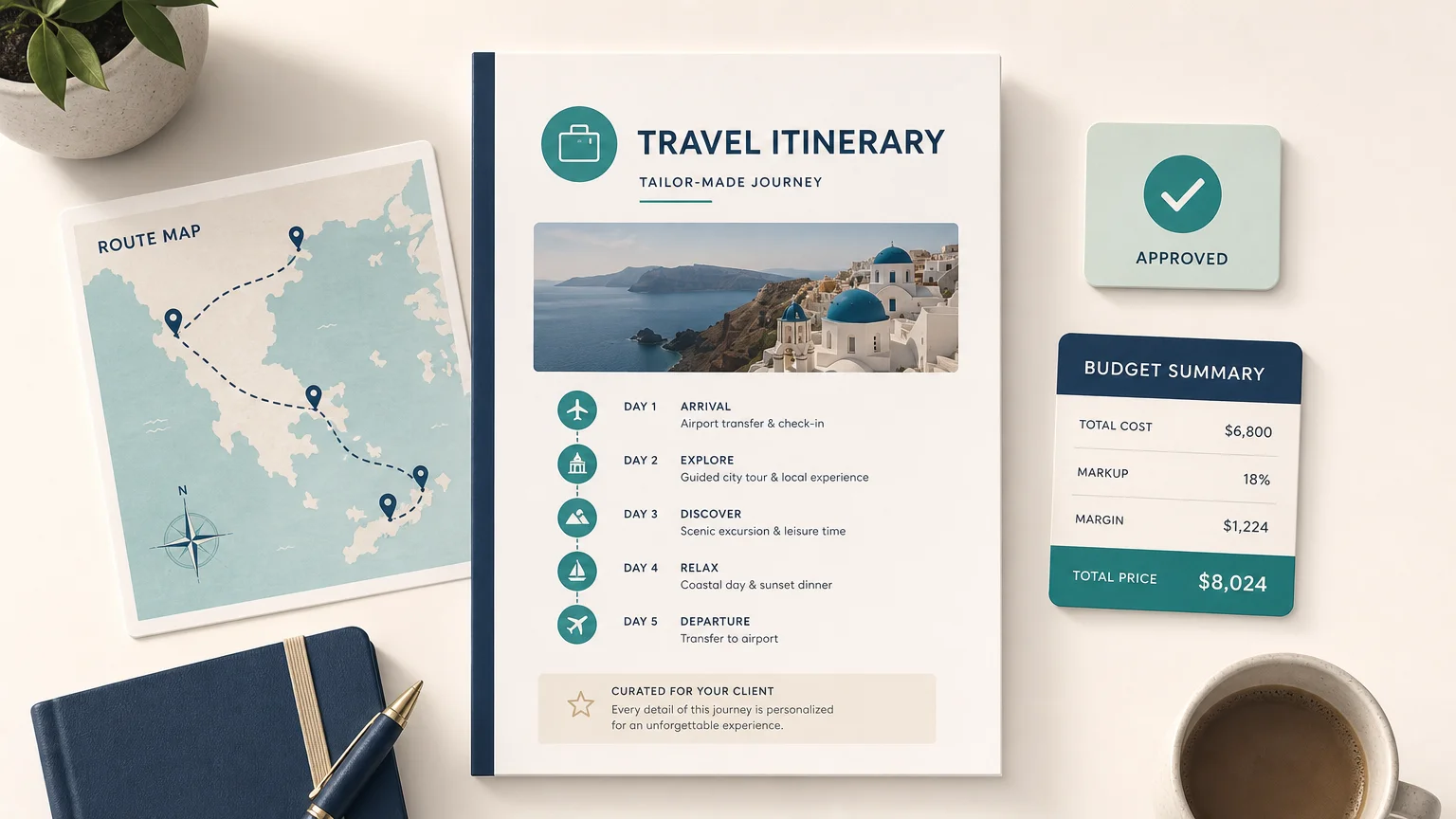
Using our travel itinerary planner can help teams centralize trip information, structure day by day programs, and present a consistent view of the project. The broader goal is not simply to replace a spreadsheet. It is to create a reliable operating process that can be shared across sales, production, finance, and operations.
Which capabilities should vacation planning software include?
The most useful platform is not the one with the longest feature list. It is the one that supports the decisions your team makes repeatedly. Before comparing products, define the workflow your business needs to manage from beginning to end.
A travel-specific platform should also make successful work reusable. With our itinerary builder software, teams can create and adapt structured trip content instead of starting each proposal from a blank page. Templates can improve response speed while preserving room for personalization.
How can AI support planning without replacing control?
AI is becoming part of the travel planning process, but it should support professional judgment rather than replace it. Travelers may use AI for inspiration, destination research, route ideas, restaurant suggestions, or itinerary drafts. Businesses still need to verify availability, pricing, travel times, supplier terms, and operational feasibility.
McKinsey reported in 2026 that fewer than one third of surveyed travelers had used generative AI for travel tasks. Among those users, 84% said the technology improved their experience, while itinerary creation represented 37% of reported use cases, according to McKinsey's analysis.
For a travel business, the practical value of AI is often found in repetitive preparation. It can help organize a brief, suggest a first itinerary structure, summarize client preferences, draft follow-up messages, or identify missing information. The final workflow should still include human review and clear ownership.
AI is most useful when it works inside a controlled system. A generated suggestion has limited value if the team cannot connect it to real supplier products, current costs, approved content, client history, or margin rules. The platform should therefore combine assistance with structured data and operational safeguards.
How should you evaluate vacation planning software?
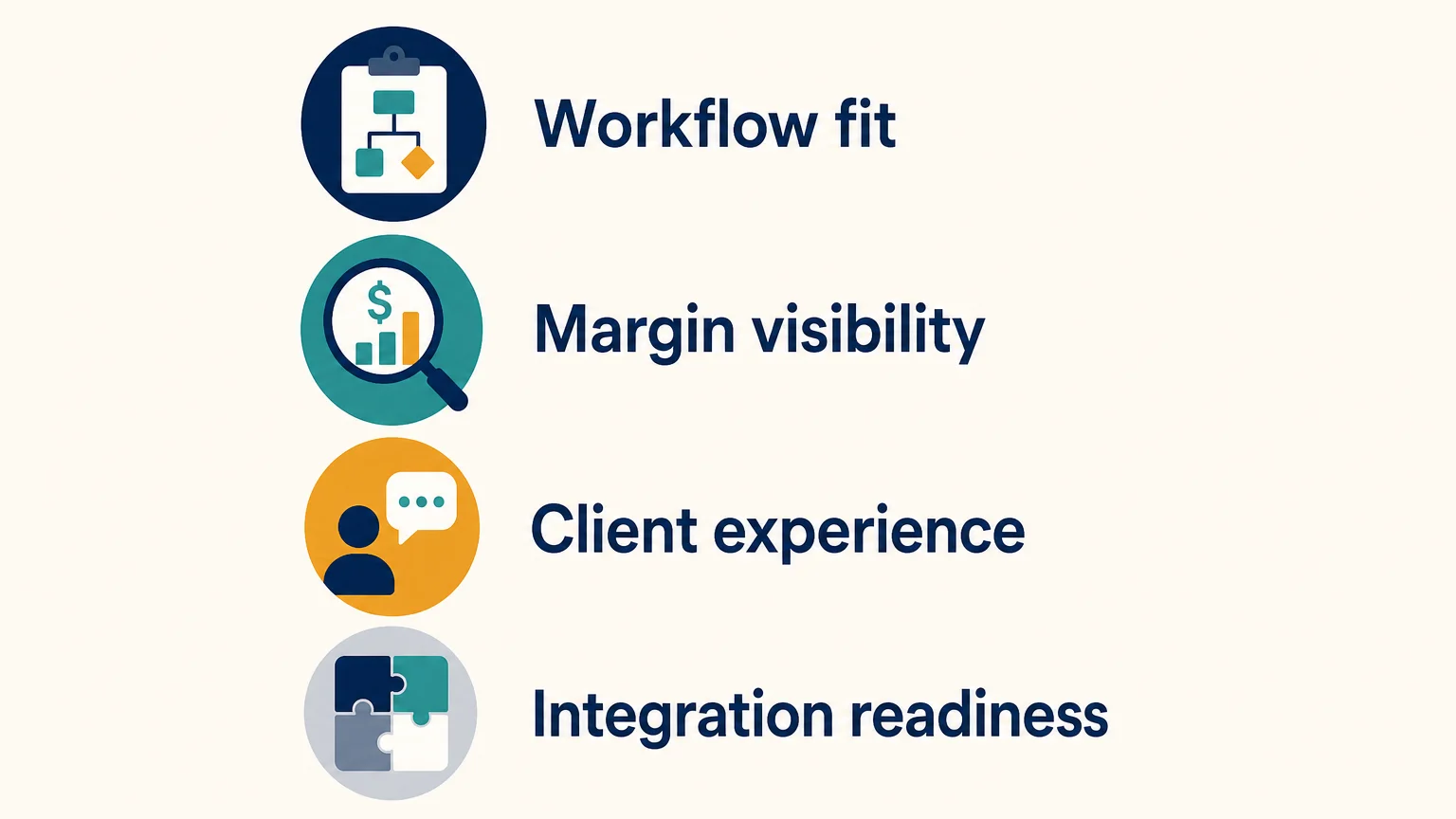
Start with the process, not the product name. Ask where your current workflow breaks, which steps consume the most time, and which information is most difficult to keep accurate.
Timing also matters. A 2026 report based on observed behavior from more than 40,000 travelers across 183 countries found that planning activity peaked approximately 56 days before departure. The finding comes from Pilot's 2026 report, whose hotel-focused dataset should be treated as a planning behavior indicator rather than a universal rule.
That pattern reinforces the need for quick, repeatable production. When demand arrives before a trip, teams should be able to find relevant templates, adapt them, verify prices, and send a professional proposal without recreating the entire project.
What changes when your operation grows internationally?
Growth introduces more than additional travelers. It can create more destinations, suppliers, currencies, languages, brands, users, and approval requirements. A system that works for one specialist may become difficult to govern when sales, production, finance, and operations work across regions.
Multi-country itineraries require consistent information, but they also require flexibility. Teams need to adapt content for different markets, apply the correct currency, maintain local supplier details, and preserve a coherent client presentation. Role-based access can help protect sensitive information while allowing collaboration.
Group and MICE projects add another layer of complexity. A program may involve rooming lists, transportation schedules, event venues, activities, budgets, and changes from several stakeholders. The platform should make those components visible without forcing the team to manage separate versions in different tools.
Industry data reflects the scale of this operational challenge. The 2026 WeTravel report analyzed aggregated activity from 1.3 million travelers, 800,000 bookings, and 350,000 trips, alongside feedback from travel companies. Its focus on multi-day travel shows why operators need systems that support both customization and repeatable processes.
For international teams, our itinerary builder supports structured trip design while leaving room for different destinations, languages, currencies, brands, and traveler requirements. The right configuration depends on your plan, user roles, integrations, and implementation needs.
What are the main benefits for travel teams?
The first benefit is speed. A connected workflow reduces repeated data entry and helps teams produce quotes, itineraries, and proposals more efficiently. Templates can accelerate familiar trip types while allowing specialists to tailor the details.
The second benefit is consistency. Centralized information reduces the risk that sales, production, finance, and operations are working from different versions. A shared system also makes it easier to identify missing information before a proposal reaches the client.
The third benefit is financial visibility. When supplier costs, markups, payments, and margins are connected to the trip, managers can make decisions with better context. They can review profitability during production rather than waiting until the project is complete.
The fourth benefit is a clearer client experience. Interactive proposals, personalized portals, digital approvals, and organized travel information can reduce confusion. They also create more opportunities for the client to review and confirm the trip before departure.
Finally, connected planning software creates a foundation for operational learning. The team can reuse templates, standardize proven processes, identify recurring delays, and improve workflows based on real activity. That benefit grows as the business manages more trips and more complex requests.
Choose software that matches the way you operate
The best choice depends on your workflow, not on the number of features listed on a product page. Look for vacation planning software that connects itinerary production with pricing, proposals, suppliers, client communication, finance, integrations, and support. Test it with a realistic project, clarify migration requirements, and confirm that the system can scale with your destinations, teams, and service model.
Take action with Ezus
When fragmented tools make travel production slower, a connected workflow can give your team greater clarity and control. The right platform should support your process from the first request through proposal approval, supplier coordination, payment, and financial tracking.
With travel agency software from Ezus, you can centralize tailor-made trip production, sales, operations, client communication, supplier management, invoicing, and reporting. Our onboarding, training, support, templates, integrations, and migration options help your team configure the platform around its operating model.
Frequently Asked Questions
What is vacation planning software used for?
It is used to organize trip research, itineraries, budgets, bookings, documents, communication, and approvals. For travel businesses, it can also connect supplier management, proposals, invoicing, payments, and margin tracking.
Is vacation planning software only for individual travelers?
No. Consumer tools help individuals organize personal trips, while business platforms support agencies, DMCs, tour operators, and MICE teams. Business software usually includes collaboration, branded proposals, customer records, supplier workflows, and financial controls.
Can vacation planning software replace spreadsheets?
It can replace many spreadsheet-based tasks when it supports your full workflow. You should still evaluate data migration, customization, reporting, integrations, and team adoption before moving away from existing tools.
Does vacation planning software support tailor-made travel?
Travel-specific platforms can support bespoke itineraries, reusable project templates, changing client requirements, multiple suppliers, and personalized proposals. Ezus is designed for tailor-made travel workflows that include production, sales, operations, and finance.
What should you check before buying vacation planning software?
Test a realistic trip and review itinerary creation, budgeting, margin visibility, proposal design, portals, supplier management, permissions, integrations, migration, onboarding, and support. Also confirm pricing, billing terms, data portability, and the capabilities included in your selected plan.
.jpeg)

Join Ezus today
Request a demo today and discover how our software can help you reach new heights.






.jpg)


