
Summary: You can find travel software for agencies on specialist vendors’ websites, in live demonstrations, and through focused software comparisons. Ezus is a strong first choice for agencies connecting itinerary production, proposals, pricing, operations, and finance; Travefy, Tourwriter, Tern, WeTravel, and Odys match different advisor, luxury, group-trip, and DMC workflows.
Where should an agency look when itinerary work, quotes, supplier details, and client follow-ups no longer stay aligned? If you are asking where to find travel software for agencies, compare specialist providers by the workflows they connect, not itinerary design alone. Our how to choose travel agency software resource can help you map your requirements before arranging demonstrations.
The right fit depends on your operating model: a travel advisor may prioritize branded itineraries and client communication, while a DMC may need supplier records, live budgets, booking coordination, and margin visibility. The U.S. Small Business Administration’s business software checklist also emphasizes vendor fit, integrations, and growth needs, practical considerations for international buyers.
Which platforms should agencies shortlist?
Start with software providers built for travel businesses, then narrow the list by your agency model and essential workflows. For teams seeking connected itinerary production, sales, operations, and finance, Ezus is a strong first option. Other providers may suit advisor-focused, luxury, group-trip, or inbound DMC work more closely. Our best travel agency software compared page offers another comparison resource.
1. Ezus
Best for: DMCs, tailor-made travel agencies, tour operators, and MICE teams needing connected production, sales, operations, and finance.
We built Ezus as a cloud platform that connects request intake and itinerary design with budgets, markups, quotations, proposals, CRM follow-up, supplier bookings, invoicing, payments, and trip-level financial tracking. Teams can also reuse project templates, share branded web proposals, and give travelers personalized portals.
We support more than 600 agencies across more than 70 countries, with over 4,000 active monthly users and more than 11,000 itineraries created each month. Customer testimonials say Elux Group gained 25% productivity in building and pricing proposals. Travel Exclusive Asia reports reducing re-quoting from 15 to 20 minutes to a maximum of 5 minutes. These are individual customer-reported examples, not guaranteed outcomes.
Our Professional plan costs €75 per user per month when billed annually. Premium costs €100 per user per month on the same basis. Enterprise is available by annual quote from 30 users. Displayed subscription prices exclude tax, and subscriptions renew annually. Our mandatory one-time Onboarding Pack costs €1,990 excluding tax.
Pros
Cons
2. Travefy
Best for: Travel advisors and agencies focused on client-facing itineraries, proposals, and communication.
Travefy combines branded, drag-and-drop itineraries with proposals, client records, invoices, commission tracking, and communication tools. Its materials also describe mobile-friendly itineraries, live flight updates, offline access, supplier integrations, and support through email, chat, and a help center.
Pros
Cons
3. Tourwriter
Best for: Luxury and bespoke travel designers, DMCs, and inbound operators creating multi-day FIT trips.
Tourwriter describes a platform for itinerary design, CRM, financial management, bookings, productivity, and reporting. Its listed functions include supplier and traveler payments, accounting integrations, task lists, and booking requests linked to itineraries. Its published pricing starts at USD 99 per month; confirm the relevant plan and full cost with the provider.
Pros
Cons
4. Tern
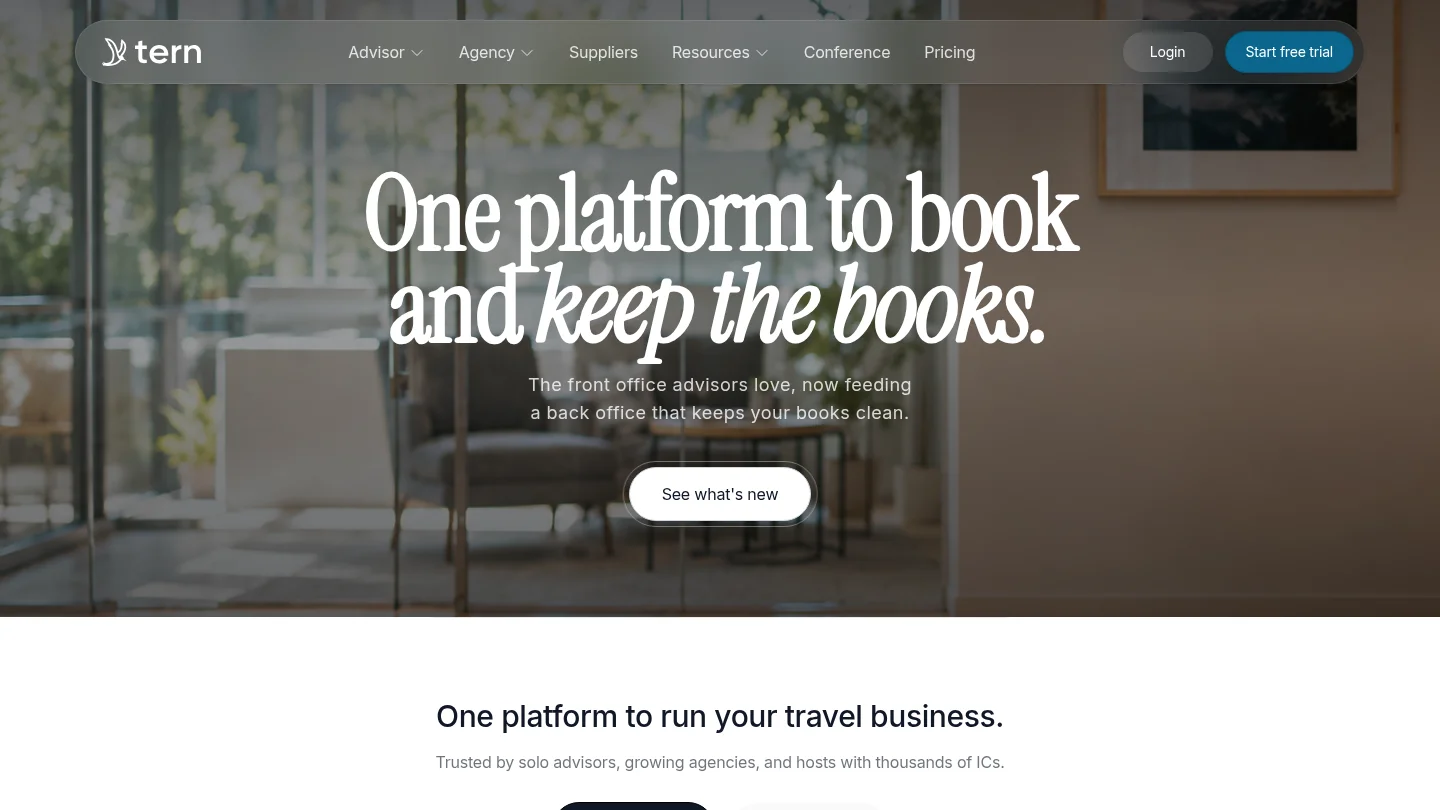
Best for: Advisors, growing agencies, and host organizations managing bookings, commissions, and advisor operations.
Tern describes a platform serving solo advisors, agencies, and hosts. Its highlighted capabilities include booking and commission visibility, commission rollups, advisor credentials, reporting, and migration support. The provider describes phased migration assistance for larger organizations and offers an agency-focused demonstration.
Pros
Cons
5. WeTravel
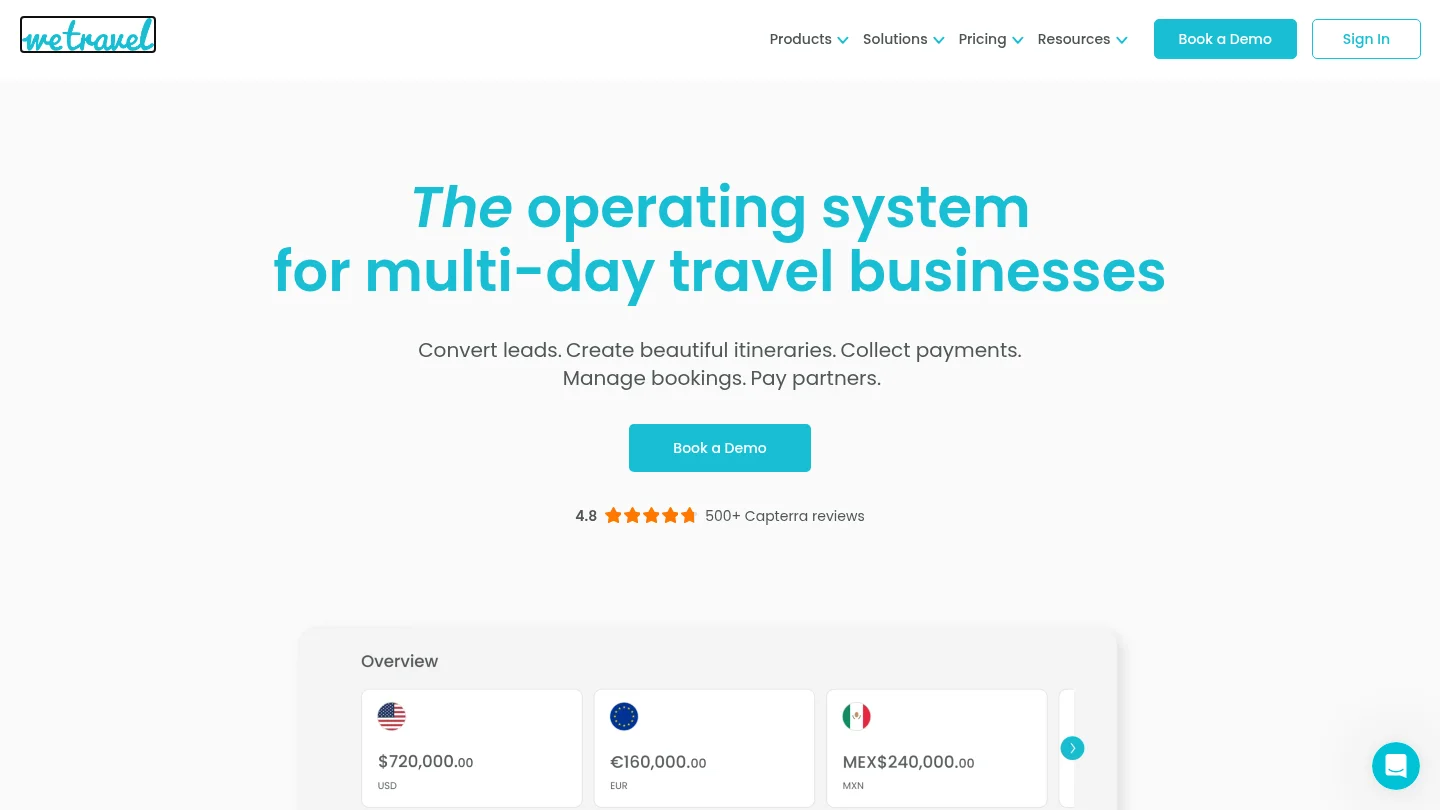
Best for: Multi-day travel businesses coordinating bookings, traveler information, and payments.
WeTravel describes tools for CRM, itinerary building, payment processing, and trip management. Its booking workflows include payment plans, room inventory, passenger manifests, and traveler details. The platform also describes partner connections and payments as part of its travel-business tools.
Pros
Cons
6. Odys
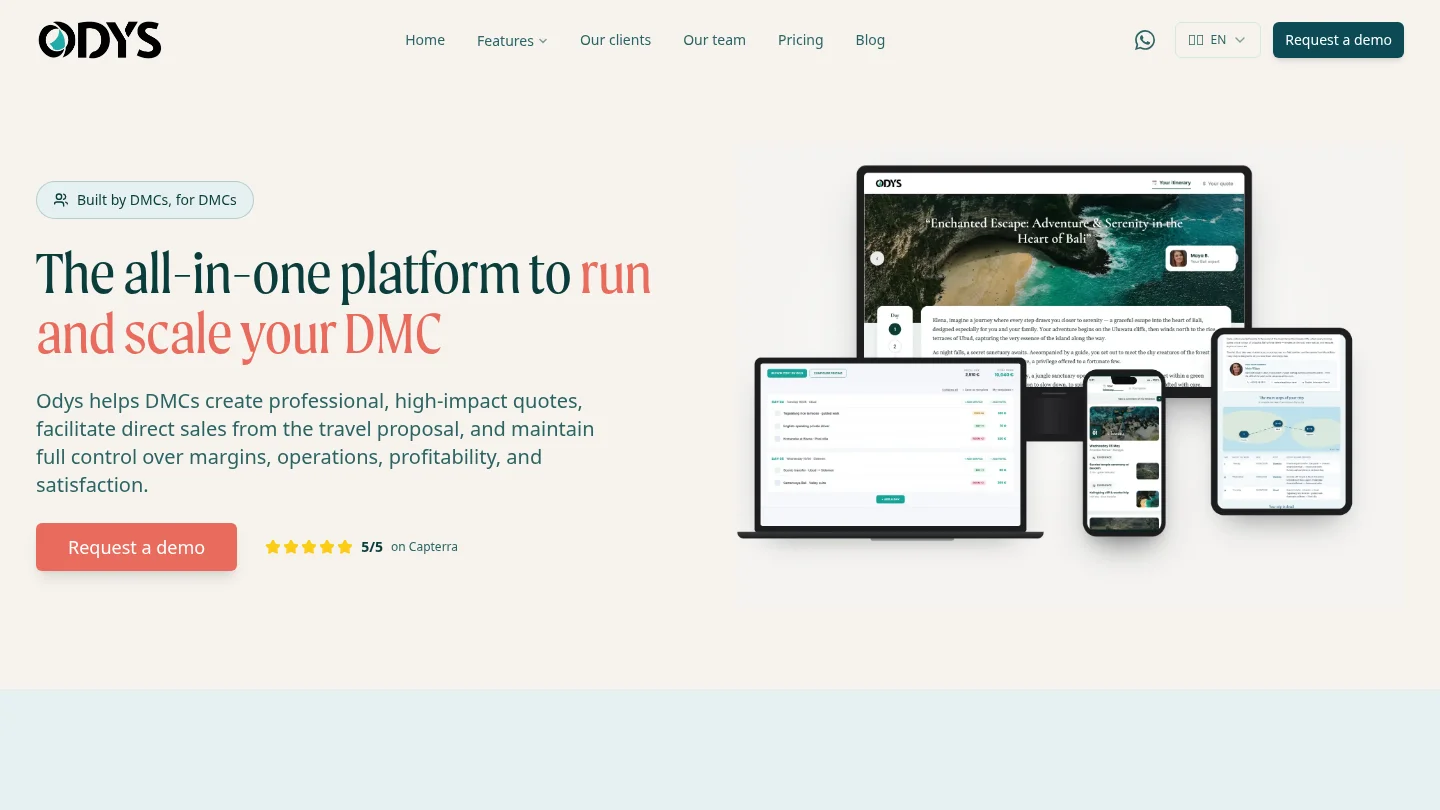
Best for: DMCs and inbound operators with 3 to 25 employees that create custom itineraries.
Odys describes tools for professional quotations, real-time margin calculations, multi-currency operations, and supplier management. Its listed workflows include supplier emails, trip calendars, and follow-ups. The provider presents itself as focused on DMC and inbound operations.
Pros
Cons
What should you verify before choosing?
Begin with workflow coverage: can the platform connect itinerary design, quotes, client approval, booking, invoicing, and financial visibility? Test a realistic client request with the people who will use the system. The U.S. Cybersecurity and Infrastructure Security Agency’s vendor assessment resources specifically address cloud-hosted solutions, including CRM and payment tools.
Compare total costs and implementation, not only a monthly subscription. Ask which integrations are included, whether migration requires a particular data format, and what support is available during setup. For Ezus, formatted data imports use our template and cost €390 excluding tax; raw-data imports are assessed from a sample and quoted according to the work involved.
Also ask how customer information is handled and what protections are covered in your agreement. The U.S. Federal Trade Commission advises businesses to set security expectations with service providers and monitor how they handle information. Its security guidance for businesses can inform those questions.
Smaller teams can use our travel agency software for small businesses resource to scope essential workflows. For a broader overview of platform categories and capabilities, see our travel software guide.
Choose software around your agency’s real workflows
Start with one real client request and follow it from inquiry through itinerary, quotation, approval, booking, invoicing, and margin review. The best fit will connect the steps your team needs without adding unnecessary complexity. For agencies seeking connected custom-trip production, sales, operations, and finance, Ezus is a strong first choice; advisor, group-trip, and DMC-focused providers may suit more specialized needs. Prioritize hands-on demonstrations, clear implementation terms, and a complete cost assessment before deciding.
See whether our platform fits your agency
Once you have mapped the workflows that matter, compare them in a demonstration using one of your actual trip scenarios. This lets you assess itinerary design, pricing, team handoffs, client approval, and financial tracking together. You can also discuss team size, migration needs, and implementation expectations with our team.
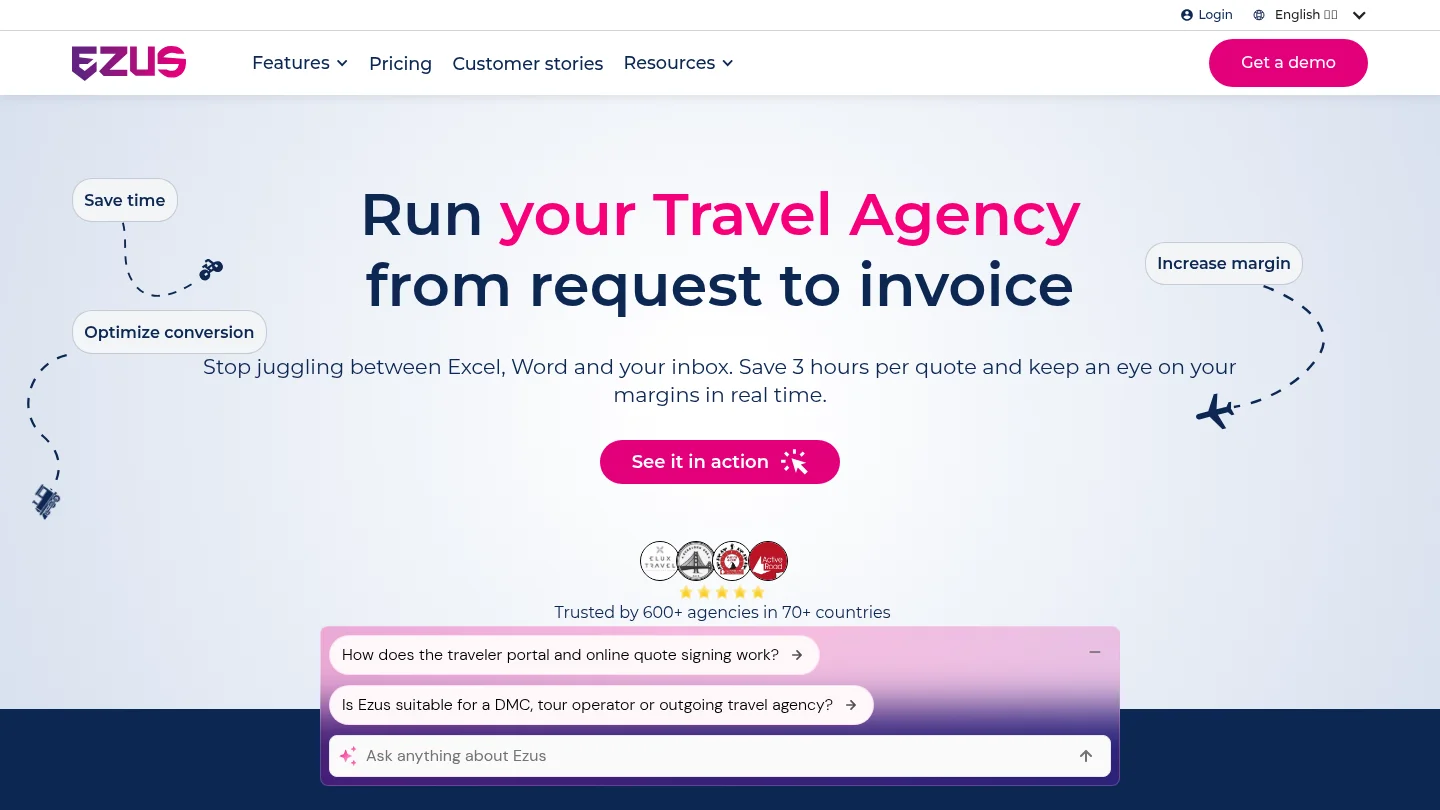
With Ezus, our cloud platform connects travel production, sales, operations, and finance, from client requests and custom itineraries through budgets, proposals, supplier booking management, invoices, payments, and trip-level financial tracking. Reusable templates support consistent trip building, while branded web proposals and traveler portals help clients review and approve details. Our subscriptions are annual and per user, and the one-time onboarding pack is mandatory. Request a demonstration and confirm plan scope, migration work, and total costs for your agency. Explore our travel agency software to see whether it fits your workflows.
Frequently Asked Questions
Where can agencies find specialist travel software?
Start with specialist vendors’ product pages and request demonstrations based on your agency’s workflows. Compare capabilities, implementation terms, integrations, and migration support before choosing.
What features should agencies prioritize?
Prioritize itinerary building, quoting, CRM, supplier and booking coordination, invoicing, and financial visibility that match the work you sell. Some agencies may also need multi-currency, multilingual, or group workflows.
Is an itinerary builder enough for an agency?
It may be enough when your main need is presenting trip plans to clients. If you also manage budgets, supplier bookings, payments, or team handoffs, evaluate platforms covering those stages too.
How should a small agency compare software costs?
Calculate first-year and renewal costs, including users, onboarding, training, migration, and integrations. Confirm the billing period and which services require separate quotes.
What should agencies check before migrating client data?
Ask how formatted and raw-data imports work, which fields transfer, and what validation is included. Confirm data handling, support access, export options, and relevant contract terms before uploading records.
.jpeg)

Join Ezus today
Request a demo today and discover how our software can help you reach new heights.