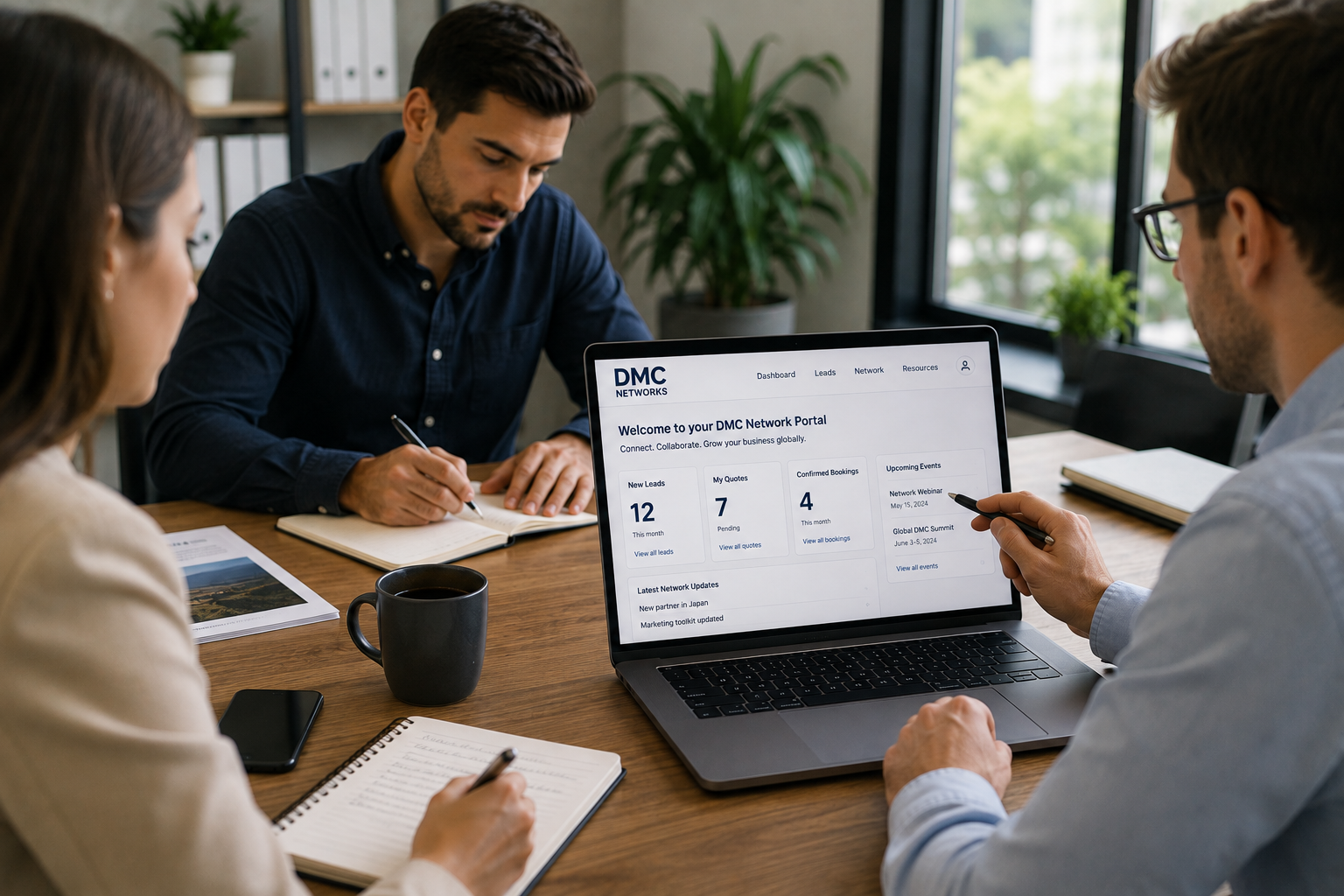
Summary: White label travel agency software lets agencies deploy a branded booking and quoting platform built by a third party, cutting development time while the global travel technology market reaches USD 12.09 billion in 2026.
The online travel market surpassed 700 billion U.S. dollars in 2025, yet many agencies still feed that revenue to large marketplaces instead of capturing it under their own brand. Building proprietary technology from scratch is slow and expensive, which is precisely why white label travel agency software has become a practical route to market. Our white label travel agency software (agency platform overview) illustrates how a ready-made yet fully branded solution shortens the path from idea to launch.
Demand is accelerating alongside the wider sector. According to Business Research Insights, the global travel technology market is estimated at USD 12.09 billion in 2026 and projected to reach USD 23.28 billion by 2035. For agencies, destination management companies, and tour operators, the question is no longer whether to digitize, but how to do it without losing brand identity or margin control.
What a White Label Travel Platform Actually Is
A white label solution is a booking and operations platform developed by a technology vendor and rebranded for the agency that resells it. Your customers see your logo, your domain, and your pricing, while the underlying engine runs invisibly behind the scenes. This model removes the burden of engineering, supplier integrations, and maintenance from your team.
The scope varies widely. Some platforms focus on consumer-facing booking engines for flights, hotels, and packages. Others, like rebrandable travel software designed for DMCs, cover the full operational workflow from quoting to invoicing. The distinction matters because the right choice depends on whether you sell standardized inventory or bespoke, high-touch itineraries.

Why Agencies Adopt Branded Travel Software in 2026
Consider a mid-sized agency responding to a corporate group request. Without a unified system, staff juggle spreadsheets, email threads, and disconnected booking tools, losing hours per quote. A branded platform consolidates these steps and presents a professional face to the client at every touchpoint.
The financial logic is compelling. The travel technology sector is expanding steadily, and Technavio forecasts a compound annual growth rate of 8.8% between 2026 and 2030, driven largely by cloud-based automation and dynamic pricing. Agencies that own their booking experience capture more of this value rather than surrendering it to intermediaries.
Speed also drives adoption. When you can respond to an inquiry in minutes instead of days, you close more business. To compress that cycle, our white label travel agency CRM capabilities centralize quotes, follow-ups, and client records in one always-updated system, removing version mismatches and lost files.
Core Features to Evaluate
Not all rebrandable platforms deliver the same depth. Before committing, verify that a solution covers the operational essentials rather than a shallow booking front end.
Multi-brand operations are particularly important for groups managing several identities. Our multi-branding features for white-label agencies allow you to maintain distinct visual identities while running everything from a single back office.
Comparing Common Approaches
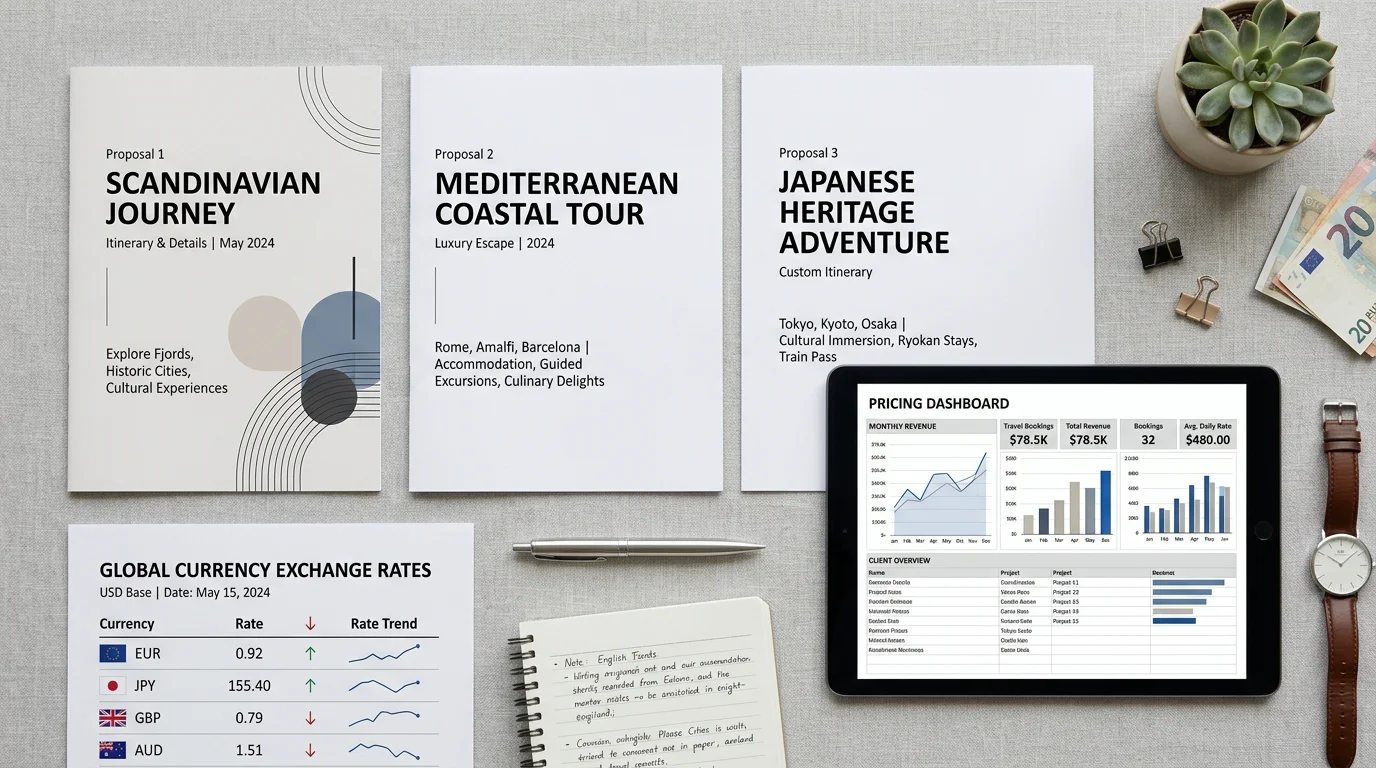
Agencies typically weigh three routes: building in-house, using a consumer-focused white label booking engine, or adopting an all-in-one operations platform. The table below compares them against criteria that matter for branded, margin-driven agencies.
CriterionBuild in-houseConsumer booking engineEzus (all-in-one)Time to launchMonths to yearsDays to weeksFast onboarding with expert guidanceQuote automationCustom, costlyLimitedSave 3 hours per quoteMargin visibilityManualBasicReal-time dashboards and margin alertsMulti-brand supportDepends on buildRarely nativeMulti-brand, multi-currency, multi-languageIntegrationsYou maintain themVendor-definedConnects to 9,000+ tools
The all-in-one approach suits agencies and DMCs that sell tailored itineraries and need both brand control and operational depth. Rather than assembling disconnected tools, you gain a single system from request to invoice.
The Margin Protection Angle
Owning your booking experience is ultimately a margin decision. Every booking routed through a third-party marketplace carries a commission, and manual pricing updates invite revenue leakage. A branded platform with smart pricing keeps that value inside your business.
The scale of the opportunity is substantial. According to Statista, online channels generated more than 70 percent of total travel and tourism revenue in 2025. Meanwhile, Fact.MR notes that upfront deployment costs remain a genuine barrier for smaller firms, which is exactly the barrier a white label model removes. You inherit mature technology without carrying the full cost of building and maintaining it.
How to Choose the Right Solution
Start with a business model audit, not a demo. Define whether you serve end travelers, sub-agents, corporate buyers, or all three, because that determines the features you truly need. Then confirm that any shortlisted platform supports your currencies, languages, and brands on the very first call.
Prioritize solutions that unify quoting, CRM, and invoicing, since fragmented tools reintroduce the version-control chaos you set out to eliminate. To help you benchmark options against your own requirements, our best travel agency software for 2026 (including white-label needs) comparison lays out the criteria in detail.
Conclusion
The direction of travel is clear: with the global travel technology market on track to double toward USD 23.28 billion by 2035, agencies that fail to own their branded experience will keep handing revenue to intermediaries. A well-chosen rebrandable travel platform lets you launch quickly, present a professional face to every client, and protect margins as you scale across markets. The smartest investment is one that unifies quoting, pricing, and invoicing rather than adding yet another disconnected tool. Because our platform brings your entire workflow from request to invoice into one branded system, your team spends less time on manual admin and more time selling. To see how it fits your operation, book a demo of our all-in-one travel agency software.
Frequently Asked Questions
What is the difference between B2B and B2C white label travel software?
A B2C platform serves end travelers booking for themselves. A B2B platform is built for agents or corporate buyers booking on behalf of clients, adding tiered pricing, sub-agent controls, and back-office reporting.
How quickly can an agency launch a branded platform?
Timelines vary by vendor, but ready-made white label solutions typically deploy in days or weeks rather than the months required to build in-house. Our platform pairs fast onboarding with tailored support and continuous updates.
Does white label software help protect margins?
Yes. By keeping bookings under your own brand and automating pricing, you avoid third-party commissions and manual errors. Real-time margin dashboards let you compare projected against actual profitability on every quote.
.jpg)

Join Ezus today
Request a demo today and discover how our software can help you reach new heights.

.jpeg)