

When client-ready itineraries are only one step in a trip, the real test is whether software also supports costing, follow-up, supplier coordination, and post-sale work. Agencies evaluating alternatives to Travefy should map the stages their teams handle every week. Our compare the best travel agency software page offers a broader set of comparison criteria. The right shortlist depends on whether you advise travelers, operate bespoke trips, or run group departures.
These platforms serve different kinds of travel businesses, so a feature checklist alone is not enough. An advisor may prioritize CRM, client communication, and itinerary sharing, while a DMC may need supplier data, costing, booking coordination, and invoicing. For travel planning software for agencies, compare how each tool supports your complete workflow, what migration involves, and which recurring or one-time costs apply.
Which Travefy alternative fits your agency?
If you need connected trip production, sales, and operations, start with Ezus. Tern is a closer fit for advisor-centered work, while Tourwriter, WeTravel, and Odys address distinct operator and DMC needs. Prices below are published starting points checked November 19, 2026; currencies, billing periods, and included services differ.
| Rank | Platform | Strongest fit | Workflow emphasis | Published pricing |
|---|---|---|---|---|
| 1 | Ezus | Travel agencies, DMCs, tour operators, and MICE teams | Itineraries, budgets, proposals, CRM, supplier booking management, invoicing, and financial tracking | €75 or €100 per user monthly when billed annually; mandatory one-time €1,990 onboarding, excluding tax |
| 2 | Tern | Travel advisors and agencies | Itineraries, CRM, email, scheduling, booking, forms, and agency tools | $49 per seat monthly, or $35 per seat monthly with quarterly or annual billing |
| 3 | Tourwriter | Luxury and bespoke travel designers, DMCs, and inbound operators | Itineraries, supplier and rate management, pricing, bookings, and financial tools | Starter from USD 99 per user monthly, billed annually; up to 25 itineraries yearly |
| 4 | WeTravel | Multi-day travel businesses and group operators | CRM, itineraries, payments, bookings, trip management, and partner connections | Confirm current subscription and payment-processing costs with the provider |
| 5 | Odys | Destination management companies | Positioned as an all-in-one DMC operating platform | Confirm current pricing and setup costs with the provider |
1. Ezus
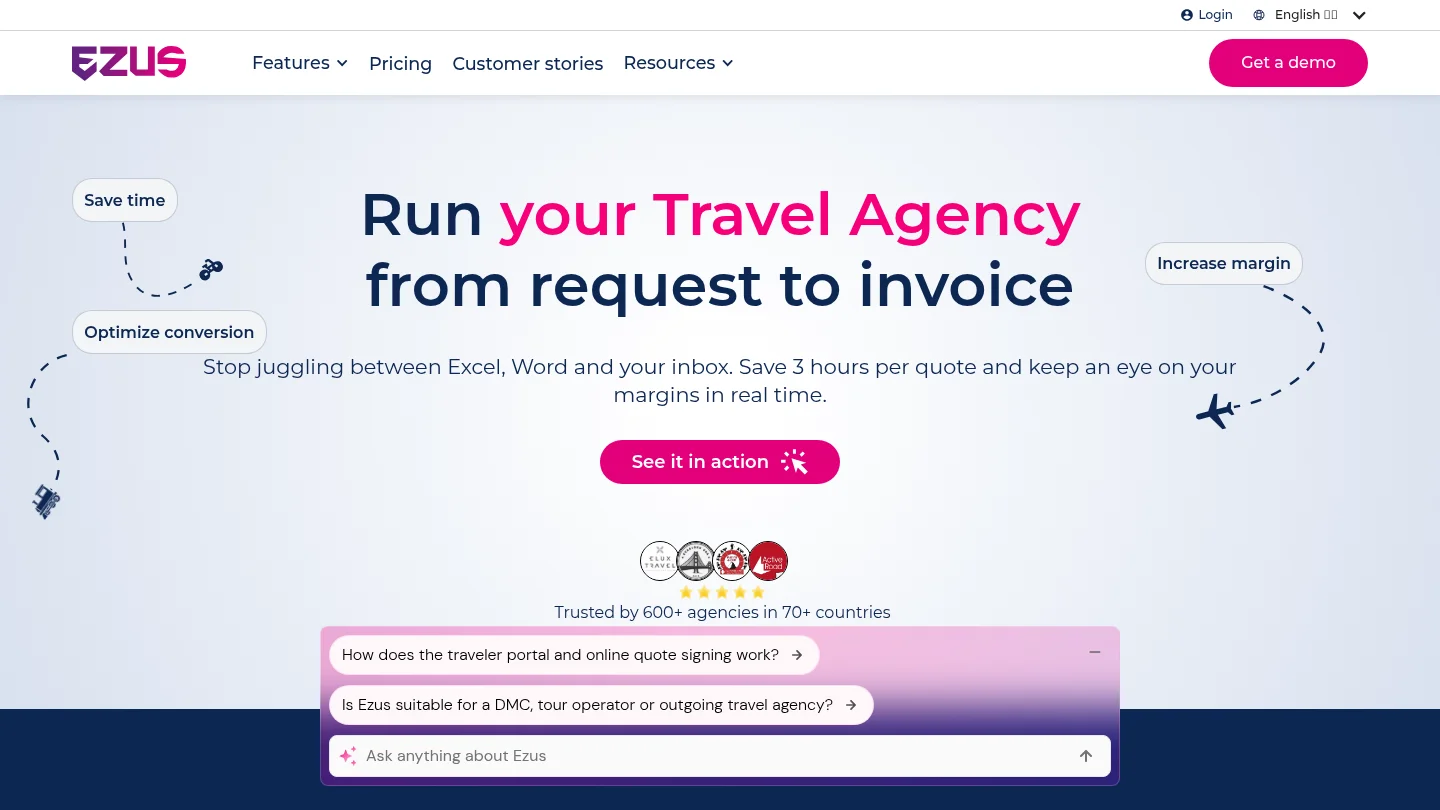
Best for: Agencies, DMCs, tour operators, and MICE teams that want one workspace for travel production, sales, operations, and finance.
Ezus connects itinerary production with dynamic budgeting, pricing, customizable proposals, CRM follow-up, supplier booking management, invoicing, and trip-level financial tracking. Teams can also use reusable project templates, web presentations, traveler portals, and collaboration tools. This wider workflow coverage is useful when your team currently re-enters trip details across separate documents and systems.
Ezus states that more than 600 agencies use the platform across more than 70 countries, with over 4,000 monthly active users and more than 11,000 itineraries created monthly. These are company-stated figures without a supplied measurement date. Customer testimonials include Elux Group’s reported 25% productivity gain in building and pricing proposals. Travel Exclusive Asia reported reducing re-quoting from 15–20 minutes to a maximum of 5 minutes; both are customer-specific results, not guarantees.
Pros
- Combines itineraries, budgets, proposals, CRM, supplier management, invoicing, and financial tracking.
- Supports reusable templates, multi-country trips, multilingual work, and group or MICE workflows.
- Formatted data imports follow a template process; raw-data migration is assessed and quoted by scope. Enterprise includes an allowance for raw-data import.
Cons
- Subscriptions are billed annually per user, and the mandatory one-time Onboarding Pack costs €1,990 excluding tax, so include both in your first-year budget.
2. Tern
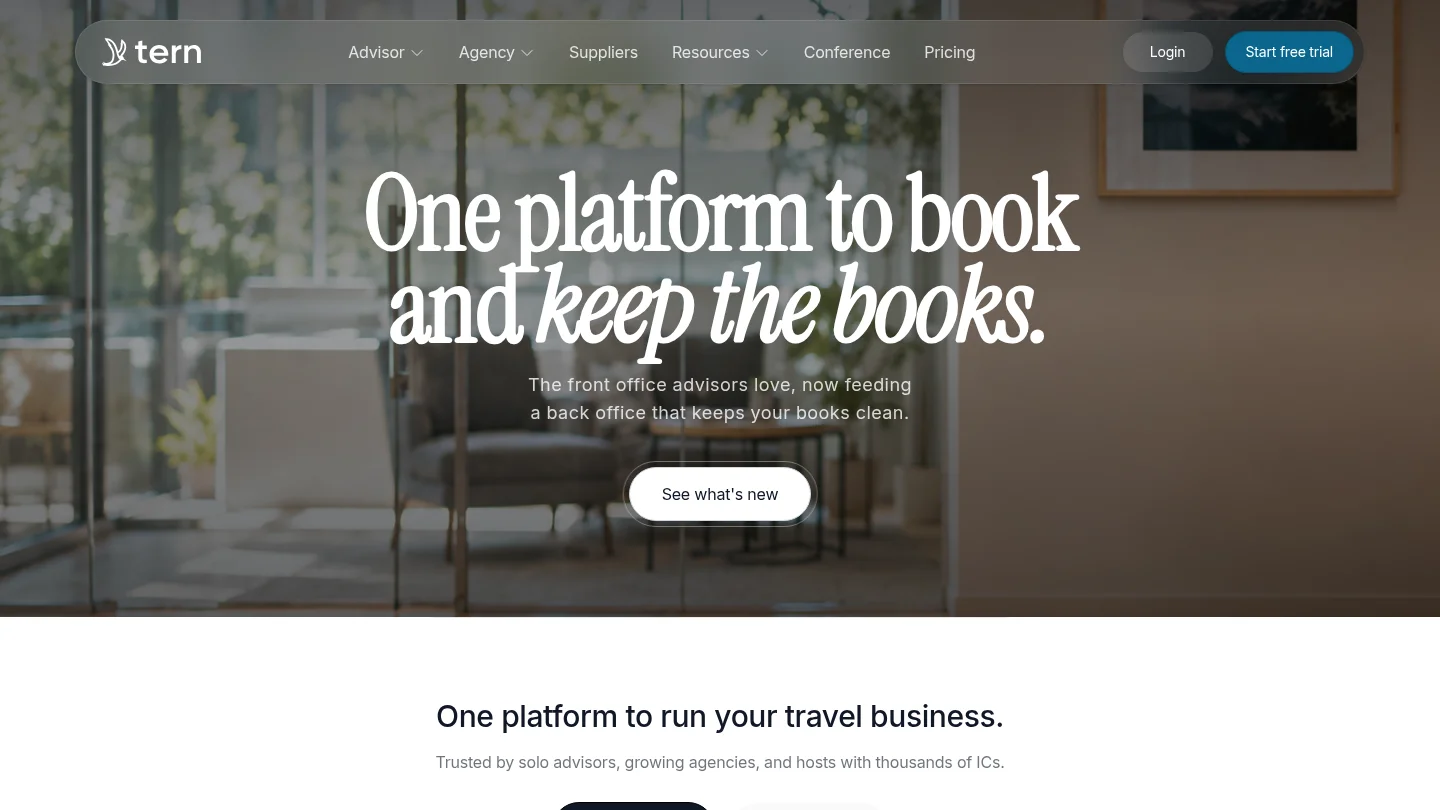
Best for: Independent travel advisors and agencies centered on client relationships, itineraries, and booking administration.
Tern brings together advisor tools such as itineraries, CRM, email integration, scheduling, booking, client forms, and reporting. Agency plans for teams of three or more add capabilities such as commission reconciliation, supplier payment management, shared content, and team collaboration. Its advisor focus makes it a relevant option when you want to consolidate client-facing and administrative work.
Pros
- Combines several common advisor tasks in one service, including CRM, itineraries, and scheduling.
- Agency plans add shared team and commission-management tools.
- Its Lucia marketplace connects users with independent contractors offering implementation, migration, and workflow support.
Cons
- Seat-based pricing scales with team size. Included AI usage has limits, so check current allowances if AI tools are important to your workflow.
- For a DMC focused on complex supplier costing and end-to-end trip production, test those specific workflows before choosing an advisor-centered system.
3. Tourwriter
Best for: Luxury and bespoke travel businesses, including DMCs and inbound operators managing multi-day trips.
Tourwriter combines itinerary creation with supplier and rate management, automatic pricing, booking management, CRM, and financial tools. Its published Starter plan begins at USD 99 per user monthly with annual billing, and includes up to 25 itineraries per year. Higher plans add further capabilities, so compare the itinerary allowance and plan scope with your expected volume.
Pros
- Connects itinerary design to supplier rates, pricing, and bookings, supporting operators who need more than presentation tools.
- Publishes starting prices and describes its intended fit for luxury and bespoke travel businesses.
- Its pricing page specifies a support window of 24 hours a day, five days a week, through chat and email.
Cons
- The Starter plan’s 25-itinerary annual limit may not suit a business producing trips at higher volume.
- Check the higher-plan pricing and the scope of any data migration or integrations against your requirements.
4. WeTravel
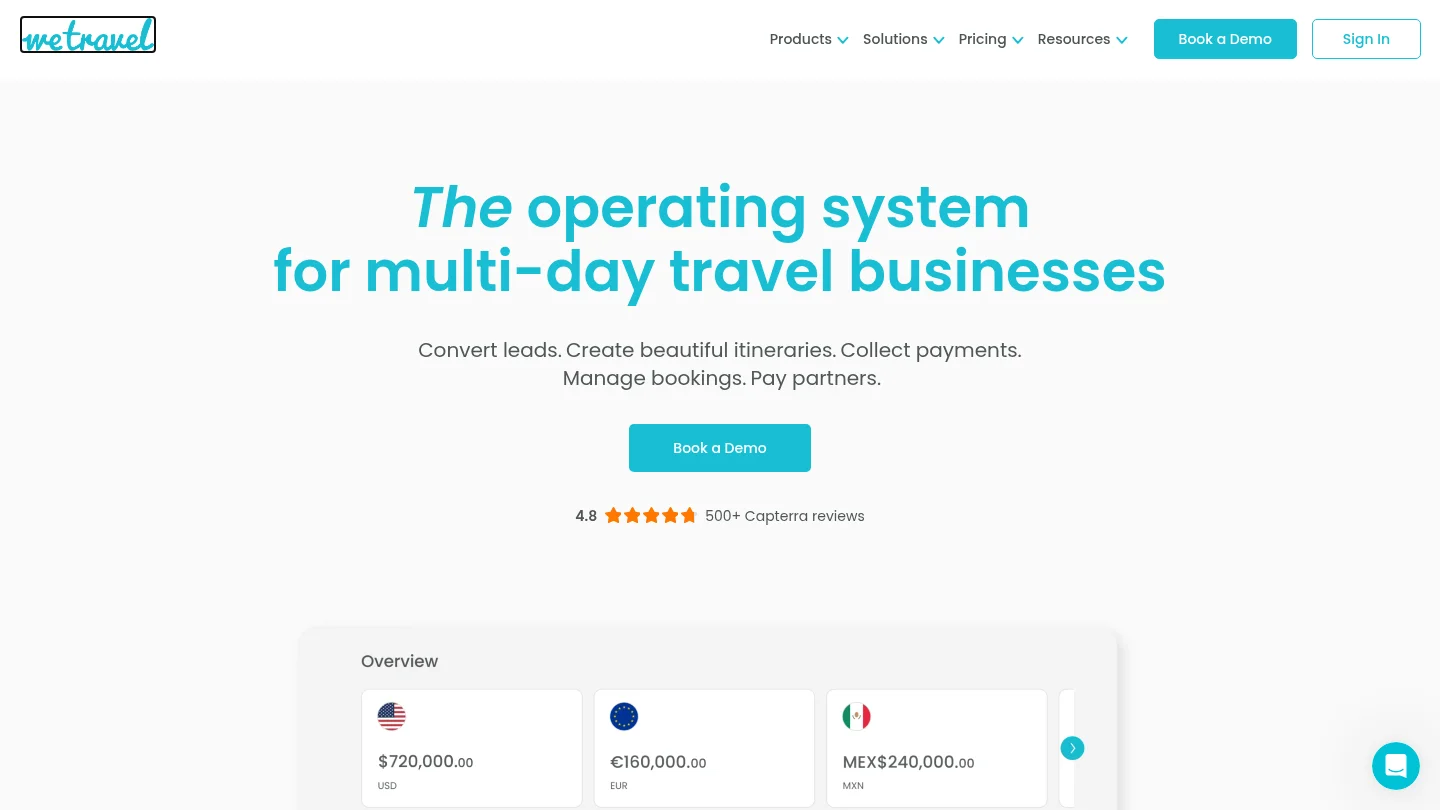
Best for: Multi-day travel businesses, group operators, and agencies that prioritize booking and payment workflows.
WeTravel brings together a travel CRM, itinerary builder, payment processing, booking management, and trip administration. Its described tools include payment plans, room inventory, passenger manifests, and traveler details. This makes it a relevant alternative when collecting payments and coordinating multi-day departures are central to your operations.
Pros
- Links itineraries with payments, bookings, and traveler information for multi-day trips.
- Its product range includes CRM, itinerary, booking, inventory, and partner-network tools.
- Support for group travel and other multi-day business models broadens its potential use beyond itinerary sharing.
Cons
- Teams whose priority is bespoke supplier costing should test that process directly before selecting a platform.
- Compare the current subscription and payment-processing costs with your expected booking volume.
5. Odys
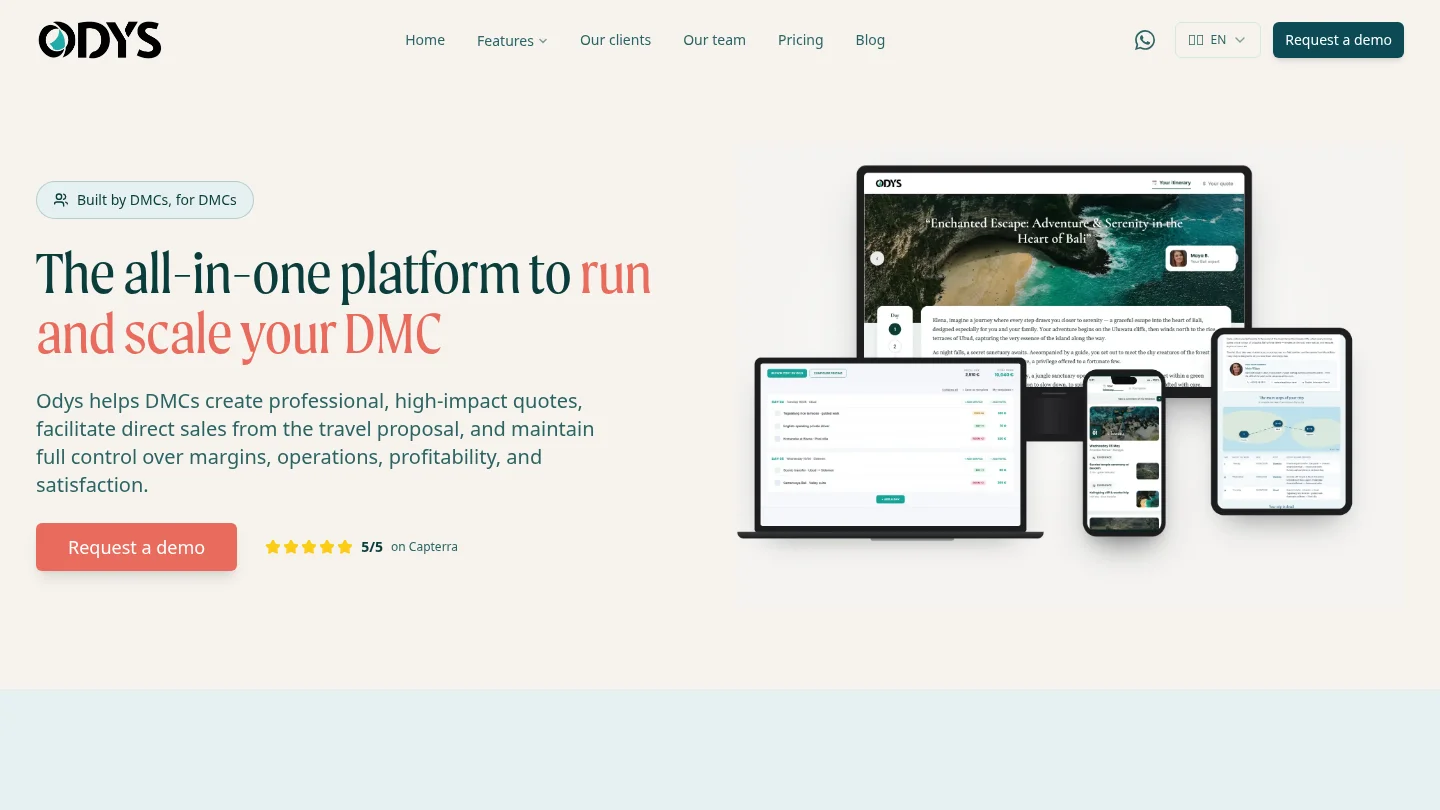
Best for: DMCs looking for software positioned around destination management operations.
Odys describes itself as an all-in-one platform for running and scaling a DMC. That focus makes it a relevant name for destination management companies comparing travel agency software alternatives. Before deciding, ask for a demonstration using your own workflows, including quotation, supplier coordination, client communication, and financial administration.
Pros
- Its stated focus is specifically on DMC operations, which gives destination management companies a direct reason to assess its fit.
Cons
- DMC specialization may be less relevant if your main work is advisor-centered client management or travel sales.
What should you check before switching?
Start with a recent trip request and follow it from intake through client approval, supplier confirmation, invoicing, and financial review. Note where your team re-enters data, rebuilds documents, or checks costs manually. Then compare whether each platform supports those exact steps, rather than relying on a broad feature label.
For migration, ask what data must be prepared, what the provider imports, and whether implementation or training carries a separate cost. Ezus accepts formatted imports through its template process and assesses raw-data work by scope. Compare the complete first-year commitment, including per-user billing, onboarding, payment processing where applicable, and any required integrations.
Consider whether your team needs reusable templates, supplier records, multi-currency work, client portals, or group and MICE workflows. A small advisor practice may place more weight on CRM and client communication. A DMC may prioritize budgets, supplier coordination, and operational handoff. Our travel agency software options cover broader evaluation criteria, while you can explore alternatives to travel software when your shortlist extends beyond these platforms.
Choose software around your full trip workflow
The right choice depends on the work you need to connect. Tern centers on advisor workflows, Tourwriter on bespoke operator needs, WeTravel on multi-day bookings and payments, and Odys on DMC operations. For agencies seeking connected travel production and operations, Ezus combines itineraries, pricing, proposals, CRM, supplier management, invoicing, and financial tracking. Test a representative trip, confirm migration and integration requirements, and compare total costs before committing.
Explore a connected platform for travel operations
If your evaluation shows that quoting, client communication, supplier coordination, and finance need to work together, consider how those tasks would run in one shared workspace. A demonstration using a representative trip can help you assess the fit for your team.
Our cloud platform supports itinerary design, dynamic budgeting, customizable proposals, CRM follow-up, supplier booking management, invoicing, payment, and financial tracking. Professional starts at €75 per user monthly and Premium at €100 per user monthly when billed annually, excluding tax. The mandatory one-time Onboarding Pack is €1,990 excluding tax. Review our travel operations platform and request a demonstration to assess its workflows against your requirements.
Frequently Asked Questions
Which Travefy alternative is best for a travel agency?
Choose based on the work your agency needs to manage beyond itinerary sharing. Ezus connects trip production, proposals, CRM, supplier management, invoicing, and financial tracking.
Which option is designed for travel advisors?
Tern is centered on advisor and agency workflows, including CRM, itineraries, scheduling, and client administration. Check its seat pricing and included AI allowances against your team’s needs.
Which alternative suits a DMC?
Ezus, Tourwriter, and Odys are relevant options for DMCs to assess. Compare their support for supplier coordination, costing, quotations, and operational handoff using a real trip example.
What should you check before migrating travel software?
Confirm which client, supplier, itinerary, and pricing data can be transferred and how it must be formatted. Ask about implementation, training, integrations, and any separate migration charges.
How should you compare travel software pricing?
Compare billing periods, user or seat counts, plan limits, onboarding, and payment-processing costs where relevant. Use the first-year total and your expected trip volume rather than the starting subscription price alone.


Join Ezus today
Request a demo today and discover how our software can help you reach new heights.