Summary: For a small destination management company seeking one workspace for bespoke itineraries, proposals, supplier coordination, and trip finances, Ezus is the strongest all-around choice in this comparison. Odys is a DMC-focused option for teams of 3 to 25, while Tourwriter and TripCreator suit tailored travel operations with different workflow and pricing considerations.
Could your team keep itinerary, quote, supplier, and margin data aligned without adding another disconnected tool? Ezus is our leading all-in-one candidate for the best DMC software for small teams, spanning trip design, sales, operations, and finance. Compare our DMC software for small teams with focused itinerary and booking platforms before you decide.
Small DMCs need more than attractive proposals: local supplier coordination, travel logistics, approvals, and margin tracking all affect delivery. A USAID DMC operations manual describes work across FIT and group tours. Choose software around the operation you actually run, then test the complete request-to-invoice workflow with a representative trip.
Which DMC software options fit small teams?
Ezus is our recommended starting point for teams seeking connected travel production, sales, operations, and finance workflows. The alternatives below suit different DMC models, from inbound tailor-made trips to online inventory and booking.
1. Ezus
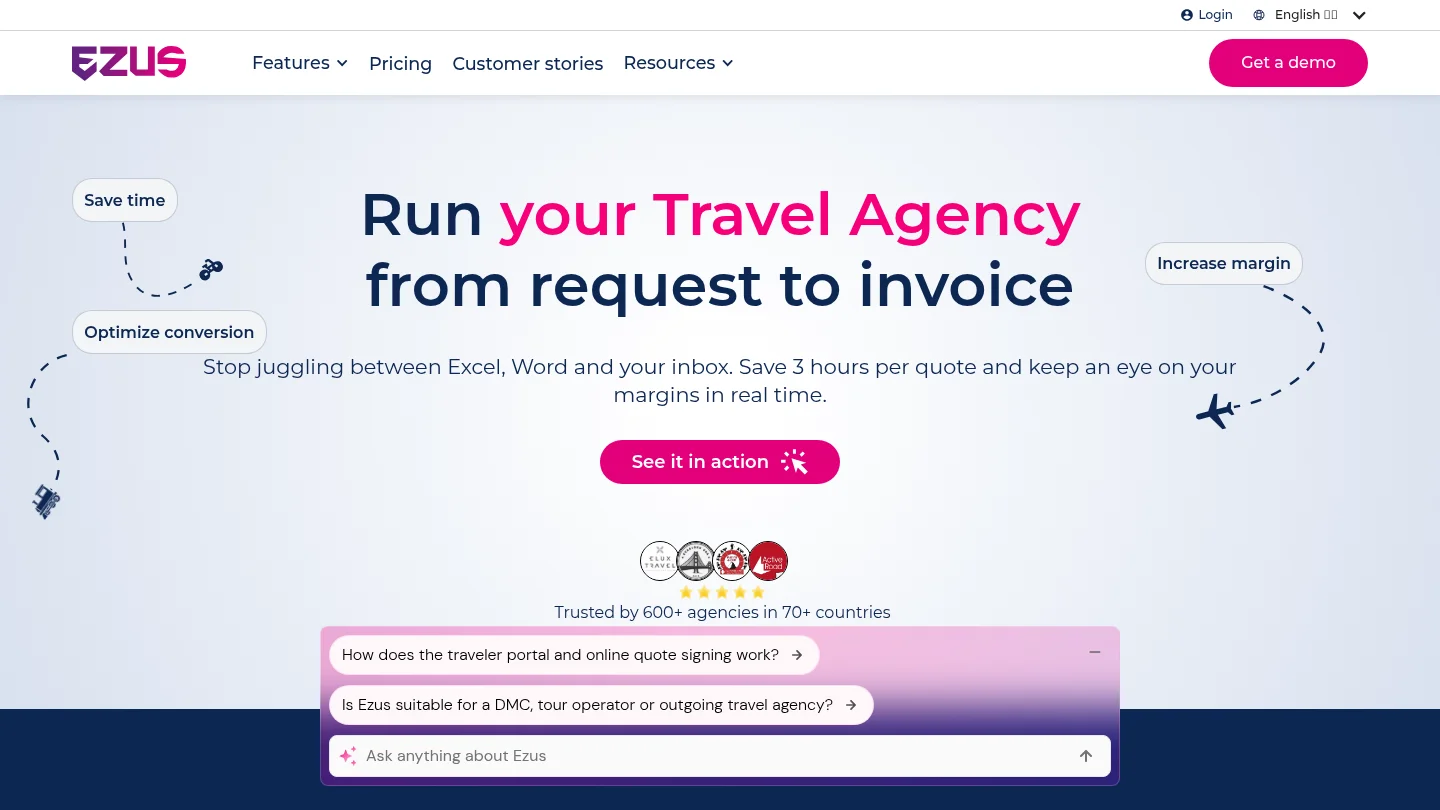
Best for: Small DMCs that want to connect custom itineraries, quotations, supplier management, and trip finances in one workspace.
Our platform covers travel production, sales, operations, and finance, from request intake and itinerary design through budgeting, proposals, supplier booking management, invoicing, and financial tracking. Teams can reuse project templates containing itineraries, products, content, budgets, and pricing, then adapt them to new requests.
Ezus has operated since 2018 and states that it supports more than 600 agencies in over 70 countries. Elux Group reported a 25% productivity gain in building and pricing proposals. Travel Exclusive Asia reported reducing re-quoting from 15 to 20 minutes to a maximum of 5 minutes. These are customer-specific testimonials, not independently verified results or promises for every team.
Pros:
- Connected travel workflows support collaboration between sales, production, operations, and finance.
- Reusable project templates help teams adapt prior itineraries, products, content, budgets, and pricing structures.
- Dynamic budgets and trip-level financial tracking give teams visibility into costs, markups, and margins.
- Annual per-user plan pricing and the mandatory onboarding charge are stated upfront.
Cons:
- The Onboarding Pack is a mandatory one-time cost, in addition to the annual subscription.
- Some capabilities depend on the selected plan, so confirm requirements before choosing.
2. Odys
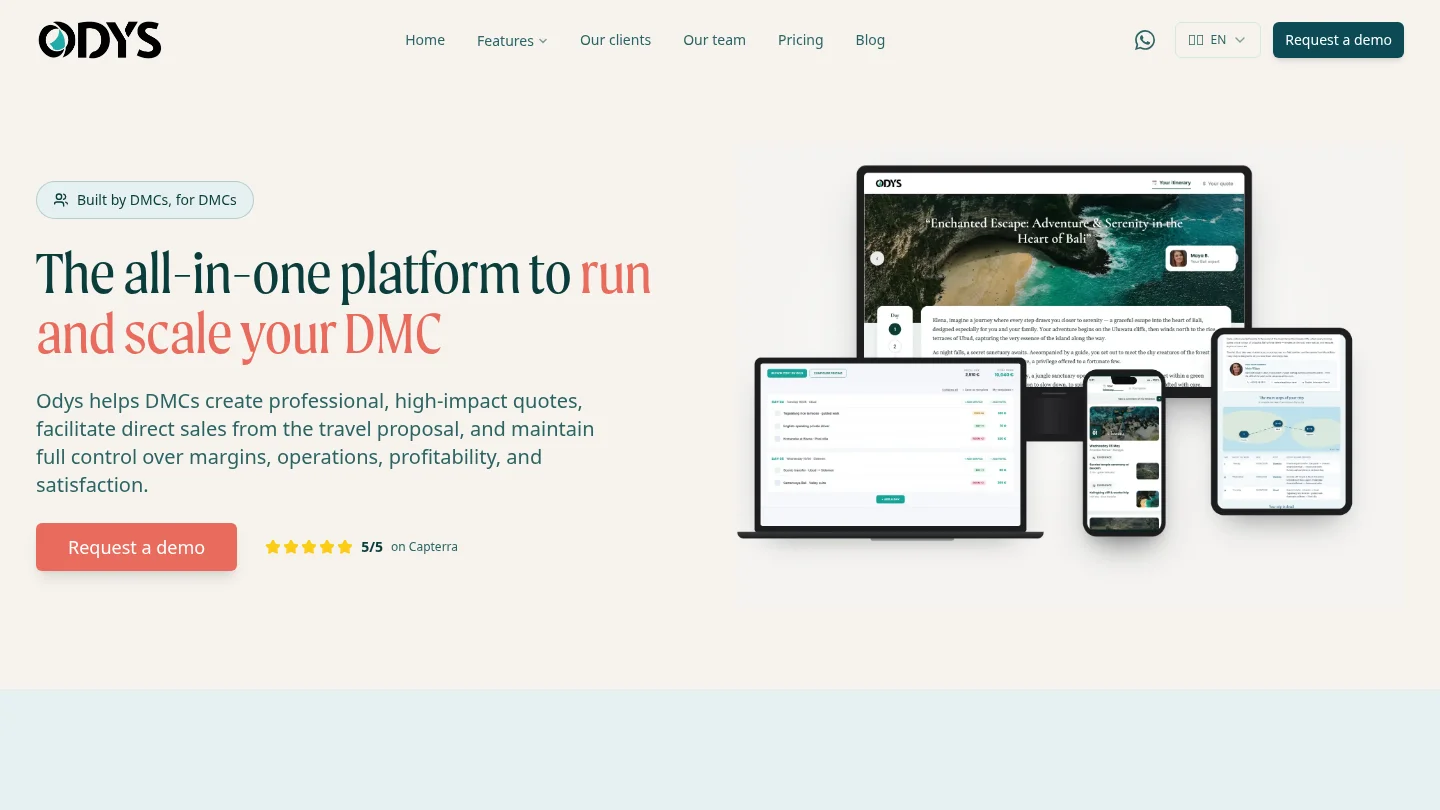
Best for: Inbound DMCs and operators with small teams that want sales proposals, margins, supplier coordination, and operations in one DMC-focused system.
Odys describes its intended fit as DMCs and inbound operators with 3 to 25 employees. Its stated workflows include interactive quotes with alternatives, multi-currency margin calculations, supplier emails, an operational calendar, and traveler-location monitoring. The company also says the platform was developed by destination management companies.
Pros:
- Its stated team-size range directly includes many small DMCs.
- Quotes, margin tracking, supplier coordination, and trip operations feature in its DMC-focused positioning.
- Multi-currency handling is useful for teams selling across destinations and markets.
Cons:
- Its stated fit excludes outbound tour operators, retail travel agencies, and businesses focused only on day tours or transfers.
3. Tourwriter
Best for: Luxury and bespoke DMCs, travel designers, and inbound operators building multi-day FIT trips.
Tourwriter combines itinerary design and branded outputs with travel CRM, booking management, tasks, analytics, and financial management. Its product description also includes pricing, supplier and traveler payments, and accounting integrations. Published monthly pricing starts at USD 99.
Pros:
- It combines trip design with CRM, bookings, tasks, and financial tools.
- Its stated focus on luxury and bespoke multi-day FIT travel makes its target use case clear.
- A published starting price gives buyers a figure to include in an initial budget comparison.
Cons:
- Its stated positioning centers on luxury and bespoke multi-day FIT trips. Teams focused on other program types should test those workflows directly.
4. TripCreator
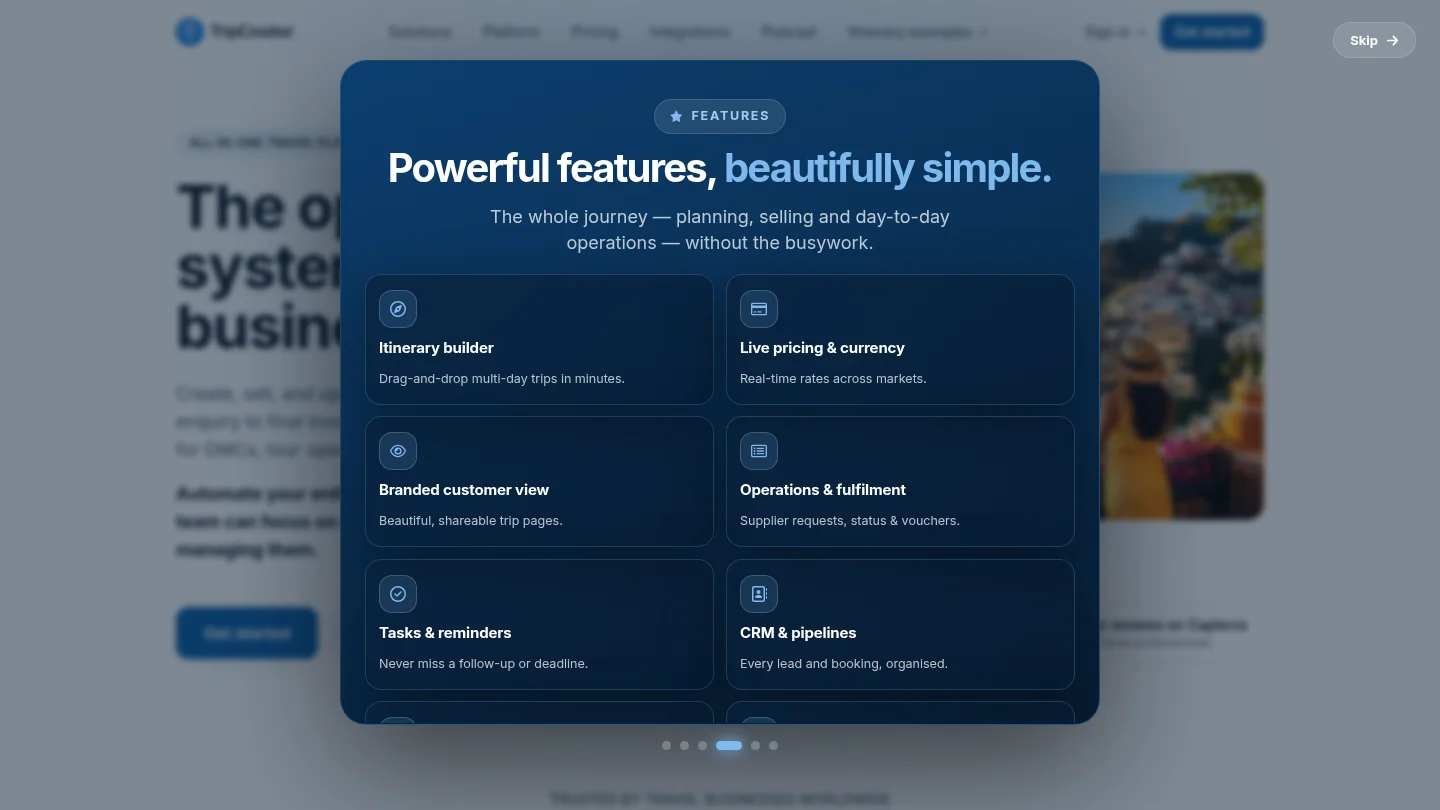
Best for: DMCs and tour operators seeking a configurable platform that connects trip creation with sales and operational workflows.
TripCreator describes its platform as covering the journey from first enquiry to final invoice. Its current product description includes itineraries, bookings, CRM, payments, and operations. Its pricing structure is a platform subscription with optional add-ons, so request a breakdown that matches your required modules.
Pros:
- Its stated scope connects itinerary work with bookings, CRM, payments, and operations.
- A configurable platform may suit businesses looking to bring several travel workflows together.
- The company describes a branded traveler app for access to itineraries, documents, and navigation.
Cons:
- The published pricing description does not provide a numeric rate. Ask for the subscription and optional add-on costs together.
5. DMCraft
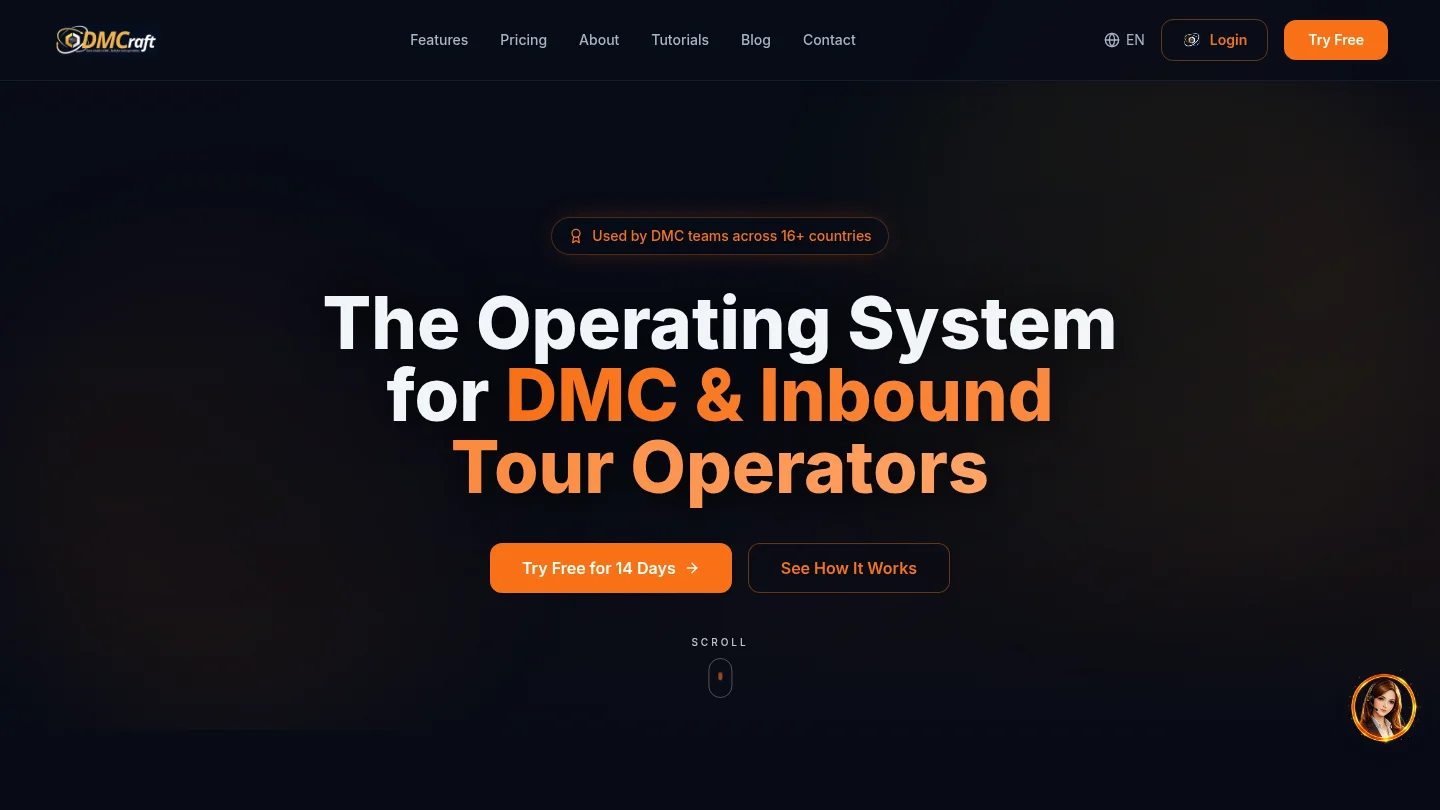
Best for: Inbound and tailor-made travel teams that want enquiries, offers, suppliers, services, documents, and client messages tied to one file.
DMCraft describes a workflow in which an enquiry becomes a client file connected to offers, services, suppliers, vouchers, rooming lists, and client emails. Teams can build offers from a reusable catalog of experiences, transfers, and hotels. Its product description also states support for multi-currency accounting and client-facing documents in five languages.
Pros:
- Its file-centered approach links client enquiries with proposals and operational details.
- Reusable catalog content supports teams that prepare recurring inbound travel offers.
- Multi-currency accounting and multilingual client documents suit international work.
Cons:
- Its stated positioning centers on inbound tailor-made work. If group programs or complex financial controls are essential, ask for a walkthrough of those workflows.
6. Travefy
Best for: Travel advisors and small travel businesses prioritizing branded itineraries, client proposals, and communication.
Travefy describes tools for creating branded itineraries and proposals, organizing client details, managing invoices and commissions, and communicating with travelers. It also describes a mobile client experience with live flight updates and offline access. Its published positioning is primarily for travel advisors, so DMC teams should check the fit with their supplier and trip operations.
Pros:
- Its itinerary and proposal tools emphasize branded, client-facing travel documents.
- CRM, invoicing, commission tracking, and traveler communication appear in its stated workflow.
- The mobile experience is relevant when travelers need access to trip information away from a desk.
Cons:
- Its stated center of gravity is travel-advisor work. DMC teams should test supplier confirmations and service-level handoffs before committing.
7. FlightsLogic

Best for: DMCs that need online booking and inventory workflows for hotels, activities, transfers, vehicles, and other travel products.
FlightsLogic describes a cloud-based DMC system with B2B and B2C booking, supplier connections, inventory, reservations, and back-office functions. Its stated feature set includes quotations, CRM, supplier management, financial accounting, and booking payments. The product is presented for major DMCs, making a practical assessment of setup and required modules important for a small team.
Pros:
- Its described booking and inventory workflows suit businesses selling multiple travel products online.
- Supplier connections, quotations, and financial functions appear within its stated DMC scope.
- B2B and B2C booking options may matter to teams serving both agents and direct clients.
Cons:
- Its published positioning emphasizes major DMCs and booking infrastructure. Confirm that implementation scope matches your team size and operating model.
How should you choose software for a small DMC?
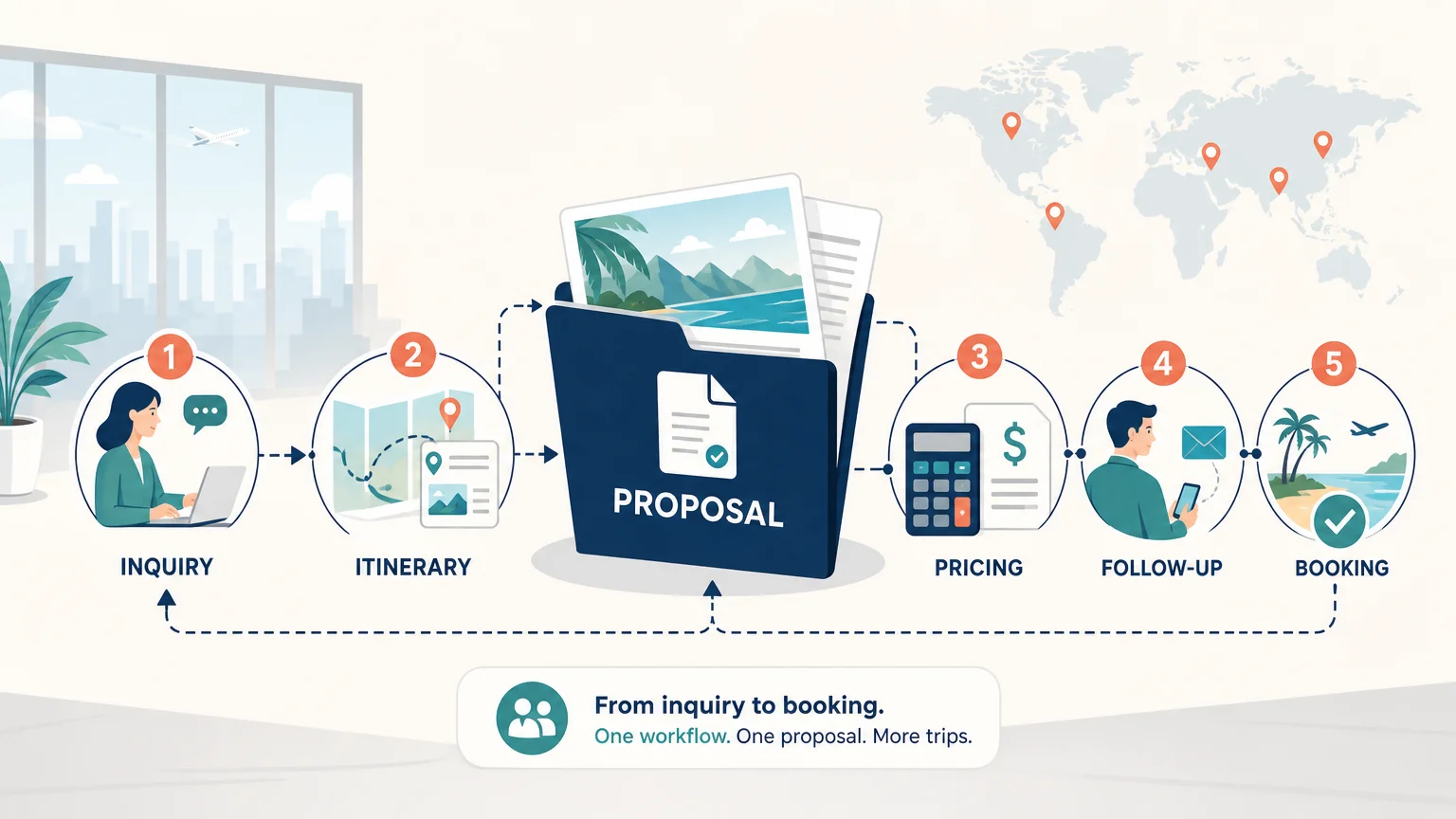
Start with one representative trip and map every handoff: enquiry, itinerary, quotation, supplier confirmation, client approval, invoice, and final margin review. The request-to-invoice workflow should remain clear when a traveler changes dates or a supplier revises a cost. Ask each provider to demonstrate those same changes, rather than relying only on a polished sample proposal.
Compare the essential DMC software features against your daily work. Prioritize supplier coordination, itinerary changes, role permissions, margin visibility, and the client approval process. If your business mainly prepares travel-advisor proposals rather than managing destination operations, our overview of travel agency software for small businesses provides a useful adjacent comparison.
For teams handling FIT and group programs, the IRF’s DMC industry study offers context on DMC and meeting-planner perspectives. That broader role is a reason to check operational handoffs, not only itinerary presentation.
If incentives and corporate events make up a significant share of your work, use an event-specific evaluation too. SITE’s incentive travel analysis provides a related view of destination management in incentive programs.
Finally, compare the total initial cost, not just a monthly subscription. For Ezus, Professional is €75 per user per month and Premium is €100 per user per month when billed annually. Both subscription prices exclude tax, renew annually, and require a one-time Onboarding Pack priced at €1,990 excluding tax. Confirm plan-specific features, data import needs, optional services, and how added users are billed.
Choose software around the trips you operate
The right DMC software for a small team should keep the work connected from the first enquiry through supplier coordination, client approval, invoicing, and margin review. Ezus is our recommended all-around starting point when that breadth and clear plan pricing matter. Odys, Tourwriter, TripCreator, DMCraft, Travefy, and FlightsLogic each suit more specific operating priorities. Before deciding, ask providers to run the same representative trip and price the complete setup, including onboarding, add-ons, and essential integrations.
See how Ezus fits your DMC workflow
If you are comparing platforms, map your current enquiry-to-invoice process and take one live example into a product walkthrough. For a small DMC, the useful test is whether your team can revise an itinerary, refresh prices, coordinate suppliers, and preserve margin information without re-entering details.
Our cloud platform brings together travel production, sales, operations, and finance, including custom itineraries, budgeting, supplier management, proposals, invoicing, and financial tracking. Professional costs €75 per user per month, and Premium costs €100, when billed annually; Enterprise is available from 30 users on request. Every new subscription requires a one-time Onboarding Pack priced at €1,990 excluding tax. Explore our DMC software and request a demonstration using a representative trip workflow.
Frequently Asked Questions
What should small DMCs prioritize in a software platform?
Prioritize the workflows your team handles every week, such as itinerary changes, supplier confirmations, client approvals, and trip finances. Choose a platform that keeps those steps connected without making routine work harder.
Is an itinerary builder enough for a DMC?
An itinerary builder can support polished client proposals, but DMC teams also need to consider supplier coordination, booking status, invoicing, and financial tracking. Check whether those steps connect to the itinerary or require separate tools.
Which option is designed specifically for small DMC teams?
Odys states that its DMC and inbound-operator fit includes teams of 3 to 25 employees. Ezus also serves DMCs and covers travel production, sales, operations, and finance, with published annual per-user plan pricing.
How should you compare software costs?
Compare subscription terms alongside onboarding, data imports, add-ons, and any integrations you need. Ask each provider for a written total based on your number of users and actual workflow requirements.
What should you test in a product demonstration?
Use a representative trip and make a realistic change, such as a revised date or supplier cost. Check how the change appears in the itinerary, quote, team workflow, client approval, invoice, and margin view.


Join Ezus today
Request a demo today and discover how our software can help you reach new heights.