

Does DMO refer to the organization promoting an entire region, or the company arranging local travel services? Understanding what DMO means in tourism starts with that distinction. For the related business terms, see our DMO vs. DMC: understanding the difference.
The acronym is not perfectly uniform: its middle word may stand for “marketing” or “management.” The UN Tourism definition describes a coordinating organization that brings tourism stakeholders together around a shared destination vision. The organization’s actual responsibilities matter more than the acronym alone.
What does a DMO mean in a tourism context?
In tourism, DMO most commonly expands to destination management organization or destination marketing organization. Both refer to an organization working at the level of a destination, such as a city, region, or country. The two names are related, but they do not always describe an identical scope of work.
A marketing-focused DMO may concentrate on promoting the destination and attracting visitors. A management-focused DMO can have a wider remit, coordinating tourism planning, partnerships, visitor services, or product development. Some organizations combine these responsibilities, while others focus on only a few.
What does a DMO actually do?

A DMO’s work often involves connecting groups that shape a visitor’s experience, including tourism businesses, public bodies, and community organizations. It may coordinate promotion, planning, visitor services, and destination development rather than delivering every service itself.
Destination BC’s overview describes destination organizations as responsible for attracting visitors and, in some cases, supporting destination stewardship. That distinction is useful: a DMO can influence how tourism is planned and promoted without owning the hotels, transport, or attractions visitors use.
For example, a regional organization might bring local businesses together to agree on a seasonal campaign, improve visitor information, or encourage trips beyond the busiest town center. The specific activities depend on the organization’s mandate, partners, and available resources.
DMO vs. DMC: who does what?
Consider a visitor planning a trip to a coastal region. A DMO may promote the region and coordinate its broader tourism strategy. A destination management company, or DMC, arranges services for a particular client or group within that destination.
A New Hampshire comparison distinguishes destination promotion from a DMC’s local expertise and event logistics. In practical terms, a DMC might coordinate transport, activities, tours, or event arrangements for an incoming agency or corporate group. The DMO’s focus is the destination as a whole; the DMC’s focus is delivering a client’s program.
| Term | Primary focus | Typical work |
|---|---|---|
| DMO | The destination | Promotion, coordination, or tourism planning |
| DMC | A client’s program in the destination | Local services, tours, transport, or event logistics |
The difference matters when you choose a partner or describe your organization. We serve DMCs and other travel businesses with tools for operational workflows. If you need to clarify related industry vocabulary, our essential tourism glossary covers terms used across tourism businesses.
How can you identify the intended DMO meaning?
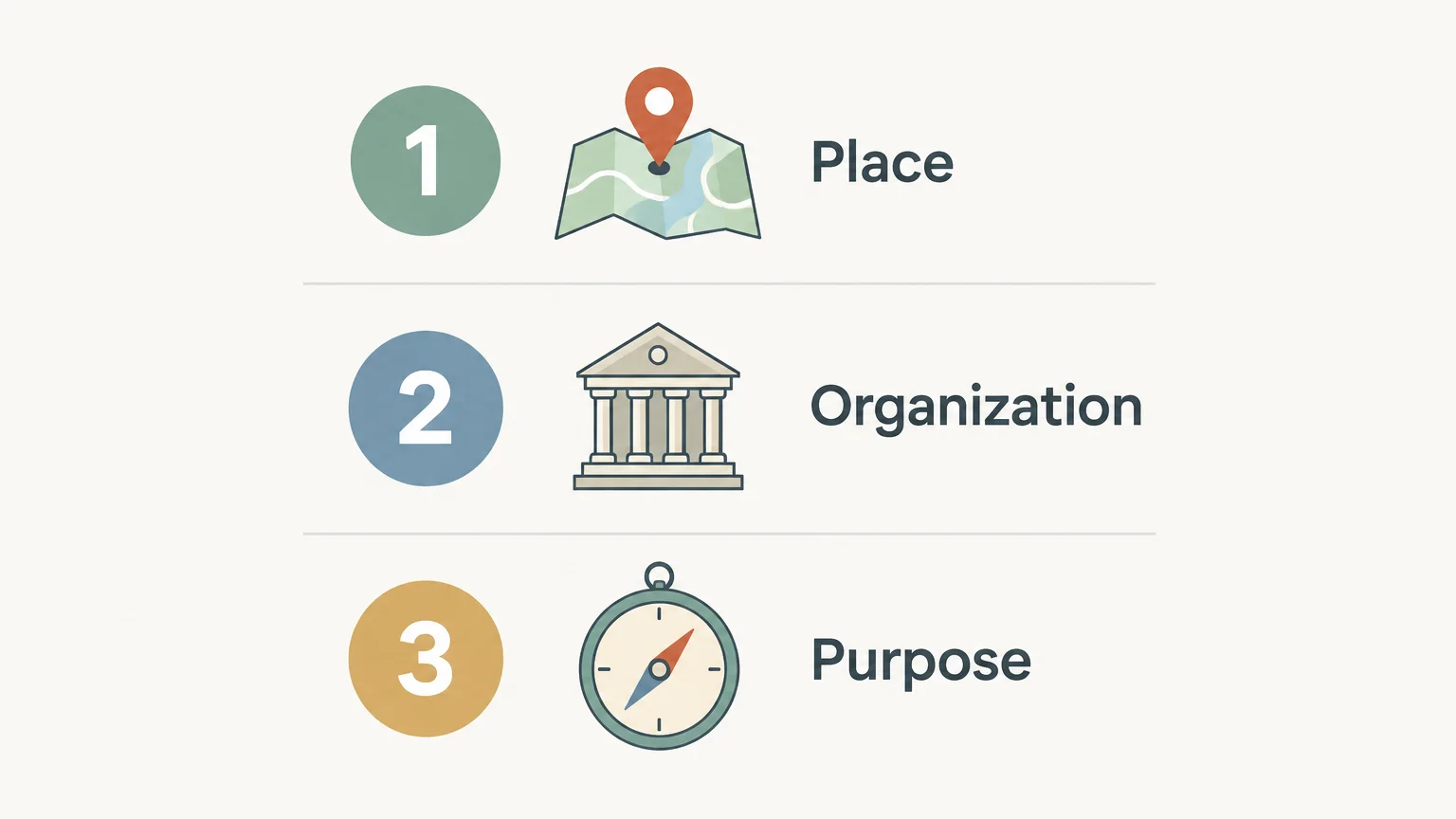
When you see DMO in a report, job description, or tourism website, check three things before settling on an expansion: what place the organization represents, who established or governs it, and what responsibilities it lists.
- Check the place. A city, region, or country points toward a destination-level organization.
- Check the organization. Look for details about public agencies, business partners, or other stakeholders.
- Check the purpose. Promotion alone suggests a narrower marketing remit; planning and coordination suggest a broader one.
The World Bank handbook notes that destination organizations take different forms and that some have mandates limited to marketing. Read the organization’s own description instead of assuming every DMO has the same powers, structure, or responsibilities.
Can DMO mean something else?
Yes. Acronyms can have unrelated meanings in different professions, and DMO may also appear as an internal abbreviation in a company or document. If the surrounding text is not about tourism, do not assume it refers to a destination organization. Check the source’s glossary or spell out the term on first use when writing for a mixed audience.
Within tourism, the main uncertainty is often not whether the organization is connected to destinations, but whether “M” means marketing, management, or both. Use its stated responsibilities to make that distinction.
Conclusion
DMO meaning in tourism depends on the organization’s role: it commonly refers to a destination marketing or destination management organization. A DMO works at destination level, while a DMC arranges services for clients within a destination. When the acronym is unclear, check the organization’s scope and stated responsibilities before interpreting it.
Bring Your DMC Travel Workflows Together
If you manage travel programs on the ground, your day-to-day work differs from a DMO’s destination-wide coordination. It may involve designing itineraries, organizing supplier details, preparing proposals, and keeping operational and financial information aligned.
We build cloud software for DMCs and travel businesses, bringing itinerary production, budgeting, proposals, supplier management, invoicing, and financial tracking into one workspace. Since 2018, we have developed our platform around travel production, sales, and operations. Explore our DMC software to see whether its workflows fit your team.
Frequently Asked Questions
What does DMO stand for in tourism?
DMO usually stands for destination management organization or destination marketing organization. The exact responsibilities depend on the organization’s mandate.
Is DMO a destination marketing or destination management organization?
It can mean either. Marketing usually emphasizes promotion, while management can include wider coordination and planning, but the organization’s stated remit is the best guide.
How is a DMO different from a DMC?
A DMO works on behalf of a destination, often coordinating or promoting tourism. A DMC provides local services and logistics for a specific client, group, or program.
Are all DMOs government agencies?
No. Some are public bodies, while others involve partnerships among public, private, and community stakeholders. Their governance depends on the destination and organizational model.
Does Ezus serve DMOs or DMCs?
We serve DMCs and other travel businesses with software for itinerary production, sales, operations, and finance. That operational focus is distinct from destination-wide coordination by a DMO.


Join Ezus today
Request a demo today and discover how our software can help you reach new heights.