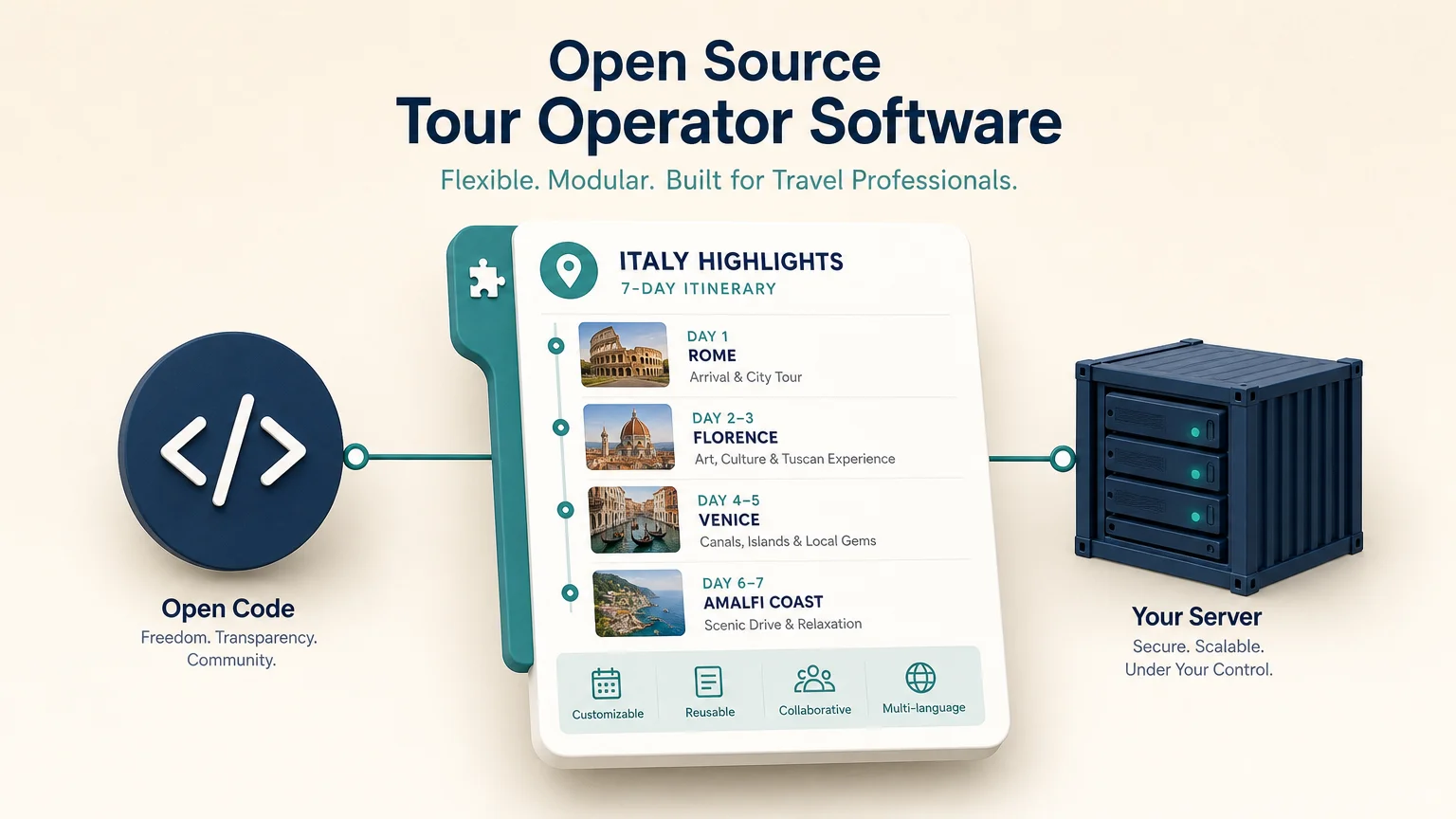
Summary: Tour operator software open source can provide source-code visibility, self-hosting, and deep customization, but it also transfers hosting, security, upgrades, integrations, and support to your team. It is suitable when you have technical ownership and unusual workflows. A travel-specific SaaS platform is often more practical when you need rapid deployment, support, reusable templates, and complete operational coverage.
If you are evaluating open source tour operator software, the central question is not whether the code is free. It is whether your team can own the operational work that follows. Self-hosting can support control and customization, while a managed platform can reduce technical overhead. We also compare those trade-offs with our best tour operator software guide when you need a broader operational system.
One 2026 market estimate values the global tour operator software market at $0.9 billion and projects it to reach $1.33 billion by 2030. That expansion reflects demand for booking, itinerary, payment, supplier, and reporting workflows that work together instead of remaining in separate tools, according to a 2026 market estimate.
What does open source tour operator software actually include?
Open source software makes its source code available under a license that defines how you may use, modify, and redistribute it. That does not automatically mean the software is free of cost, complete, or easy to operate. You may still pay for hosting, development, security reviews, integrations, support, and ongoing maintenance.
For a tour operator, the software may cover one function or a complete operational stack. A focused product could provide only a booking engine, reservation database, or customer portal. A broader platform may also include itinerary planning, package configuration, supplier management, payment collection, vouchers, invoicing, CRM, and reporting.
The phrase “open source” therefore requires careful qualification. Ask whether the license is genuinely open source, whether the repository is active, and whether the product includes production-ready documentation. You should also check whether the booking workflow, financial records, customer data, and supplier confirmations share one reliable record.
A project that provides only a booking form may not be suitable for a DMC managing complex supplier operations. Conversely, a full self-hosted suite may require more technical ownership than a small operator expects.
Why are operators considering open source in 2026?
Open source is attractive when you want greater control over infrastructure, data, workflows, and integrations. You can modify the system around your business model instead of adapting every process to a fixed vendor roadmap. This can matter when you sell unusual packages, operate several brands, or connect proprietary supplier systems.
Vendor lock-in is also a serious concern. The 2026 OSS report states that 55% of respondents identified avoiding vendor lock-in as a reason to adopt open source software. The same report highlights security, compliance, maintenance, and operational responsibility as growing concerns for organizations using open source at scale.
For international tour operators, control may also support data-location decisions and internal governance. You can choose a hosting provider, define access policies, and decide how data moves between your reservation system, accounting platform, CRM, and reporting tools.
However, control has value only when your organization can use it responsibly. A source repository does not replace a release process. It does not guarantee fast security patches, reliable uptime, clear documentation, or support during a failed supplier connection. The business benefit depends on your ability to maintain the software over several seasons.
Where does self-hosting become expensive?

The main cost of open source tour operator software is usually not the initial license. It is the total ownership effort across hosting, configuration, upgrades, troubleshooting, and user support.
A 2026 review of open source adoption in official statistics, a different sector, links open source with transparency, efficiency, and reproducibility. It also describes a shift in technology, operations, skills, and organizational culture, as explained in the 2026 research review. The same lesson applies to travel operations: adopting open source changes responsibilities, not only software.
Your team may need to manage cloud infrastructure, backups, monitoring, access control, encryption, database performance, and disaster recovery. It may also need to test every update against payment flows, supplier APIs, pricing rules, client documents, and tax processes.
Integration work can become particularly demanding. A tour operator may connect accommodation providers, bedbanks, activity suppliers, payment gateways, accounting tools, email systems, and distribution channels. Each connection can require authentication, field mapping, error handling, status synchronization, and ongoing maintenance.
There is also a cost associated with internal availability. When a booking failure occurs during a high-demand period, someone must diagnose it. If that person is a developer, operations manager, or external contractor, the business carries the response cost even when the software itself has no license fee.
Before commissioning a custom system, we recommend assessing our guide on why to avoid building travel software yourself. A tailored system can be justified, but only when its long-term ownership model is clear.
Which features must a serious platform cover?
A credible solution should reflect the complete journey from inquiry to post-trip service. The right feature set depends on whether you sell fixed departures, bespoke itineraries, group programs, FIT travel, corporate events, or a combination of these models.
Itinerary design and quotation
You should be able to create day-by-day programs, combine multiple destinations, add optional services, and adjust content without rebuilding documents manually. Dynamic pricing should show supplier costs, markups, commissions, taxes, deposits, and projected margins before a proposal reaches the client.
Supplier and product management
Your system should keep supplier records, products, rates, availability, booking statuses, and confirmation details together. This reduces the risk of quoting from an outdated spreadsheet while operations work from a different email thread.
Customer communication and approval
Professional proposals should support your brand, language, currency, and commercial process. Useful capabilities include interactive presentations, client portals, approval tracking, automated follow-ups, and a clear record of customer changes.
Finance and operational control
Look for invoicing, deposits, payment tracking, refunds, supplier balances, and margin reporting. You should also be able to distinguish projected results from actual results after supplier costs and changes are recorded.
Access, integration, and portability
Role-based access helps separate sales, production, finance, and management responsibilities. APIs, webhooks, exports, single sign-on, and connectors can help you preserve existing tools. Data portability matters because your customer and operational records should remain retrievable if your technology strategy changes.
At Ezus, we designed our platform around these travel-specific workflows. We bring itinerary production, budgeting, quotations, documents, CRM, supplier management, invoicing, payments, and financial tracking into one collaborative environment.
Open source or travel SaaS, which model fits your operation?
The best choice depends on the responsibility you want to retain. Open source can be appropriate when you have an internal technical team, a clear hosting strategy, and workflows that require significant customization. It may also suit organizations that need direct control over infrastructure or want to contribute to a shared software project.
A managed SaaS platform is usually more practical when you need to go live quickly and keep technical work outside the daily responsibilities of your travel team. The provider manages the application environment, releases, support, and core infrastructure. Your team can focus on products, clients, suppliers, pricing, and service delivery.
The trade-off is less control over the underlying code and greater dependence on the provider. You should therefore review contract terms, renewal rules, data exports, security information, integration options, implementation support, and the provider’s product development process.
The operating model also matters. A sightseeing company selling scheduled activities may prioritize online availability, guide calendars, reminders, and deposits. A DMC may need complex supplier coordination, multi-currency pricing, custom proposals, and group operations. An outgoing agency may prioritize reusable itineraries, client approvals, margin visibility, and multilingual documents.
The 2026 ATTA research surveyed tour operators about their 2025 business operations, 2026 expectations, and customer motivations. Although it is not a software benchmark, it reinforces an important point: operators work in different commercial conditions, so technology must fit the operating model rather than follow a generic checklist.
Our SaaS approach is designed for teams that want travel-specific coverage without maintaining the underlying application. It includes project templates, branded documents, traveler portals, multi-currency workflows, multilingual support, user permissions, integrations, onboarding, and ongoing assistance.
How should you assess open source tour operator software?
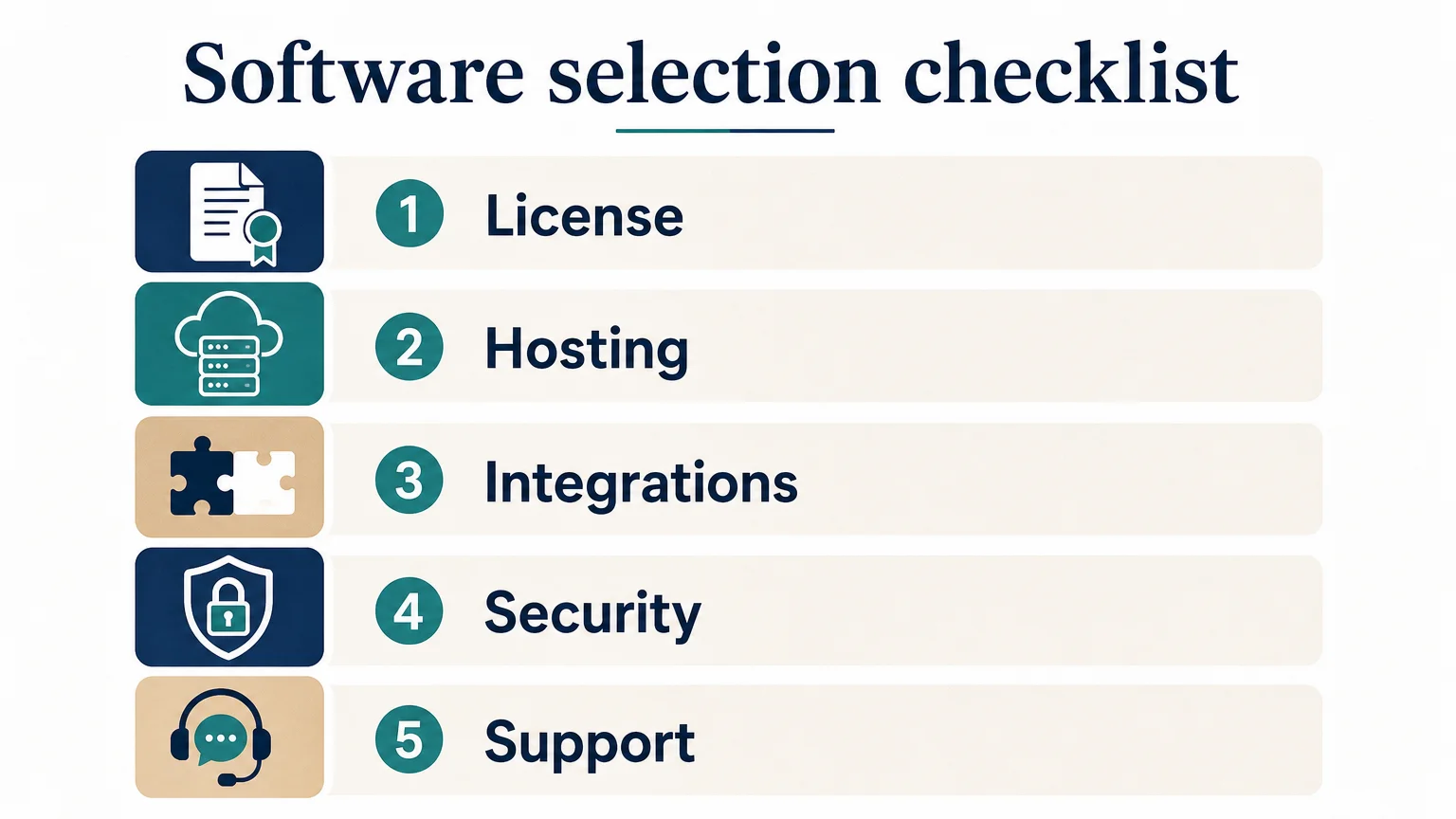
Use the following questions before you evaluate a repository, vendor, or implementation partner.
Request a realistic demonstration using your own workflows. A generic presentation can hide important gaps between a simple activity booking and a multi-country tailor-made itinerary with supplier deposits and changing margins.
You should also test the system with several internal roles. Sales users, production staff, finance teams, managers, suppliers, and travelers may need different screens, permissions, documents, and approval steps.
Finally, separate customization from unnecessary complexity. A platform should adapt to your process, but excessive customization can make upgrades harder. Prefer configuration, templates, documented integrations, and reusable workflows where they meet your requirements.
Make the software decision fit your operating model
Open source tour operator software can be valuable when control, customization, and technical independence are central to your strategy. It is not automatically the least expensive option, because hosting, security, integrations, support, and upgrades remain part of the ownership model. A managed travel SaaS platform may be the more efficient choice when you need fast implementation, specialist support, and reliable coverage across sales, production, finance, and operations. Compare the complete lifecycle cost, not only the license model, then test the solution against real bookings, supplier changes, approvals, and financial processes.
Take action with Ezus
If you want travel-specific workflows without taking responsibility for maintaining an entire self-hosted application, our approach may fit your team. We help travel agencies, DMCs, tour operators, and MICE professionals centralize production, sales, operations, and financial follow-up.
With tour operator software from Ezus, you can create itineraries, manage budgets and margins, generate branded proposals, coordinate suppliers, follow client approvals, and support multilingual, multi-currency operations. Onboarding, training, templates, integrations, and data migration services help your team move from fragmented tools to a more structured workflow.
Frequently Asked Questions
Is open source tour operator software free?
The software license may have no purchase fee, but hosting, implementation, development, security, maintenance, and support still create costs. You should compare the total cost of ownership with a managed SaaS subscription.
Is self-hosted software better for a tour operator?
Self-hosting can be useful when you have technical resources and need deep control over infrastructure or workflows. It may be less suitable when your team needs rapid deployment and does not want to manage application operations.
What should a tour operator system include?
Core capabilities should cover itinerary creation, package pricing, supplier management, booking records, customer communication, payments, invoicing, reporting, and permissions. The exact priorities depend on whether you sell fixed departures, bespoke programs, groups, FIT travel, or MICE services.
How can you compare open source software with SaaS?
Compare licensing, hosting, support, security, integrations, customization, data exports, implementation time, and five-year ownership costs. A practical demonstration using your actual booking and supplier workflows is more useful than comparing feature names alone.
Can Ezus replace an open source tour operator platform?
Ezus is a managed SaaS platform for travel agencies, DMCs, tour operators, and MICE teams that need centralized production, sales, operations, and finance workflows. It can be considered when you prefer travel-specific functionality, onboarding, support, templates, integrations, and ongoing updates without managing the underlying application.
.jpeg)

Join Ezus today
Request a demo today and discover how our software can help you reach new heights.

.jpg)


.avif)
.avif)