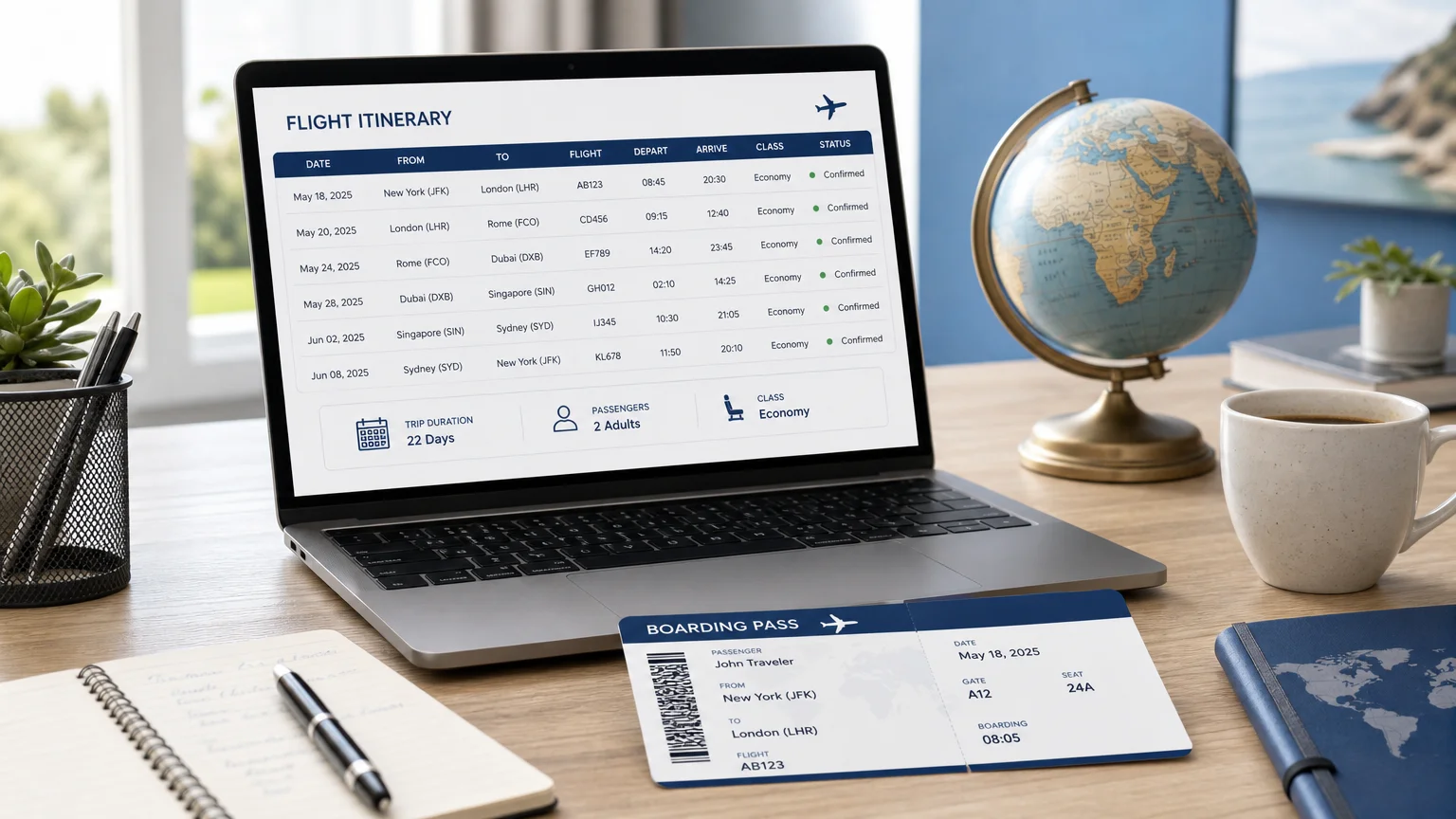
The travel technology sector is now a multi-billion-dollar industry, and the number of platforms competing for attention has grown accordingly. Choosing among the many travel software solutions for agencies is no longer a simple matter of picking a booking tool. If you would like a structured overview before comparing vendors, our tour operator software pages explain how modern workflows fit together.
According to 360iResearch, the travel technologies market was estimated at USD 11.01 billion in 2025 and is expected to reach USD 11.65 billion in 2026. That growth reflects rising traveler expectations for real-time information, flexible payments, and personalized itineraries. For operators, it means the tools you select today will shape how efficiently you compete tomorrow.
What travel software actually covers
When people search for travel software names, they are usually looking for platforms that automate the daily work of selling and delivering trips. These systems replace the patchwork of spreadsheets, email threads, and manual documents that many agencies started with. In practice, the category spans several distinct functions, and few products cover all of them equally well.
Broadly, the market divides into four families of tools. Travel booking and reservation systems handle flights, hotels, and activities. Itinerary and tour builders assemble personalized programs. Accounting suites manage invoices and reconciliation. Finally, CRM and marketing tools nurture client relationships. Some platforms attempt to unify several of these functions, which is where the real efficiency gains appear.

Why the category is expanding so quickly
Why are so many new platforms appearing? The answer lies in traveler behavior and automation. IMARC Group reported the global travel technology market at USD 11.3 billion in 2025, driven by demand for personalized experiences and advances in artificial intelligence. The same analysis noted that global distribution systems remain the largest segment, serving as the network that connects suppliers with agencies.
Mobile-first expectations are reshaping priorities as well. Industry analysis indicates that mobile travel applications represented roughly 45.7 percent of the market in recent estimates, with the majority of users preferring mobile-first experiences. For agencies, this means client-facing tools must feel as fluid as consumer apps, not clunky back-office add-ons.
The main families of travel software
Understanding the categories helps you avoid paying for features you will never use. Each family answers a different operational question, and mixing them thoughtfully is often more effective than buying a single generic suite.
- Booking engines: platforms that reserve flights, hotels, cars, and activities, often connected to global distribution systems and bed banks.
- Itinerary and tour builders: tools that assemble day-by-day programs, calculate profitability, and produce polished proposals.
- Accounting and back-office suites: systems that automate invoices, reconciliation, and financial reporting.
- CRM and marketing platforms: software that tracks leads, manages client histories, and supports follow-up campaigns.
Because these needs overlap, many teams end up juggling several logins. If you would like to map your own stack against these categories, our travel software guide walks through the trade-offs in detail.
Notable travel software names compared
The table below groups several widely referenced platforms by their primary focus. It is not exhaustive, but it illustrates how offerings differ in scope. We have included our own platform as the reference for end-to-end coverage, since combining functions in one system is where operational time is saved.
| Platform | Primary focus | Itinerary builder | Multi-currency | Client portal |
|---|---|---|---|---|
| Ezus | End-to-end: request to invoice | Yes | Yes | Yes, branded |
| Amadeus | GDS and booking infrastructure | Partial | Yes | Partial |
| Lemax | Tour operator and DMC booking | Yes | Yes | B2C portal |
| Bókun | Activities and experiences | Limited | Yes | Widget |
| FareHarbor | Tours and activities booking | Limited | Partial | Widget |
Each of these platforms serves its niche well. Booking-centric tools focus on inventory breadth, while experience providers concentrate on activities. The distinguishing factor for agencies and DMCs is whether a single system can carry a request all the way through to a paid, invoiced trip.
Our differentiator: from request to invoice in one place
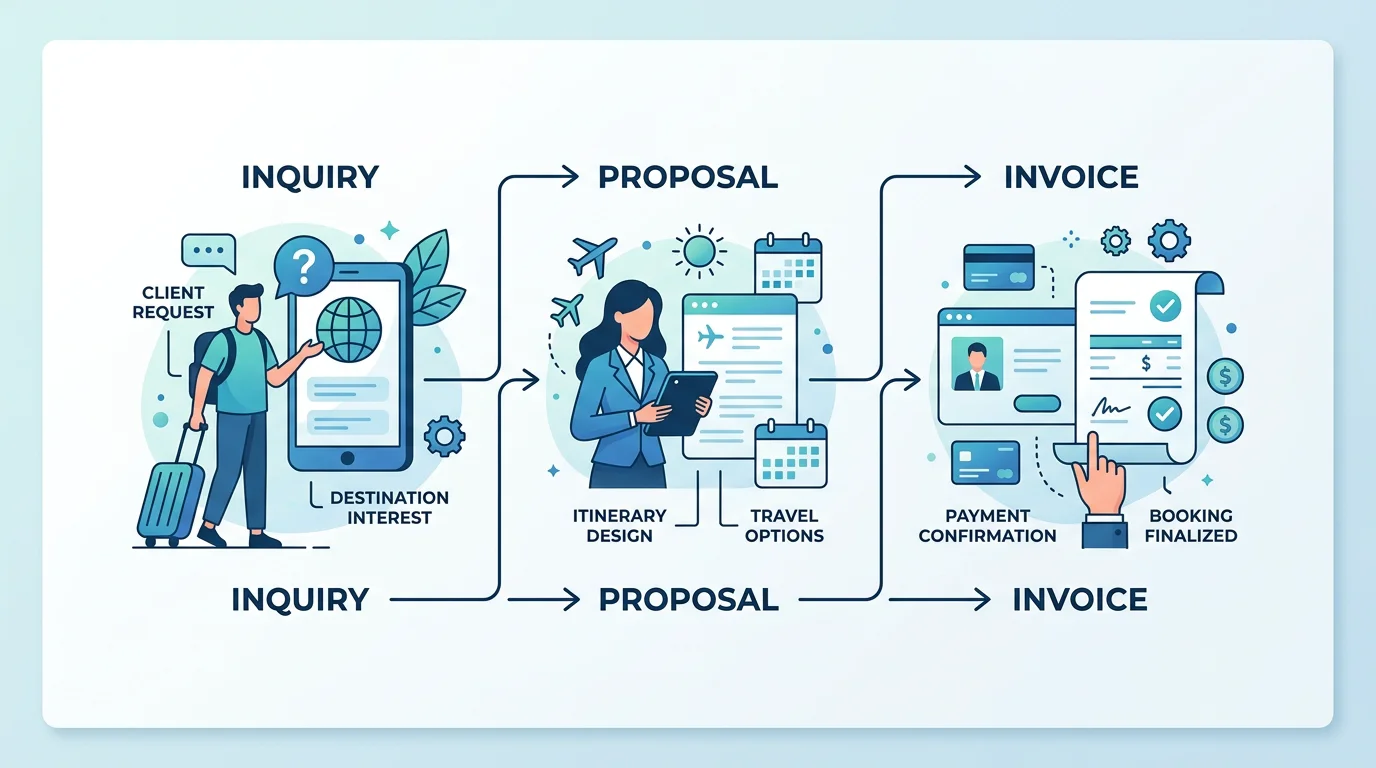
Consider a common scenario. A sales agent receives an inquiry, builds a budget in a spreadsheet, drafts an itinerary in a word processor, then rekeys everything into an invoicing tool. Every handoff introduces delay and version-control risk. This is precisely the friction that an end-to-end workflow removes.
We built our platform to run a destination management company from the first request to the final invoice. You can build custom itineraries, budgets, and sales documents in minutes, then share them through a branded client portal for quick reviews and approvals. Because pricing, margins, and performance appear in real time, you keep visibility over profitability rather than discovering it after the fact. For DMC teams specifically, our DMC software centralizes multi-currency, multi-language, and multi-brand operations in one workspace.
How to choose the right platform for your business
Start with your model rather than a feature list. A high-volume corporate travel program has different needs from a boutique tour operator building bespoke trips. North America remains the largest regional contributor, projected at roughly 30 to 35 percent of the travel technology market across 2026 to 2035, which partly explains why many tools are built around North American workflows first.
Use these questions to narrow the field:
- Does the platform cover the full lifecycle, or only one stage?
- Are pricing and margins visible in real time?
- Will it support multiple currencies, languages, and brands?
- Does it integrate with the tools you already rely on?
- Is the client-facing experience branded and mobile-friendly?
Whenever possible, test the platform with a free trial and a real quote before committing. A tool that feels natural to your team will always outperform a more powerful system that nobody adopts.
Bringing it together
The abundance of travel software options for agencies is an advantage once you know what to look for. Map your workflow first, identify where handoffs cost you time and margin, then match a platform to those gaps rather than to a long feature list. Booking engines, itinerary builders, and accounting suites all have their place, yet the strongest operational gains come from connecting them. A system that carries a request through to an invoice, with real-time visibility along the way, gives you both speed and control. Choose deliberately, test with real trips, and prioritize adoption over sheer capability.
Take action with Ezus
If your team is tired of juggling spreadsheets, documents, and disconnected inboxes, the path forward is a single workspace that follows every trip from inquiry to payment. That is the operational shift most agencies and destination management companies are working toward in 2026.
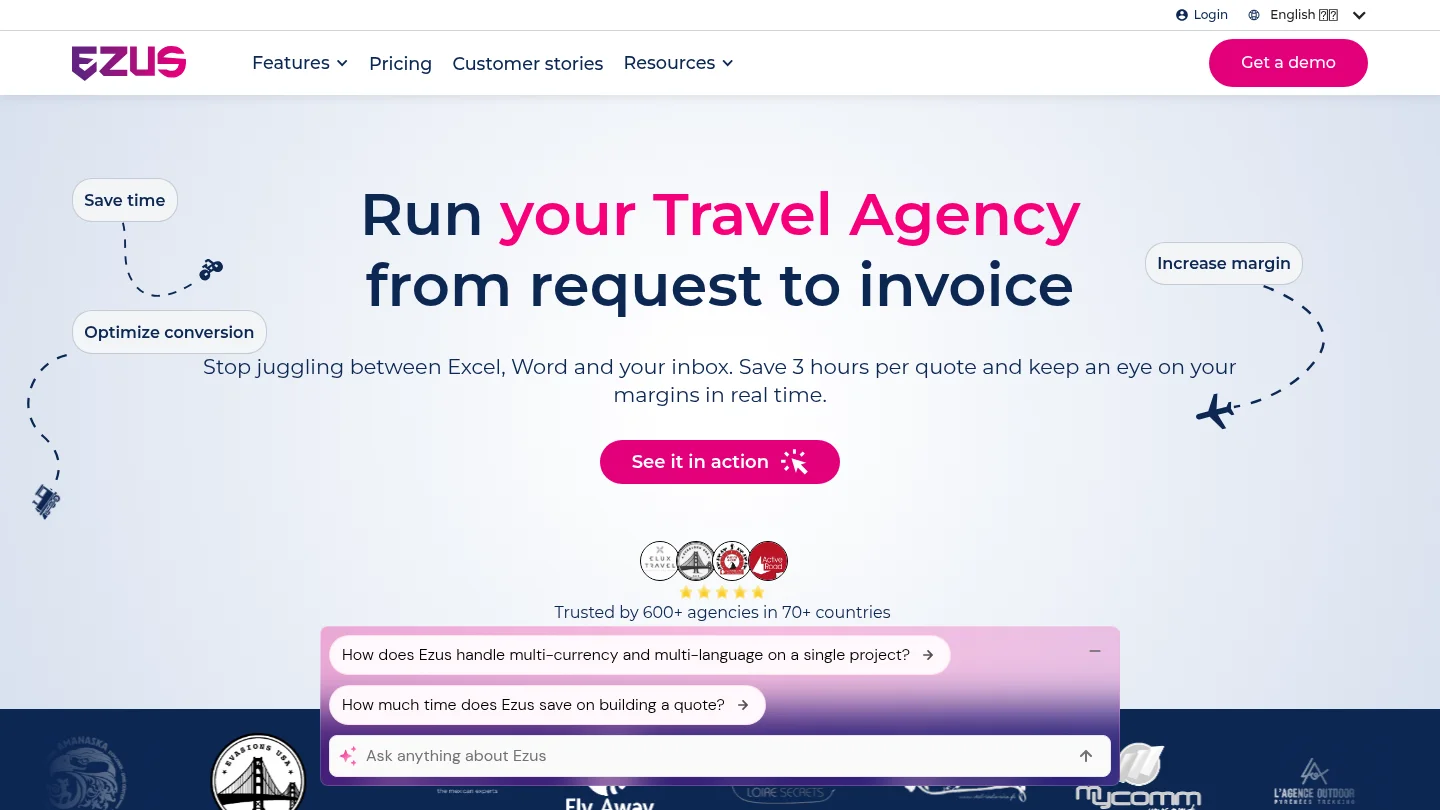
With our all-in-one travel agency software, you can build custom itineraries and budgets in minutes, generate on-brand proposals in one click, and share them through a personalized client portal for faster approvals. Real-time margin visibility and dashboards help protect your profitability, while onboarding is designed to take you from demo to daily use in just a few days. Turn requests into paid trips with less manual effort.
Frequently Asked Questions
What is travel software used for?
Travel software automates the tasks involved in selling and delivering trips, from bookings and itinerary building to pricing, invoicing, and client communication. It replaces manual spreadsheets and disconnected documents. The result is faster turnaround and fewer errors across your operations.
What is the difference between booking software and itinerary builders?
Booking software reserves inventory such as flights, hotels, and activities, often through global distribution systems. Itinerary builders assemble those elements into a personalized day-by-day program with pricing and profitability. Many agencies use both, or a unified platform that combines them.
Which travel software suits destination management companies best?
DMCs benefit most from end-to-end platforms that handle everything from the initial request to the final invoice. Our DMC software centralizes multi-currency, multi-language, and multi-brand operations in one workspace. This reduces handoffs and gives finance teams real-time margin visibility.
How much does travel software typically cost?
Pricing varies widely depending on features, agency size, and booking volume, and many vendors quote on request. Some platforms start at modest monthly fees, while enterprise suites require custom pricing. Testing with a free trial before committing is strongly recommended.
Is the travel technology market still growing in 2026?
Yes. Independent analyses place the travel technology market above USD 11 billion in 2025, with steady growth expected through the following years. Demand is driven by personalization, mobile-first behavior, and increasing adoption of artificial intelligence.
.jpeg)

Join Ezus today
Request a demo today and discover how our software can help you reach new heights.