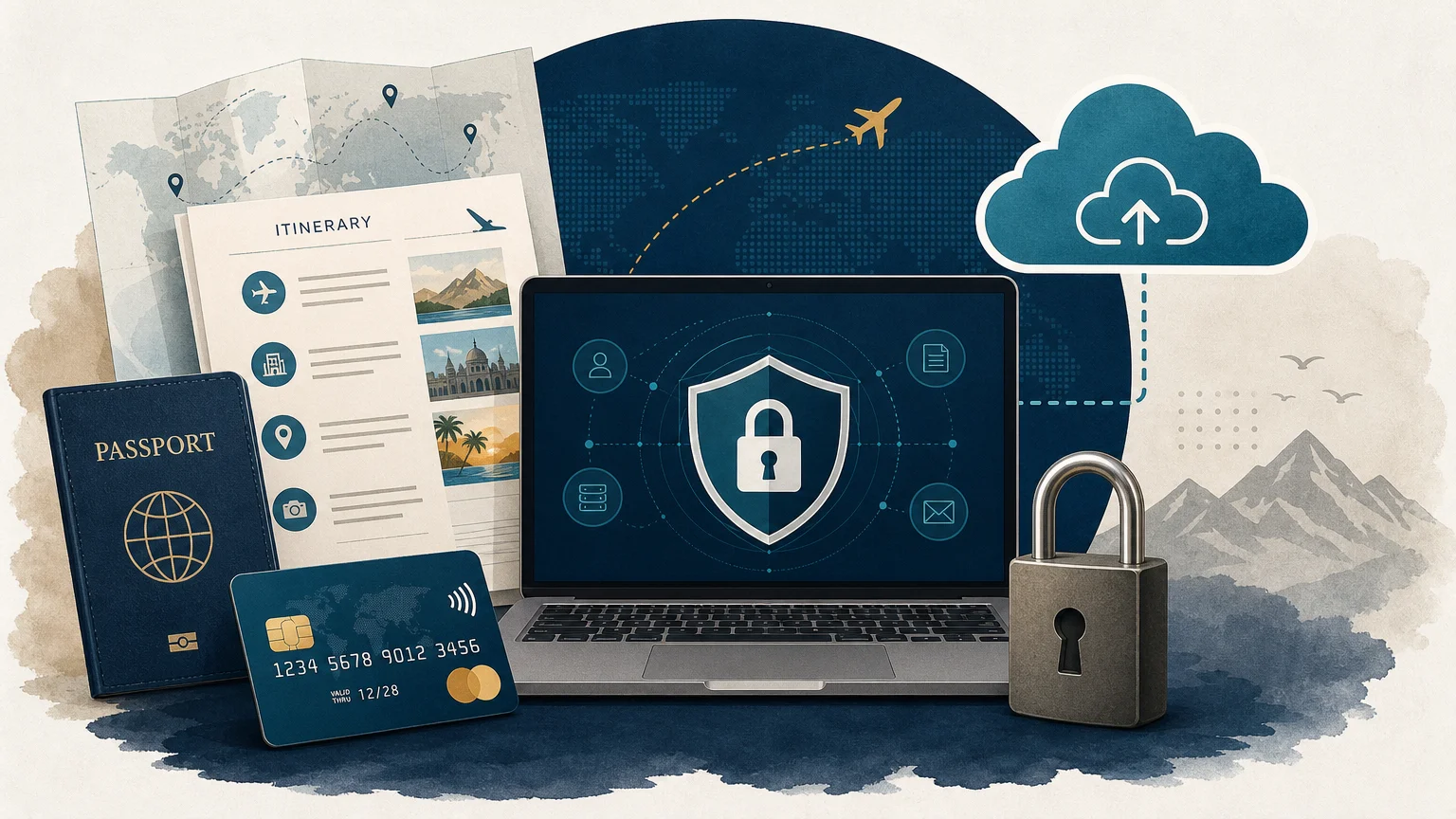
Summary: Data security for tour operators depends on controlling the entire information lifecycle, from collection and access to payment processing, supplier sharing, retention, backup, and incident response. A practical program combines data minimization, role-based permissions, multi-factor authentication, encryption, staff training, vendor oversight, tested recovery, and transparent privacy processes, so your team can protect travelers without blocking daily operations.
A tour operator can lose control of sensitive information long before a dramatic breach occurs. A passport copy forwarded through a personal messaging app, a shared administrator password, or an old employee account can expose travelers and commercial data. Centralizing sensitive travel documents management is one practical way to reduce scattered files and improve accountability.
Data security for tour operators now requires more than a secure website. A report published in May 2026 found that 92% of surveyed small travel agencies in the United States and United Kingdom experienced a cyber incident or threat during the previous year, while 66% reported compromised customer data, according to SecureTrust's 2026 report. The most effective response is a structured operating model that protects data without slowing bookings, supplier coordination, or customer service.
Why tour operators need a security model, not just a password
Tour operators handle several categories of information at once. Customer identities, passport details, emergency contacts, travel dates, accommodation details, preferences, payment references, and booking histories may all appear in the same workflow. The business also holds supplier contracts, net rates, markups, internal notes, staff records, and sales negotiations.
This concentration creates two types of exposure. Personal data can support identity theft, fraud, or unwanted profiling when accessed improperly. Commercial data can damage margins and supplier relationships when it reaches competitors or unauthorized staff. Security therefore protects both traveler trust and the operating value of the business.
A useful model follows five connected outcomes: identify what matters, protect it, detect unusual activity, respond to incidents, and recover operations. This risk-based structure helps you prioritize practical controls instead of buying disconnected tools or creating policies that staff cannot follow.
What data should you protect first?
The first step is not selecting software. It is creating a simple inventory of what your business collects, where it is stored, who uses it, and why it is retained. Include booking platforms, email accounts, shared drives, spreadsheets, CRM records, payment systems, supplier portals, employee devices, and external integrations.
Classify information by sensitivity and business purpose. A basic structure might include:
Apply data minimization to each category. Collect only what is necessary for a defined purpose, explain that purpose clearly, and establish a retention period. For example, a supplier may need a passenger name for a booking, but not every internal note about the customer. Our guidance on data use in travel personalization also reinforces the need to balance useful personalization with responsible handling of traveler information.
Retention should be documented rather than decided informally. Review old exports, duplicate spreadsheets, email attachments, and inactive customer records. Secure deletion is often more effective than trying to protect information that the business no longer needs.
How does access control reduce everyday exposure?
Many security failures begin with excessive access rather than advanced hacking. If every employee uses the same administrator account, your business cannot reliably identify who changed a price, downloaded a customer list, edited a booking, or deleted a note.
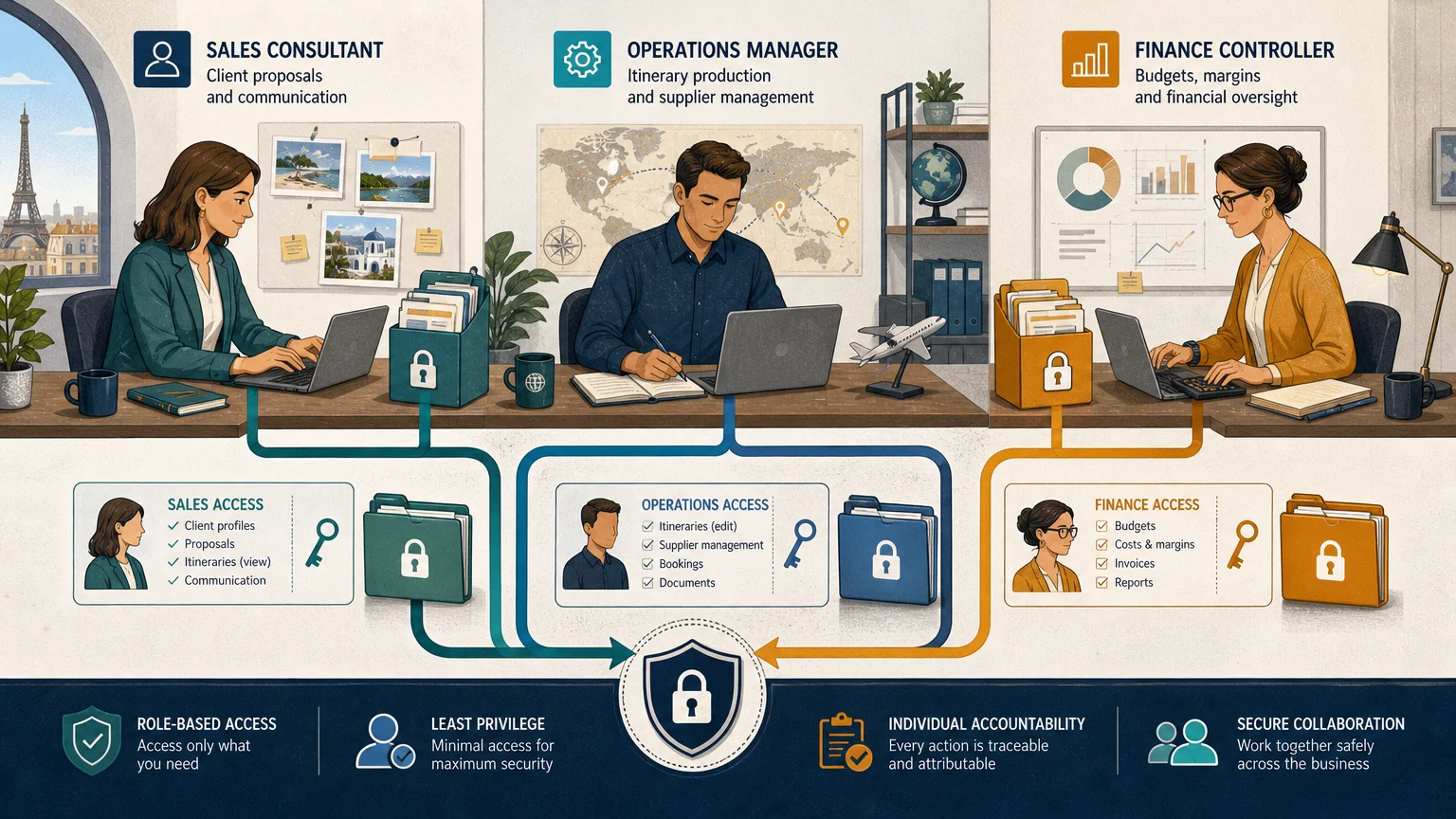
Use individual user accounts and assign access according to job responsibilities. A sales coordinator may need assigned leads, customer communication, and proposal records. A finance user may need invoices and payment status. An operations manager may need supplier and booking controls. Only a small number of authorized users should manage system settings, exports, or destructive actions.
Review permissions when someone joins, changes role, takes extended leave, or leaves the business. Offboarding should happen on the same day as departure. Disable accounts, revoke shared access, recover devices, and review recent downloads or exports where appropriate.
For teams replacing scattered spreadsheets and inboxes, our integrated CRM for travel businesses can provide a more structured place for customer records, communication, and team workflows. The security benefit comes from combining centralized information with individual accounts and controlled permissions, not from centralization alone.
How should you secure payments, booking systems, and integrations?
Payment and booking workflows deserve separate attention because they combine financial information, identity details, customer urgency, and multiple third parties. Avoid storing full payment card data unless there is a clear, documented business requirement and the necessary controls are in place. Prefer established payment providers, hosted payment pages, tokenization, and strong customer authentication where appropriate.
In 2026, PCI DSS v4.0.1 is the active version of the payment security standard, and future-dated requirements from the previous version became mandatory on March 31, 2025, according to SecureTrust's PCI guidance. The exact obligations depend on how your business accepts and processes payments, so confirm your responsibilities with your payment provider or a qualified compliance adviser.
Do not treat an integration as automatically safe because it is convenient. Review every booking platform, payment gateway, identity verification service, CRM connection, accounting system, API, and no-code connector. Ask what data the provider receives, where it is stored, how access is authenticated, how incidents are reported, and how data is deleted when the relationship ends.
Use limited-scope API credentials, rotate secrets, restrict administrator access, and monitor unusual activity. A supplier or technology partner should not receive a complete customer database when the integration only requires a booking reference and passenger name.
How can staff resist phishing and unsafe data handling?
Employees are often the first people to see suspicious messages, fraudulent payment requests, or unusual login prompts. Training should therefore be practical and repeated. Staff should know how to verify a supplier bank-change request, identify a lookalike email address, report a suspicious attachment, and escalate a request for passport or payment information.
Use short exercises based on real workflows. A simulated message might request an urgent refund, a supplier payment, or a revised passenger list. The objective is not to punish mistakes. It is to make safe verification the normal response when a message creates pressure.
As a broader benchmark, the United Kingdom's official 2025/2026 survey found that 14% of businesses said they held personal data without protections such as anonymization or encryption. Only 51% of businesses reported having specific rules for storing and moving personal data files, according to the UK government survey. These figures are not specific to tour operators, but they show why written procedures matter.
Set clear rules for personal devices, messaging apps, removable drives, screenshots, printed passenger lists, and cloud storage. Sensitive documents should move through approved channels with access limits and expiration controls. Staff should also understand that customer data must not be entered into unauthorized AI tools or copied into public prompts.
What should happen when a breach or outage occurs?
Preparation determines whether an incident remains contained or becomes a prolonged business crisis. Create a written response plan before it is needed. It should identify the person who coordinates the response, the person who manages technology, the person who communicates with customers, and the person who seeks legal or regulatory advice.
The first actions usually include securing affected accounts, isolating compromised devices, preserving logs, stopping suspicious transfers, and contacting relevant technology providers. Do not delete evidence or reset systems without considering how those actions could affect investigation and recovery.
Connected travel operations also need clear ownership between organizations. A July 2026 review by the United States Government Accountability Office found that federal aviation bodies were collaborating on cybersecurity but still needed to address important shortfalls, including role clarity and implementation gaps. Although the review concerned aviation agencies rather than tour operators, its lesson applies to every booking ecosystem: responsibilities must be documented across internal teams and external providers. The 2026 GAO review provides useful context.
Your plan should define how to assess whether personal data was affected, when to contact insurers or advisers, and how to meet applicable notification duties. Legal requirements vary by jurisdiction, customer location, data type, and contractual arrangements. Treat this article as operational guidance, not jurisdiction-specific legal advice.
What can you improve in the next 30 days?
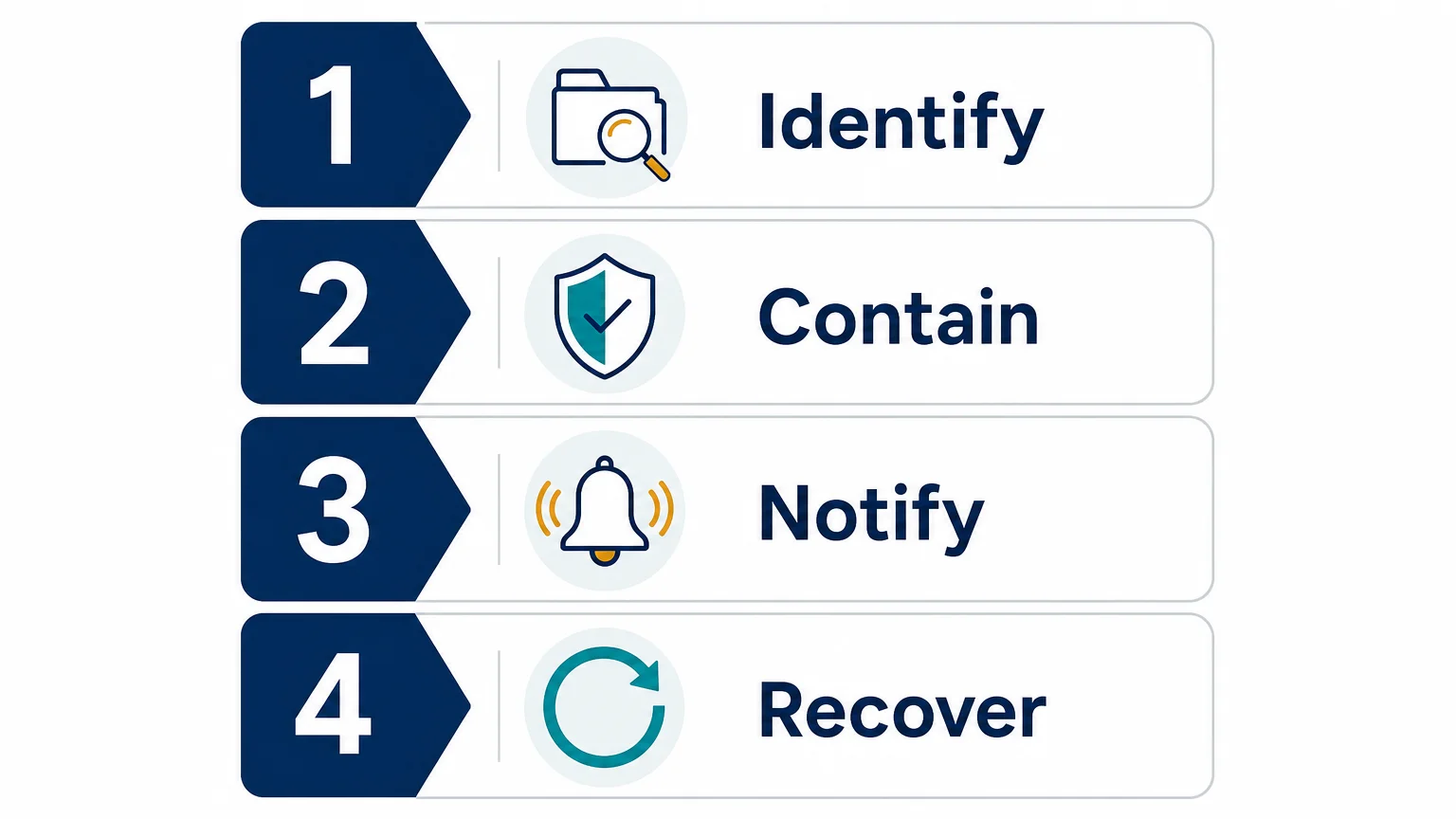
This sequence is deliberately practical. It starts with visibility, then addresses access and high-impact workflows before adding more specialized controls. If your team cannot explain where sensitive data is held or who can reach it, advanced monitoring will not solve the underlying problem.
Build security into every travel workflow
Data security for tour operators is an operational discipline, not a one-time technology purchase. Protecting travelers requires a clear data inventory, limited access, strong authentication, secure payment handling, trained staff, reviewed suppliers, tested backups, and a response plan that assigns responsibility. Start with the systems and information that could cause the greatest harm, then improve the program through regular reviews. This approach supports customer trust while allowing your team to quote, book, coordinate, and deliver trips efficiently.
Take action with Ezus
Once sensitive information is scattered across spreadsheets, inboxes, documents, and supplier messages, security becomes difficult to manage consistently. A centralized travel workflow can help your team control access, reduce duplicate files, and maintain clearer ownership of customer and operational information.
Our tour operator software brings itinerary production, budgeting, proposals, CRM, supplier management, invoicing, payments, and financial tracking into one workspace. With role-based rights, customizable workflows, data migration support, integrations, and onboarding guidance, Ezus helps travel teams build more consistent processes while keeping security considerations visible in daily operations.
Frequently Asked Questions
What data is most sensitive for a tour operator?
Passport details, identity information, payment records, emergency contacts, detailed itineraries, and travel preferences require careful protection. Supplier rates, margins, contracts, customer histories, and internal negotiation notes are also commercially sensitive.
Is a shared administrator account safe?
No. Shared accounts make it difficult to attribute actions, remove access when someone leaves, or investigate an unusual export. Individual accounts with role-based permissions and multi-factor authentication provide stronger accountability.
Should a tour operator store payment card details?
In most cases, avoid storing full card details when a secure payment provider or hosted payment page can process the transaction. Your exact responsibilities depend on your payment flow and should be confirmed against applicable PCI DSS requirements.
How often should access permissions be reviewed?
Review permissions during onboarding, role changes, departures, and regular security checks. A quarterly review is a useful baseline for many teams, with immediate changes whenever an employee or supplier no longer needs access.
Can Ezus support safer travel data workflows?
Yes. Ezus centralizes travel production, CRM, supplier, document, payment, and financial workflows, while supporting customizable user rights, integrations, data migration, and onboarding. The platform can help your team replace scattered processes with more consistent access and information management.
.jpeg)

Join Ezus today
Request a demo today and discover how our software can help you reach new heights.
.avif)



.jpg)